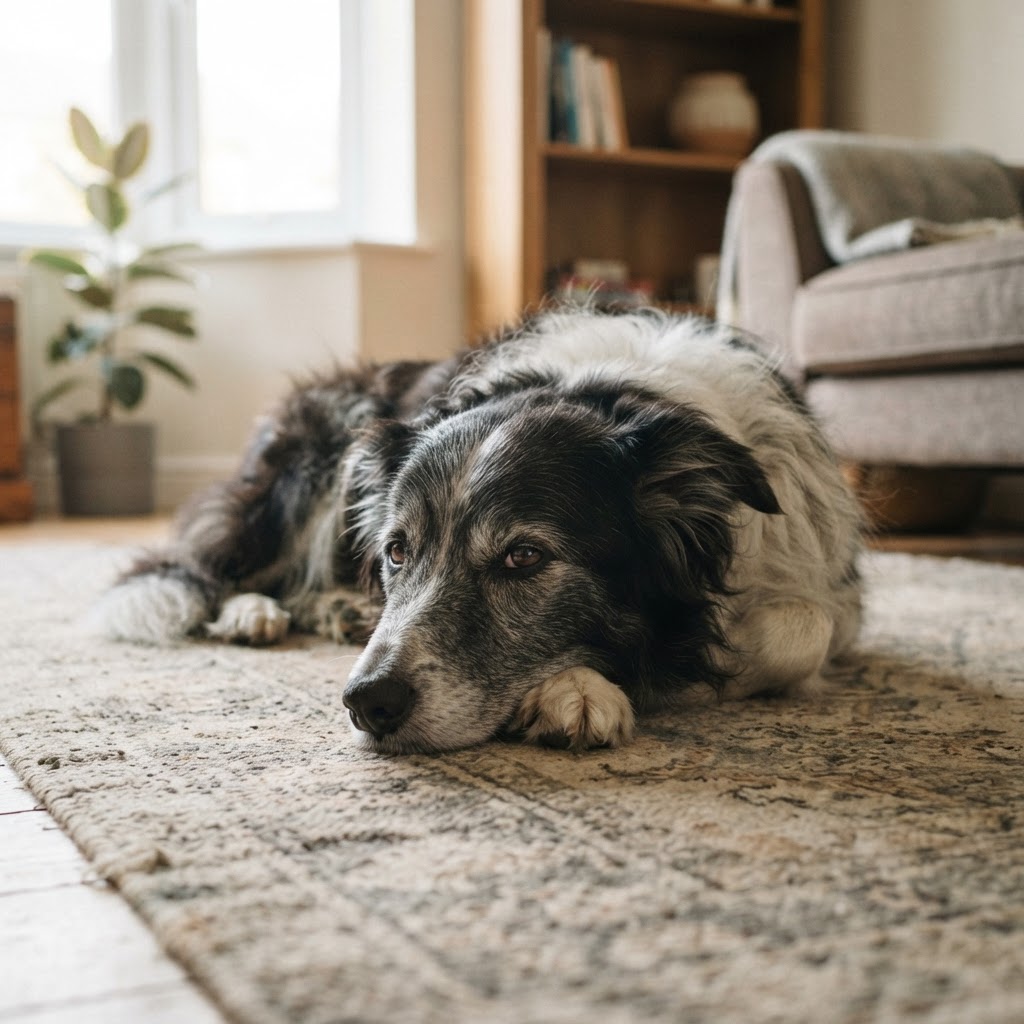
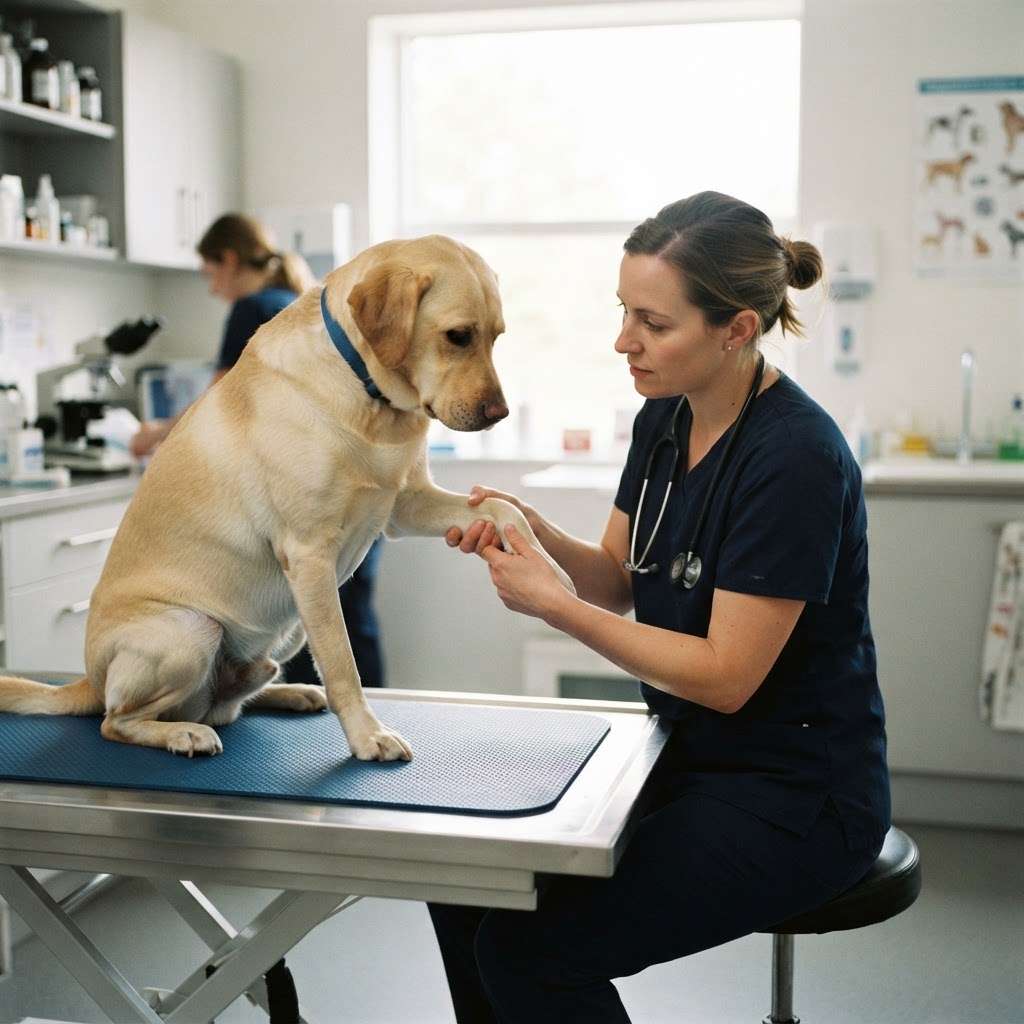
Bottom line: Paw licking is usually caused by allergies, pain, or anxiety. Check for redness, swelling, or foreign objects between the toes, and visit your vet if the skin looks irritated.
| Situation | Suggested action |
|---|---|
| Raw, bleeding, or infected skin | Schedule vet exam |
| Limping while licking | Schedule vet exam |
| Mild redness or irritation | Clean and observe |
| Constant daily obsession | Schedule vet exam |
The Dog Who Won't Stop Licking
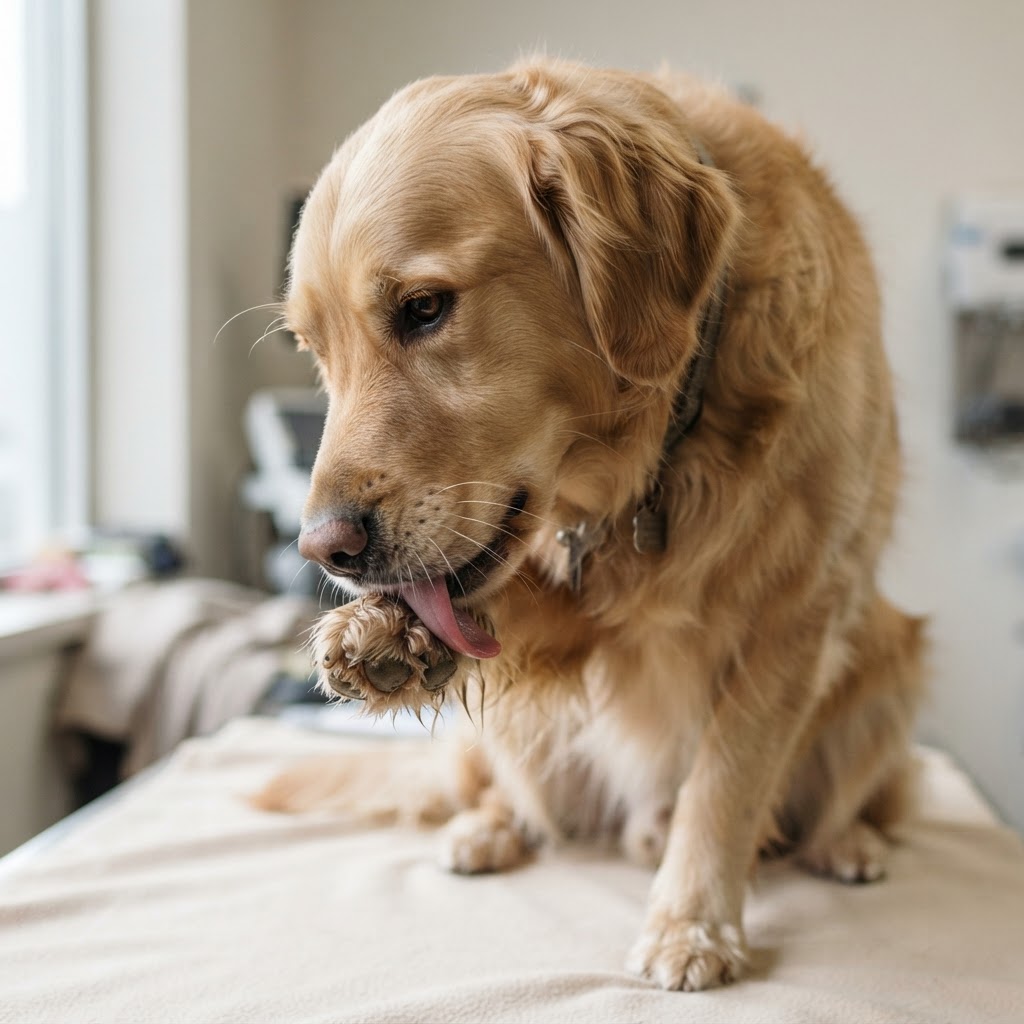
You're trying to sleep, and all you can hear is slurp, slurp, slurp. Your dog is at it again - obsessively licking their paws. It's keeping you awake. It's keeping them awake. And the skin between their toes is looking red and raw.
Occasional paw licking is normal - dogs groom themselves, and paws pick up dirt and debris. But persistent, excessive paw licking is almost always a sign of an underlying problem. The challenge is figuring out what that problem is.
Why Dogs Lick Their Paws
Paw licking is a symptom, not a diagnosis. The causes range from minor to serious, and many dogs have more than one contributing factor. Here are the most common:
1. Allergies
Allergies are the number one cause of chronic paw licking in dogs. When a dog is allergic to something, their paws often bear the brunt - this is called pododermatitis (inflammation of the skin of the paws).
Types of allergies:
- 🐾 Environmental allergies (atopic dermatitis) - pollens, grasses, dust mites, mould. Seasonal patterns are common (spring/summer)
- Food allergies - typically to a protein source (chicken, beef, dairy, soy). Food allergies tend to cause year-round symptoms
- Contact allergies - to carpets, lawn treatments, cleaning products, or certain plants
Signs of allergy-related paw licking:
- Licking or chewing at the feet, especially between the toes
- Red, inflamed skin
- Brown or rust-coloured staining of the fur (from saliva)
- Recurring ear infections
- Itchy skin elsewhere on the body
- Seasonal patterns (for environmental allergies)
What to do: See your vet. Diagnosing allergies requires investigation - food elimination trials, environmental management, and sometimes allergy testing. Treatment may include antihistamines, prescription diets, medicated shampoos, immunotherapy (allergy shots), or medications like Cytopoint or Apoquel.
2. Parasites
Fleas are a common cause of paw licking - even if you don't see them. Some dogs are allergic to flea saliva, and a single flea bite can trigger intense itching. Flea allergy dermatitis typically affects the lower back, base of the tail, and the paws.
Mites - including demodex and sarcoptic mange - can also cause intense paw licking, especially in young dogs or those with weakened immune systems.
What to do: Ensure your dog is on a vet-recommended flea and tick prevention - year-round, even for indoor dogs. If mites are suspected, your vet can diagnose them with a skin scraping.
3. Infections
Constant licking creates a warm, moist environment between the toes - the perfect breeding ground for bacteria and yeast. This creates a vicious cycle: licking causes infection → infection causes itching → more licking.
Signs of infection:
- 🐾 Red, swollen, or inflamed skin between the toes
- An unpleasant smell
- Discharge or pus
- Hair loss between the toes
- Red or brown discolouration of the fur
What to do: Your vet can diagnose the type of infection (bacterial vs. yeast) and prescribe appropriate treatment - medicated shampoos, wipes, topical treatments, or oral medications.
4. Pain or Injury
Dogs lick painful areas - it's an instinctive soothing behaviour. Paw licking can indicate:
- A cut or wound on the paw pad or between the toes
- A foreign body - a grass seed, thorn, or splinter lodged in the paw
- A cracked or broken nail
- Burns - from hot pavement, road salt, or chemicals
- Arthritis or joint pain - dogs may lick the affected limb
- Interdigital cysts - painful lumps between the toes, common in some breeds
What to do: Examine your dog's paws carefully. Look between the toes, check the pads, and examine the nails. If you find a wound, foreign body, or lump, see your vet.
5. Anxiety and Boredom
Some dogs lick their paws as a displacement behaviour - a self-soothing activity when they're anxious, bored, or stressed. This can become a compulsive habit, similar to nail-biting in humans.
Signs of anxiety-related paw licking:
- 🐾 Licking increases when you leave the house (separation anxiety)
- Licking increases during stressful events (thunderstorms, visitors)
- Your dog is under-exercised or bored
- The licking is intermittent rather than constant
What to do: Increase exercise and mental stimulation. Provide puzzle toys, chew toys, and training games. Address the underlying anxiety - a vet behaviourist can help with separation anxiety.
How to Help Your Paw-Licking Dog
Step 1: See your vet. Chronic paw licking almost always has an underlying cause that needs diagnosis.
Step 2: Follow the treatment plan. This may include:
- Medicated shampoos or wipes for infections
- Prescription diets for food allergies
- Flea prevention year-round
- Medications like Cytopoint, Apoquel, or antihistamines
- Topical treatments for wounds or foreign bodies
- Behavioural modification for anxiety
Step 3: Manage the environment:
- Rinse your dog's paws after walks (to remove allergens)
- Use dog boots in extreme weather
- Avoid walking on hot pavement or chemically treated lawns
- Provide mental enrichment to reduce anxiety-related licking
Step 4: Prevent the cycle:
- Use an Elizabethan collar (cone) or soft collar to break the licking cycle while the skin heals
- Use a paw balm to soothe cracked or dry pads
The Bottom Line
Paw licking is not "just a habit" - it's almost always a sign of an underlying problem. The most common cause is allergies, but infections, parasites, pain, and anxiety all play a role. The key is to identify the cause with your vet's help and to treat it at the source. A dog who licks their paws excessively is an itchy, uncomfortable dog - and with the right diagnosis and treatment, they don't have to be.
Frequently Asked Questions
Disclaimer: This article is for educational purposes only and is not a substitute for professional veterinary advice. If you're concerned about your pet's health, use our AI triage assessment or consult a licensed veterinarian.