Bottom line: A rabbit that stops eating is a medical emergency because their digestive system requires constant movement to function properly. Any sign of anorexia in a rabbit must be treated by a vet immediately to prevent fatal GI stasis.
| Situation | Suggested action |
|---|---|
| Stopped eating/no droppings | Immediate emergency vet visit |
| Lethargic or hiding | Urgent vet visit |
| Reduced appetite | Call your vet today |
| Normal behavior | Continue monitoring health |
A Rabbit Who Stops Eating Is a Rabbit in Danger
If your dog skips a meal, you might not think much of it. If your cat turns their nose up at breakfast, it's usually not a five-alarm fire.
But if your rabbit stops eating, the clock is already ticking. Rabbits are not like dogs and cats - their digestive system is fundamentally different, and a rabbit who stops eating can become critically ill - or die - within 24 hours.
This is not an exaggeration. A rabbit going off their food is always a veterinary emergency.
Understanding the Rabbit Gut
Rabbits are obligate hindgut fermenters. This means their digestive system relies on a constant supply of fibre (hay, grass) moving through the gut at all times. The large intestine contains a delicate balance of bacteria that ferment this fibre, extracting nutrients and producing caecotrophs - special droppings that the rabbit re-ingests to absorb B vitamins and proteins (yes, they eat some of their own poo - this is normal and essential).
When a rabbit stops eating - for any reason - this system grinds to a halt. The gut motility slows or stops entirely, the bacterial balance shifts dangerously, and gas builds up. This condition is called gastrointestinal stasis (GI stasis), and it can be fatal within hours.
What Is GI Stasis?
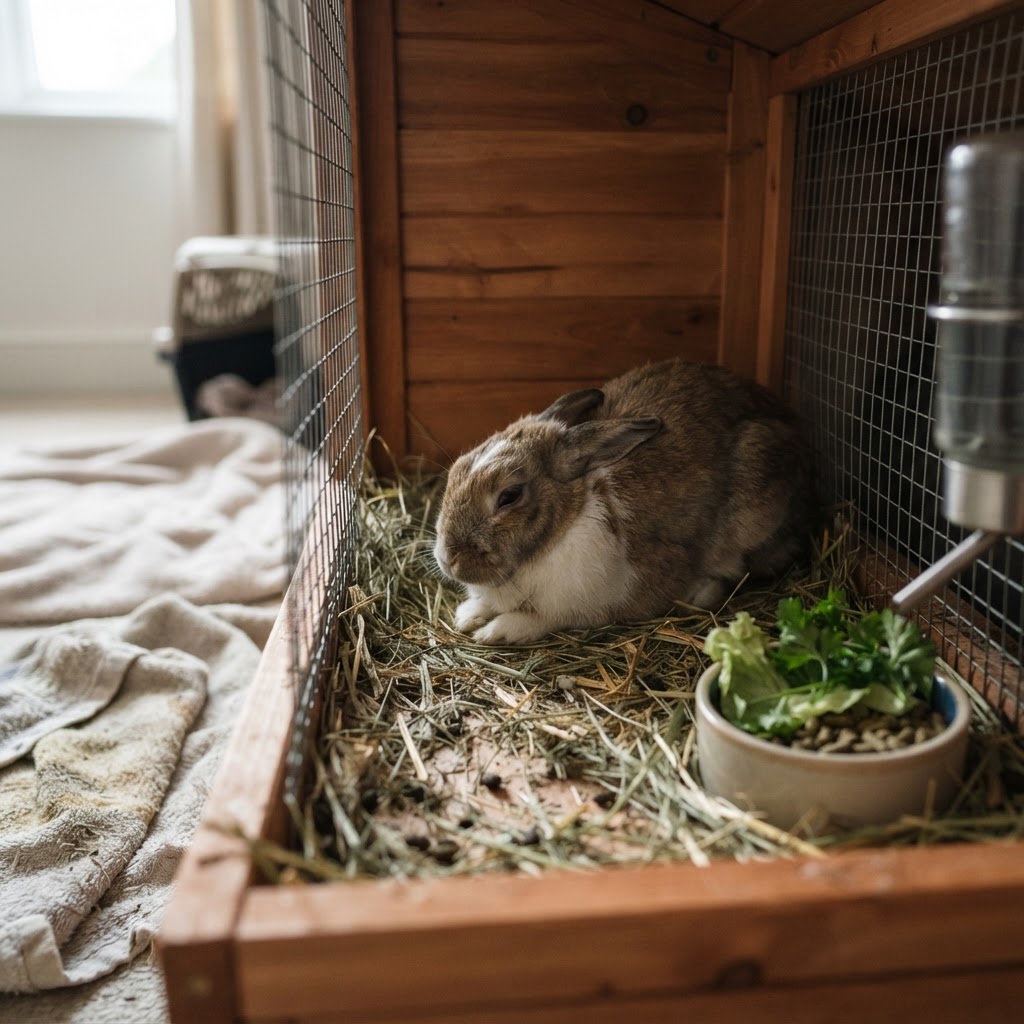
Gastrointestinal stasis is a slowing or complete cessation of normal gut movement. It's one of the most common - and most dangerous - conditions in pet rabbits.
What happens during GI stasis:
- The rabbit stops eating (or eats very little)
- Gut motility slows - food and gas accumulate in the stomach and intestines
- The rabbit stops producing faecal pellets and caecotrophs
- Painful gas build-up causes further appetite loss - creating a vicious cycle
- The gut bacteria begin to produce dangerous toxins
- Without treatment, the rabbit can go into shock and die
GI stasis is a symptom, not a disease. It can be caused by:
- 🐾 Too little fibre in the diet - the most common cause. Rabbits need unlimited access to grass hay (not just pellets)
- Dental disease - overgrown teeth or dental spurs make chewing painful
- Stress - a new pet, loud noises, changes in environment
- Pain from another condition (arthritis, urinary stones, internal masses)
- Dehydration
- Lack of exercise - rabbits need space to move to keep the gut moving
- Hairballs - unlike in cats, fur accumulation in rabbits can cause serious blockage
- Infection or underlying illness
The Signs - What to Watch For
If you own a rabbit, you should check on them at least twice daily. Know their normal eating, output, and behaviour patterns. Signs of GI stasis include:
- 🐾 Not eating - refusing hay, pellets, and favourite treats
- Not producing faecal pellets - or producing very few, small, or misshapen ones
- Not producing caecotrophs - or, conversely, an accumulation of uneaten caecotrophs around the rear end
- Lethargy - sitting hunched in a corner, not interested in surroundings
- Hunched posture - a rabbit sitting pressed into a tight ball, often grinding their teeth (a sign of pain)
- Teeth grinding - audible tooth grinding is a classic sign of pain in rabbits
- Bloating - a swollen or firm abdomen
- Pressing their belly against the floor
- Not drinking - dehydration worsens GI stasis rapidly
If your rabbit hasn't eaten or produced pellets for 6–8 hours, this is an emergency. Don't wait until tomorrow.
What to Do - Right Now
Step 1: Call your vet immediately. Tell them your rabbit has stopped eating and isn't producing pellets. Any vet who sees rabbits will treat this as urgent.
While you wait to be seen:
- Offer favourite foods - fresh herbs (coriander, parsley, basil), dandelion greens, or a tiny piece of banana - to see if you can tempt them to eat anything at all
- Gently massage their belly - stroking from chest to tail can help stimulate gut movement
- Encourage movement - let them out of their enclosure and encourage gentle exercise
- Keep them warm and quiet - stress and cold make things worse
- Offer water - via a bowl and a syringe (gently, without forcing)
Do NOT:
- ❌ Force-feed large amounts of food (can cause further problems if there's a blockage)
- ❌ Give human medications
- ❌ Give abdominal pain relief without veterinary guidance
- ❌ Wait until tomorrow to "see if they improve"
What the Vet Will Do
Your vet will:
- Examine the rabbit, including checking their teeth (dental disease is a common underlying cause)
- Take X-rays to check for blockage, gas, or other abnormalities
- Provide pain relief - this is critical; pain is a major driver of GI stasis
- Give gut motility medication - drugs that stimulate the gut to start moving again
- Provide fluids - subcutaneous or intravenous, to treat dehydration
- Assist feeding - syringe-feeding a critical care formula (like Critical Care) to provide nutrition and fibre
- Treat the underlying cause - dental work, antibiotics if there's infection, etc.
With prompt treatment, many rabbits recover. But time is of the essence - the longer the gut sits still, the harder it is to get it moving again.
Prevention - The Best Medicine
GI stasis is far easier to prevent than to treat:
- Unlimited grass hay - this should make up 80% of the diet. Timothy, oaten, or meadow hay. Always available, always fresh
- Limited pellets - a small measured amount daily; they're a supplement, not the main food
- Fresh greens - a variety of leafy greens daily
- Plenty of fresh water - from both a bowl and a bottle
- Exercise - rabbits need several hours out of their enclosure daily
- Regular vet checks - including dental checks every 6–12 months
- Minimise stress - stable routine, quiet environment, gradual introductions to new pets
The Bottom Line
A rabbit who stops eating is not "being fussy." They are in trouble - and you have hours, not days, to act. If your rabbit hasn't eaten or produced pellets in 6–8 hours, call your vet immediately. This simple rule has saved countless rabbit lives. Know the signs, act fast, and never adopt a "wait and see" approach with a rabbit's appetite.
Frequently Asked Questions
Disclaimer: This article is for educational purposes only and is not a substitute for professional veterinary advice. If you're concerned about your pet's health, use our AI triage assessment or consult a licensed veterinarian.