Bottom line: Bloat (GDV) is a rapidly fatal emergency where the stomach twists, cutting off blood flow. If you notice a distended abdomen, unproductive retching, or extreme restlessness, get to an emergency vet immediately.
| Situation | Suggested action |
|---|---|
| Swollen belly + dry retching | Rush to emergency vet immediately |
| Restless/pacing/salivating | Urgent vet visit |
| Suspected high risk breed | Discuss prevention with vet |
| Normal behavior | Keep watch after meals |
Imagine This: Your Dog's Stomach Is Twisting - Right Now
It's 9 PM on a Sunday. Your normally greedy Great Dane has refused his dinner. He's pacing the living room, drooling puddles on the floor, and every few minutes he stretches into a downward-dog pose and heaves - but nothing comes up. His belly looks swollen and feels tight as a drum.
This is bloat. And you have minutes, not hours, to get to a vet.
What Exactly Is Bloat (GDV)?
Gastric dilatation-volvulus - GDV for short - is one of the most dramatic and deadly emergencies in veterinary medicine. Here's what happens:
- The stomach fills with gas and begins to swell like a balloon.
- The stomach twists on itself (the "volvulus" part), sealing off both ends - nothing can go in, nothing can come out.
- Blood vessels get pinched, cutting off circulation to the stomach wall and sometimes the spleen.
- The swollen stomach presses against major veins, reducing blood return to the heart and sending the dog into shock.
Without surgery, GDV is fatal. The twist must be manually untwisted, the stomach assessed for dying tissue, and then permanently tacked to the abdominal wall (a procedure called a gastropexy) to stop it from ever happening again.
Which Dogs Are Most at Risk?
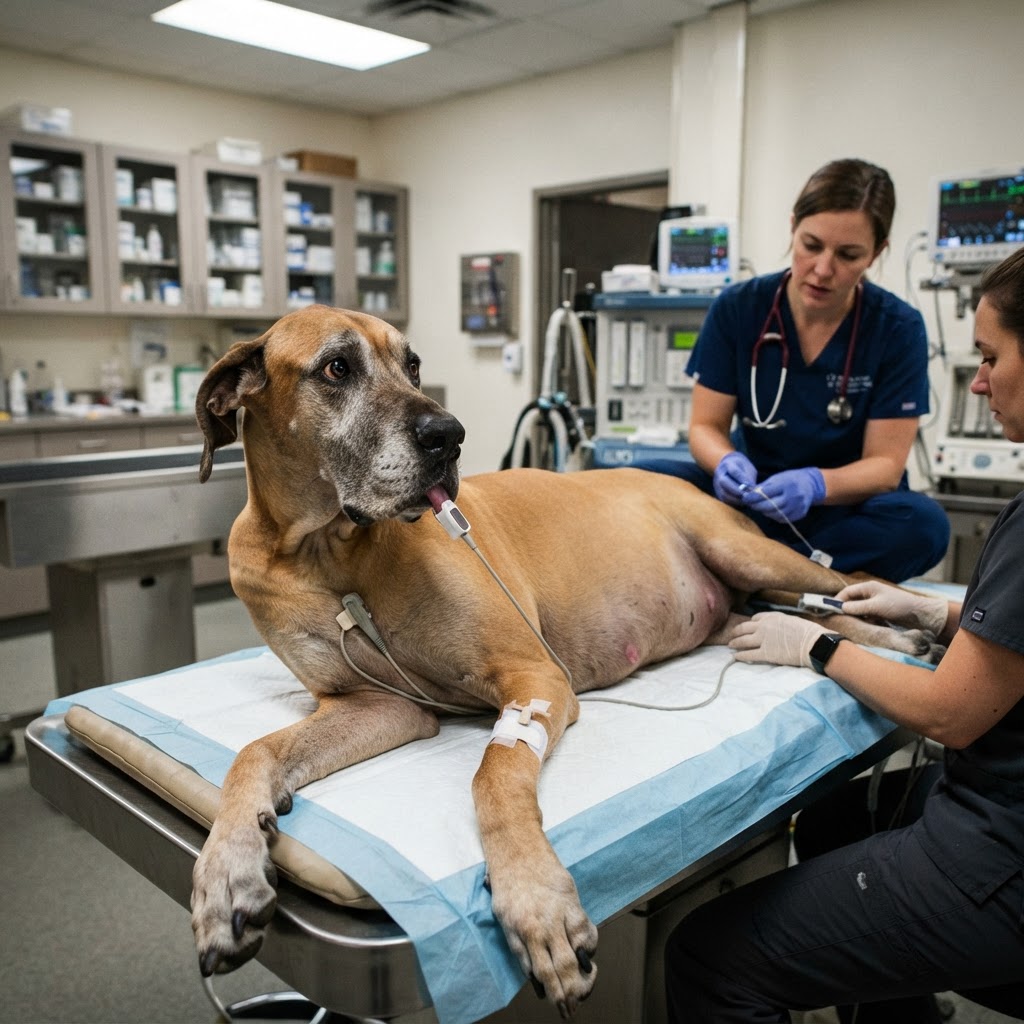
Bloat doesn't only affect large breeds - but it overwhelmingly does. The key physical trait is a deep, narrow chest, which gives the stomach more room to swing and twist.
Highest-risk breeds: Great Danes (by far the most affected), German Shepherds, Standard Poodles, Weimaraners, St. Bernards, Gordon Setters, Irish Setters, Dobermans, and Boxers.
Risk factors that stack the odds against your dog:
- Eating one large meal per day instead of several smaller ones
- Gulping food rapidly and swallowing air
- Exercising vigorously right before or after eating
- Stress or anxiety - kennelling, travel, or new environments
- Feeding from a raised bowl (this is debated, but recent evidence suggests raised feeders may increase risk rather than reduce it)
- Having a first-degree relative (parent or sibling) who has had GDV
The Signs Every Owner Must Recognise
GDV can go from "something's off" to life-threatening in under an hour. The earlier you act, the better the outcome.
Early signs - the ones most people miss:
- 🐾 Restlessness and pacing - your dog simply can't get comfortable
- A visibly swollen or distended abdomen - tap it gently; it may sound hollow, like a drum
- Unproductive retching - your dog heaves and gags as if trying to vomit, but nothing comes up. This is the classic red-flag sign.
- Excessive drooling - thick, stringy saliva
- Looking at, biting at, or licking the belly
As it progresses:
- Weakness, stumbling, or collapse
- Pale or blue-tinged gums - a sign of shock
- Rapid, shallow breathing and a racing heart
- Cold extremities (ears, paws)
What to Do - Right Now
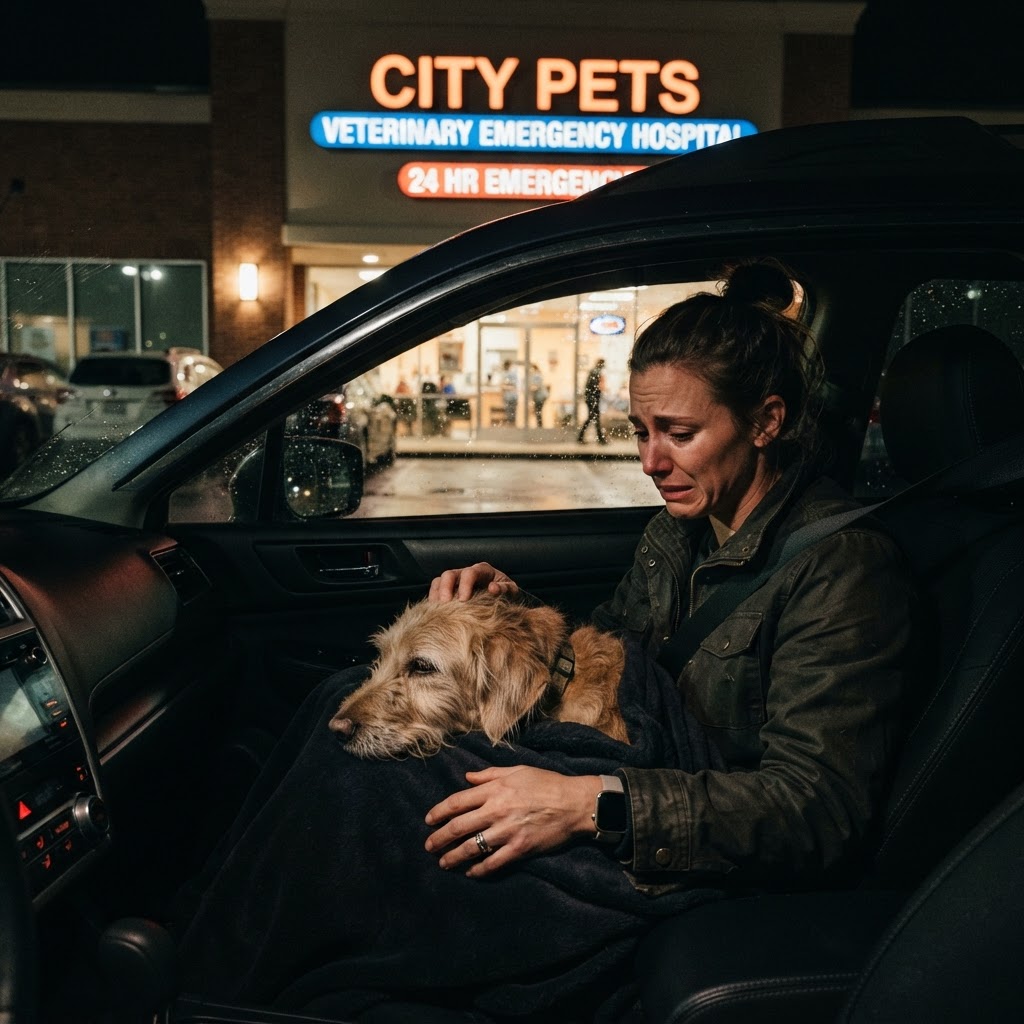
If you suspect bloat, do not wait. Do not Google. Do not try home remedies. Get to the nearest emergency vet immediately.
- Call ahead so the clinic can prepare for emergency surgery
- Do not give food or water
- Do not try to relieve gas yourself
- Do not give any human medication
- Drive carefully but quickly - every minute the stomach stays twisted, tissue dies
The good news? With prompt surgery, survival rates exceed 85%. The key is speed.
Can You Prevent Bloat?
While you can't eliminate the risk entirely, you can dramatically reduce it:
- Feed 2–3 smaller meals instead of one big one
- Use a slow-feeder bowl or puzzle feeder to prevent fast eating and air swallowing
- No vigorous exercise for 1 hour before and 2 hours after meals
- Talk to your vet about a prophylactic gastropexy if you have a high-risk breed - this surgery can often be done at the same time as desexing and permanently anchors the stomach so it can't twist. It's one of the most worthwhile preventive procedures in veterinary medicine.
The Bottom Line
Bloat is fast, it's terrifying, and it's deadly - but it's also one of the most treatable emergencies if you act quickly. Know the signs, especially the combination of a swollen belly and unproductive retching. If something seems wrong with a deep-chested dog, don't take a "wait and see" approach. Pick up the phone, call your vet, and go.
Frequently Asked Questions
Disclaimer: This article is for educational purposes only and is not a substitute for professional veterinary advice. If you're concerned about your pet's health, use our AI triage assessment or consult a licensed veterinarian.