Bottom line: A cat straining to pee, especially a male, is a life-threatening emergency caused by a urinary blockage. Without immediate treatment, toxins build up in the body and can cause death within 24 to 48 hours.
| Situation | Suggested action |
|---|---|
| Straining, vocalizing, no urine | Rush to emergency vet immediately |
| Frequent trips with little urine | Urgent vet visit |
| Known history of urinary issues | Consult vet immediately |
| Normal urination habit | Routine wellness check |
What Is a Urinary Blockage?
A urinary blockage (urethral obstruction) occurs when the urethra - the tube that carries urine from the bladder to the outside of the body - becomes partially or completely blocked.
In cats, this is most often caused by:
- Urethral plugs: A combination of mucus, crystals, and inflammatory material that forms a plug
- Urinary stones (uroliths): Mineral stones that lodge in the urethra
- Spasms of the urethral muscle: Often triggered by inflammation
- Swelling from inflammation: Severe urethral inflammation can narrow the passage
Why Male Cats Are Most at Risk
Male cats have a longer, much narrower urethra than females. This anatomical difference means that material that might pass through a female cat's wider urethra can completely block a male's.
If you have a male cat, this is the most important emergency article you will ever read.
Signs of a Urinary Blockage
Recognising the signs early can save your cat's life. Watch for:
Early Signs
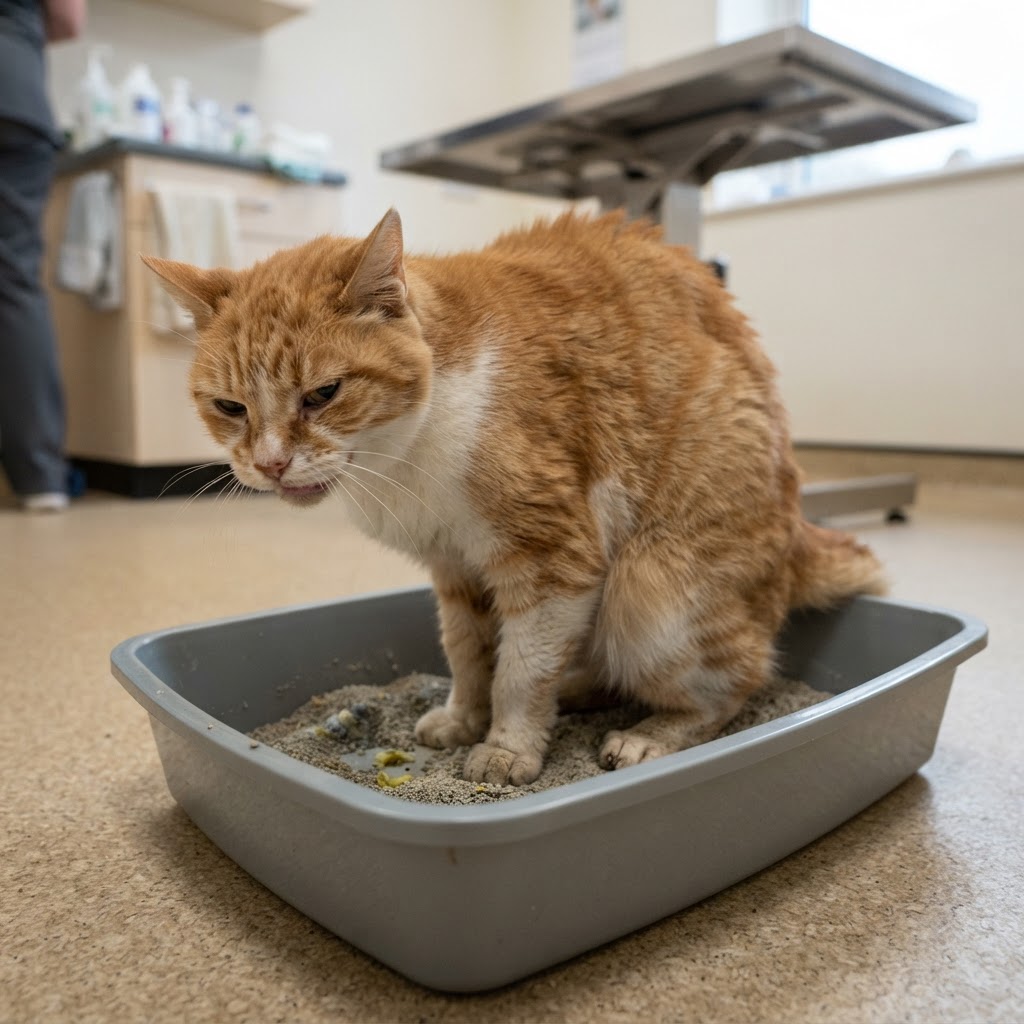
- Straining to urinate (spending prolonged time in the litter box)
- Frequent trips to the litter box with little or no urine produced
- Crying or vocalising while in the litter box
- Urinating in unusual places (outside the litter box, on beds, on floors)
- Blood in the urine (pink, red, or brownish urine)
- Excessive licking of the genital area
- Restlessness or discomfort
Later Signs (More Urgent)
- No urine production at all despite repeated attempts
- A firm, enlarged bladder felt in the lower abdomen (like a small balloon)
- Vomiting
- Lethargy and weakness
- Loss of appetite
- Hiding or withdrawn behaviour
- Collapse
Critical Signs (Life-Threatening)
- Extreme lethargy or unresponsiveness
- Drooling (due to nausea from toxin buildup)
- Bradycardia (slow heart rate)
- Seizures
- Coma
Critical: If your male cat has been straining to urinate and has not produced urine for several hours, or if you can feel a hard, swollen bladder, go to an emergency vet immediately. Every hour counts.
Why a Blocked Bladder Is Fatal
When the bladder is blocked and urine cannot pass, the kidneys continue producing urine. The bladder fills beyond its capacity, causing:
- Extreme pain: The overfull bladder is agonisingly painful
- Bladder damage: The bladder wall can rupture or suffer permanent damage
- Kidney shutdown: Back pressure prevents the kidneys from filtering blood
- Toxin buildup: Without urine output, waste products (urea, creatinine, potassium) accumulate in the blood
- Potassium poisoning: High potassium levels disrupt the heart's electrical system
- Cardiac arrest: The heart can slow and ultimately stop
A cat with a complete urinary blockage can go from seemingly okay to critically ill in a matter of hours. Death typically occurs within 24-48 hours of complete blockage.
What to Do If You Suspect a Blockage
1. Call Your Vet or Emergency Clinic NOW
Do not wait to "see if it improves." Do not try home remedies. Call your vet immediately and tell them you suspect a urinary blockage. Most clinics will see blocked cats as a priority emergency.
2. Transport Your Cat Safely
- Use a secure carrier
- Keep the cat calm and warm
- Do not give any food or water (in case anaesthesia is needed)
- Do not press on the abdomen - this can rupture the bladder
3. Do NOT Attempt to Help at Home
- Do not try to express the bladder yourself (this can rupture it)
- Do not give human pain medications
- Do not wait "until morning" to see if it resolves
If you are unsure where to go, find the nearest open vet using your postcode, or use our AI triage tool to assess the urgency.
What Happens at the Vet
Your vet will:
- Confirm the blockage through physical examination and possibly imaging
- Sedate or anaesthetise your cat to allow treatment
- Pass a urinary catheter to relieve the obstruction and empty the bladder
- Flush the bladder to remove sediment, stones, or inflammatory material
- Place an indwelling catheter to keep the urethra open during recovery
- Administer IV fluids to flush out accumulated toxins and support kidney function
- Provide pain relief and anti-inflammatory medication
- Monitor blood work for kidney values and potassium levels
Most blocked cats require hospitalisation for 2-5 days. In severe cases, surgery (perineal urethrostomy) may be needed to create a wider urethral opening, especially if the blockage recurs.
The cost of treating a urinary blockage can be significant. If you are concerned about costs, see our pricing page for information about our health plans.
Risk Factors and Prevention
Risk Factors
- Sex: Male cats (especially neutered males) are at highest risk
- Age: Most common in cats 1-10 years old
- Diet: Dry-only diets increase risk due to lower water intake
- Weight: Overweight cats are at higher risk
- Stress: Stress can trigger episodes of feline lower urinary tract disease (FLUTD)
- Multi-cat households: Increased stress and litter box competition
- Indoor-only lifestyle: May contribute to inactivity and lower water intake
Prevention Strategies
- Feed a high-moisture diet: Wet food or water added to dry food significantly increases water intake
- Provide multiple water sources: Use water fountains and bowls in different locations
- Maintain a healthy weight: Monitor food portions and encourage activity
- Reduce stress: Provide multiple litter boxes (one per cat plus one extra), scratching posts, hiding spots, and vertical spaces
- Keep litter boxes clean: Cats may hold their urine if the box is dirty
- Consider a urinary health diet: If your cat has had previous issues, your vet may recommend a prescription diet that controls urine pH and mineral content
- Encourage water intake: Try a pet water fountain, add water to food, or use flavoured water (tuna water)
The Bottom Line
A urinary blockage in a cat is one of the most time-critical emergencies in veterinary medicine. If your cat - especially a male - is straining to urinate and producing little or no urine, do not wait. Call your vet or emergency clinic right now.
Every hour that passes without treatment increases the risk of irreversible kidney damage and death. With prompt veterinary care, most blocked cats recover fully. Without it, the outcome is fatal.
This is not an article to bookmark for later. If you are reading this because your cat is straining to pee right now, close this page and call your vet.
Frequently Asked Questions
Disclaimer: This article is for educational purposes only and is not a substitute for professional veterinary advice. If you're concerned about your pet's health, use our AI triage assessment or consult a licensed veterinarian.