Bottom line: While hairballs are common, vomiting that happens multiple times a week could indicate underlying digestive issues or obstructions. If your cat strains to vomit without producing anything, see a vet.
| Situation | Suggested action |
|---|---|
| Straining with no hairball result | Emergency vet visit |
| Vomiting daily | Schedule vet exam |
| Loss of appetite with vomiting | Schedule vet exam |
| Occasional monthly hairball | Brush cat more often |
The 3 AM Serenade
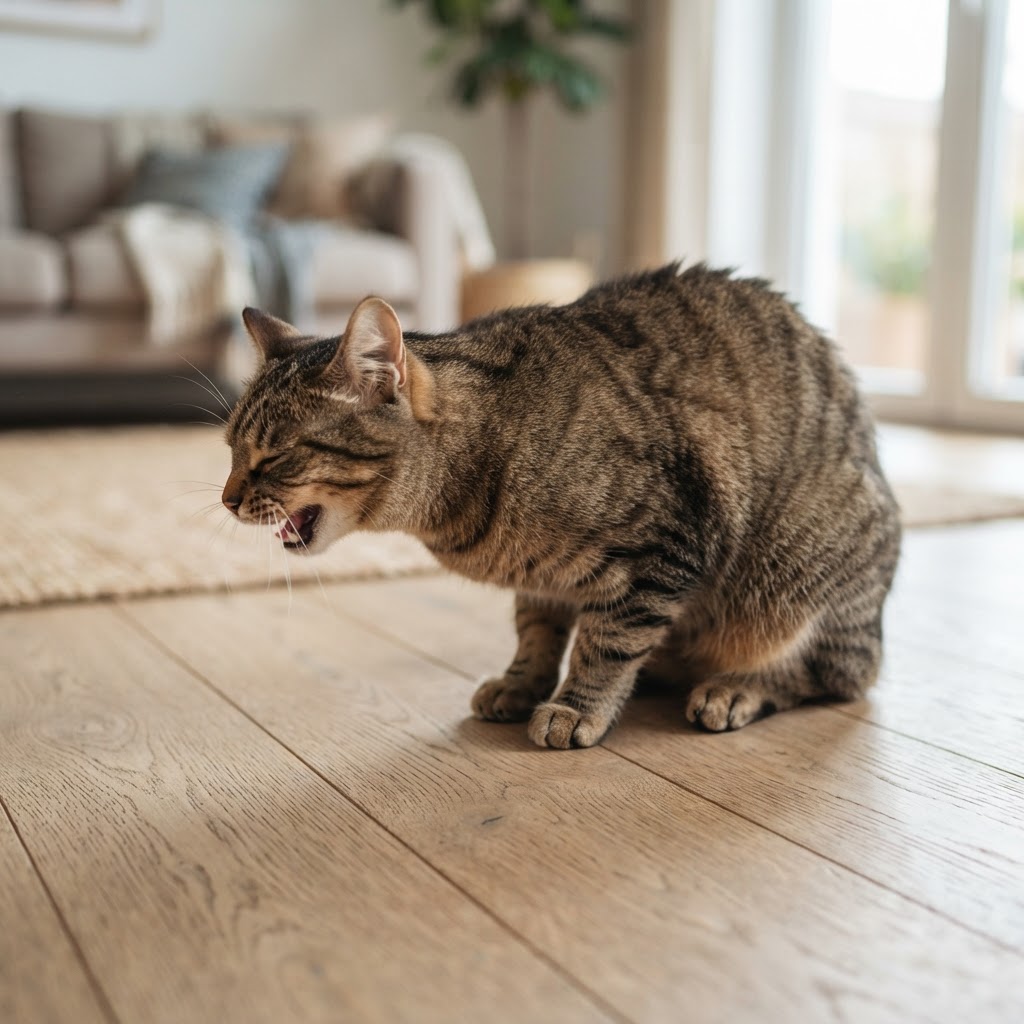
It's the middle of the night. You're jolted awake by the unmistakable sound: hack, hack, gag, slurp, splat. Your cat has deposited a small, dark, cylindrical gift on your bedroom carpet.
Hairballs. Every cat owner knows them. But how many is too many? When is a hairball just a hairball, and when is it something more serious?
What Is a Hairball - and Why Do Cats Get Them?
Cats are fastidious groomers. They spend up to 30% of their waking hours grooming themselves, using their rough tongues to catch loose fur. Most of this fur passes through the digestive tract and comes out in the litter tray. But some fur accumulates in the stomach, forming a trichobezoar - the medical term for a hairball.
When the mass becomes large enough, the cat vomits it up. The typical hairball is:
- 🐾 Cylindrical (not round - it takes the shape of the oesophagus)
- Dark brown or black (from stomach acid and digestive juices)
- Slimy and wet
- Often accompanied by a small amount of clear or yellow fluid
How Often Is Normal?
A healthy cat may bring up a hairball once every 1–2 months. Some cats - especially long-haired breeds - may produce them more frequently. But if your cat is producing hairballs more than once a week, or if the frequency has increased, it's worth investigating.
Hairballs aren't always "just hairballs." Sometimes what looks like a hairball is actually vomiting caused by an underlying problem - and the hair is just along for the ride.
When Hairballs Become a Problem
While occasional hairballs are normal, frequent or excessive hairballs can indicate:
1. Excessive grooming
Some cats groom excessively due to stress, anxiety, allergies, or pain. This leads to more fur being swallowed and more hairballs. Look for:
- 🐾 Bald patches or thinning fur
- Red, irritated skin
- Hairballs more frequent than usual
2. Gastrointestinal disease
If the digestive tract isn't moving normally, fur can accumulate. Conditions that can cause this include:
- Inflammatory bowel disease (IBD) - chronic inflammation of the digestive tract
- Gastrointestinal motility disorders
- Intestinal partial obstruction - sometimes caused by a large hairball itself
- Food allergies or intolerances
3. A hairball that's stuck
Sometimes a hairball doesn't come up - and doesn't pass through. A large trichobezoar can cause an intestinal obstruction, which is a life-threatening emergency.
Signs of an obstruction:
- 🐾 Repeated, unproductive retching - trying to vomit but nothing comes up
- Loss of appetite
- Lethargy
- Abdominal pain - hunched posture, reluctance to be touched
- Constipation or no stool production
- Dehydration
If your cat is repeatedly retching without producing anything, or if they've stopped eating and are lethargic, go to the vet immediately. A stuck hairball can cause a life-threatening obstruction.
When to See the Vet
Contact your vet if:
- 🐾 Your cat is producing hairballs more than once a week
- The hairballs are accompanied by food or bile (not just fur)
- Your cat is vomiting frequently (separate from hairball episodes)
- Your cat has diarrhoea, lethargy, or loss of appetite
- Your cat is repeatedly retching without producing anything
- Your cat has abdominal pain or a swollen belly
- The hairballs have a particularly foul smell
- Your cat is losing weight
- The pattern has changed recently - more frequent, different appearance, or new symptoms
How to Reduce Hairballs
If your cat is otherwise healthy and just prone to hairballs, these strategies can help:
1. Groom your cat regularly
The most effective way to reduce hairballs is to remove loose fur before your cat can swallow it. Brush your cat daily (or every other day) with a brush appropriate for their coat type. For long-haired cats, consider a de-shedding tool (like a Furminator) once a week.
2. Use a hairball control diet
Many commercial cat foods are formulated to reduce hairballs. They typically contain:
- Higher fibre - to help move fur through the digestive tract
- Omega-3 and omega-6 fatty acids - to improve coat health and reduce shedding
3. Hairball remedies
Hairball gels or pastes (such as Katalax or Laxatone) are malt-flavoured lubricants that help fur slide through the digestive tract. Most cats will lick them off your finger. Use them 2–3 times a week for cats prone to hairballs.
4. Cat grass
Growing cat grass (usually oat, wheat, or barley grass) gives cats a source of fibre and something to chew on. It can help with digestion and reduce hairballs.
5. Encourage water intake
Cats are notoriously poor drinkers. Dehydration slows the digestive tract and makes hairballs worse. Encourage drinking with:
- 🐾 A cat water fountain - running water is more appealing
- Multiple water bowls in different locations
- Wet food - provides significant moisture
6. Reduce shedding
- Feed a high-quality diet rich in omega-3 and omega-6 fatty acids (for coat health)
- Keep your cat at a healthy weight - obese cats can't groom effectively and may develop matted fur
- Address any skin conditions - allergies or parasites can cause excessive shedding
- Reduce stress - stressed cats may groom excessively
What NOT to Do
- ❌ Do not give your cat petroleum jelly meant for humans - it can interfere with nutrient absorption and isn't formulated for cats
- ❌ Do not assume all vomiting is "just hairballs" - if your cat is vomiting frequently, there may be an underlying cause
- ❌ Do not ignore a cat who is retching but not producing anything - this can be a sign of obstruction
- ❌ Do not give your cat laxatives without veterinary instruction
The Bottom Line
Occasional hairballs are a normal part of being a cat. But frequent hairballs - or hairballs accompanied by other symptoms - can indicate an underlying problem. The key is to know your cat's normal pattern and to pay attention to changes. If your cat is suddenly producing more hairballs, vomiting more frequently, or showing any signs of illness, don't dismiss it as "just hairballs." Call your vet.
Frequently Asked Questions
Disclaimer: This article is for educational purposes only and is not a substitute for professional veterinary advice. If you're concerned about your pet's health, use our AI triage assessment or consult a licensed veterinarian.