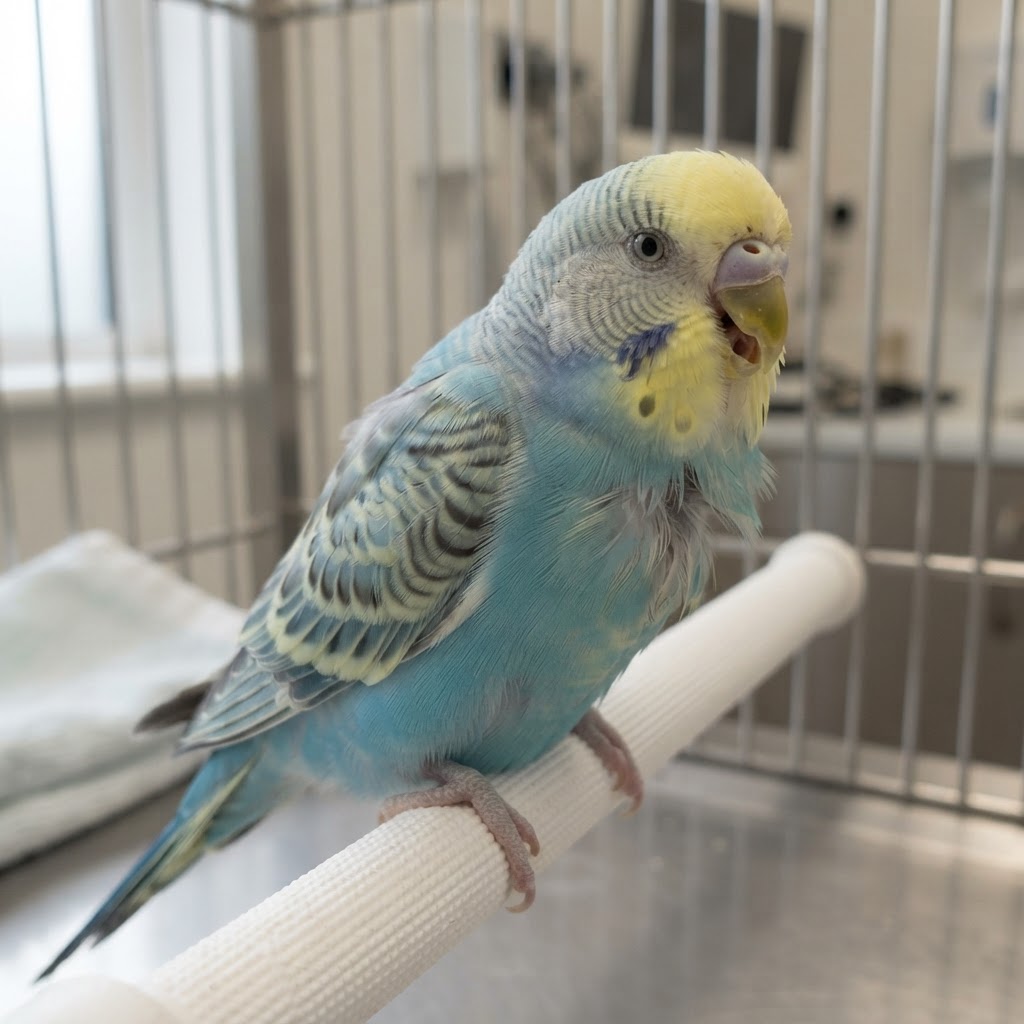
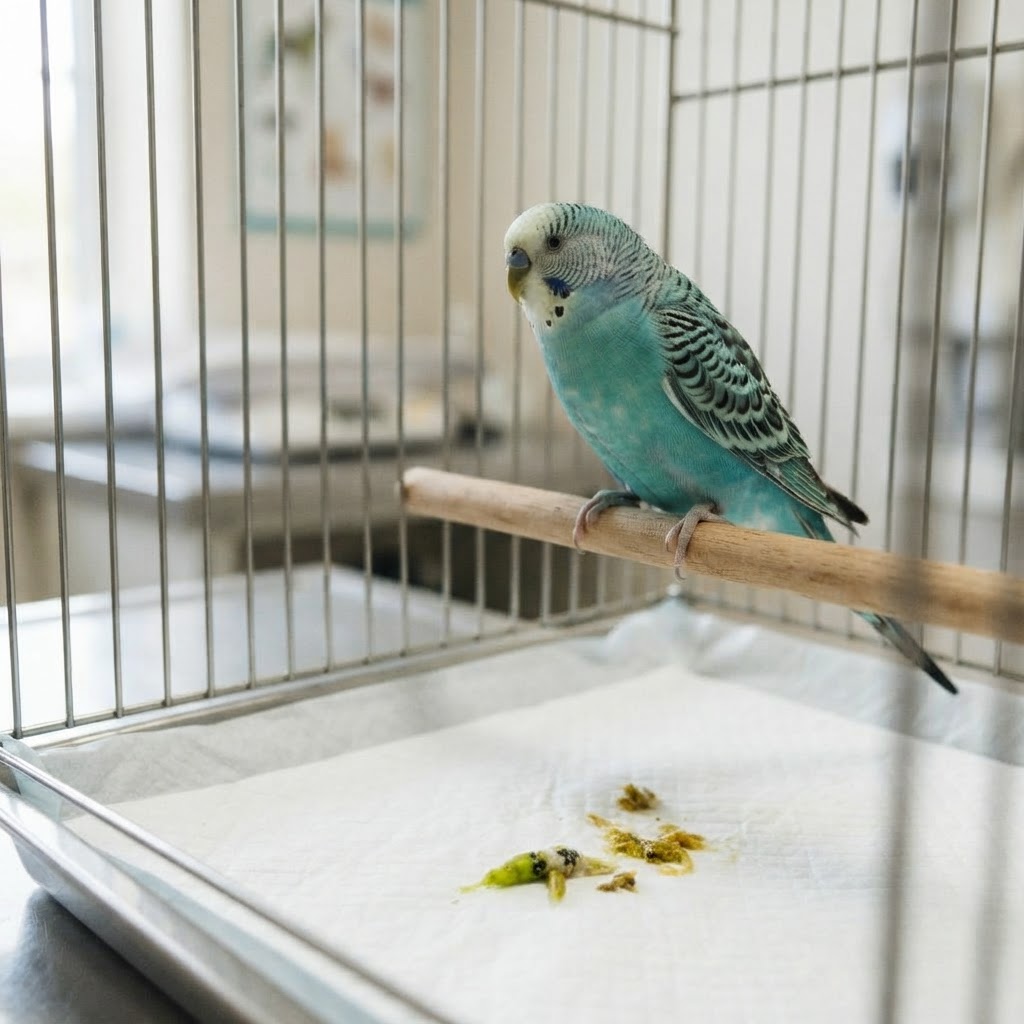
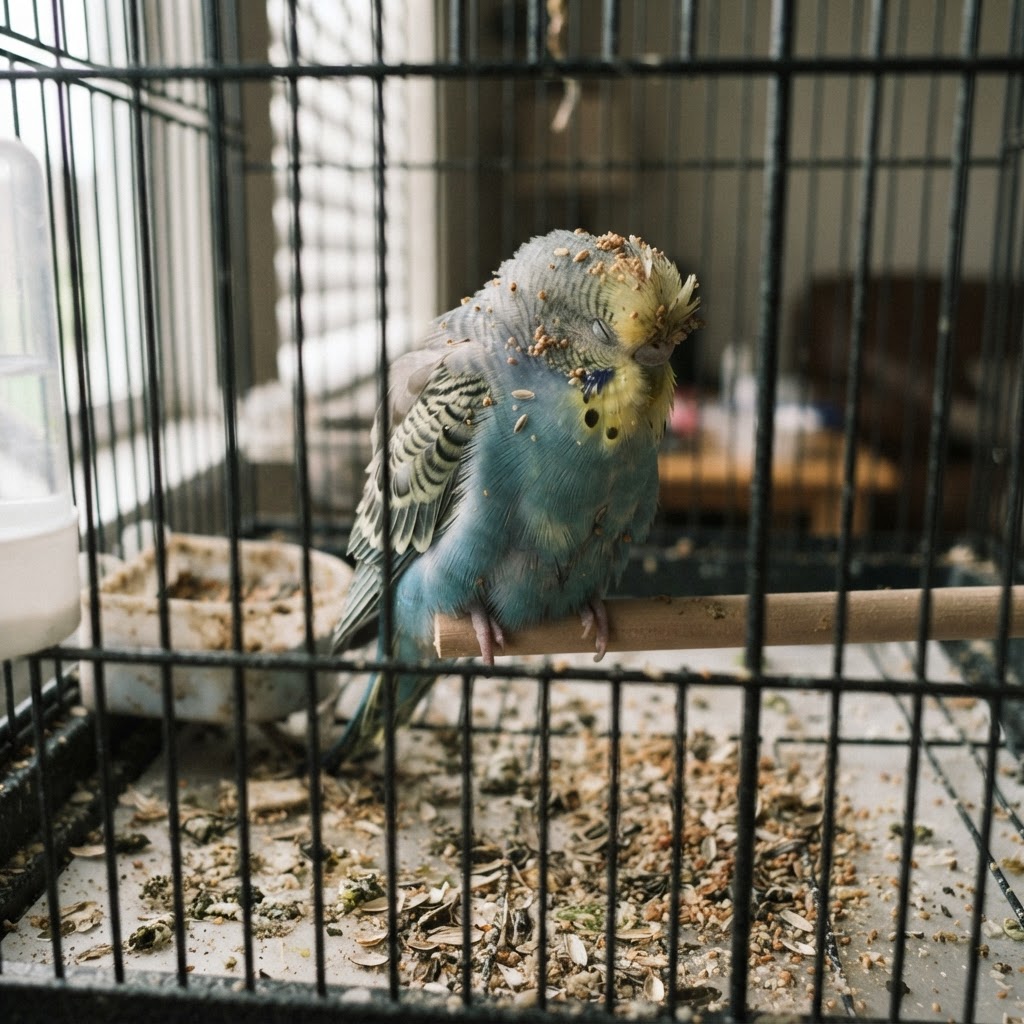
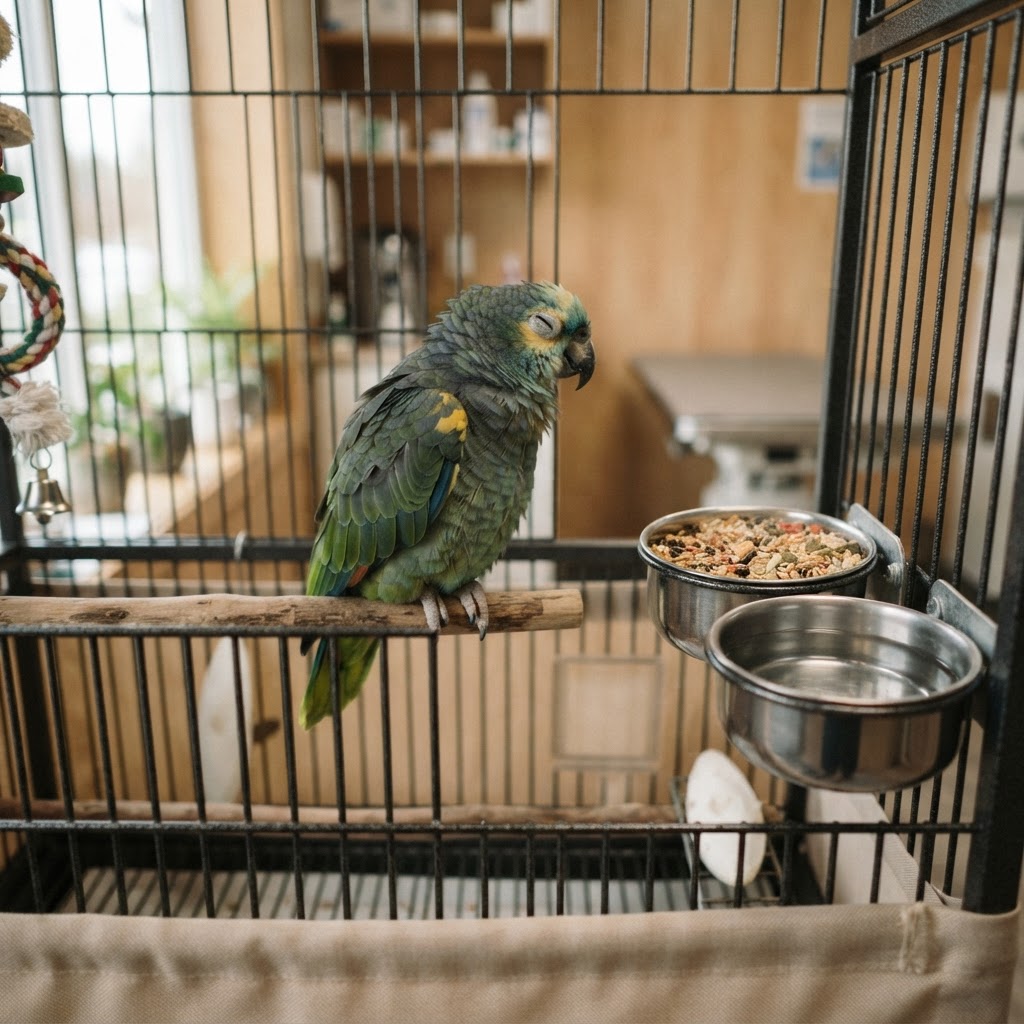
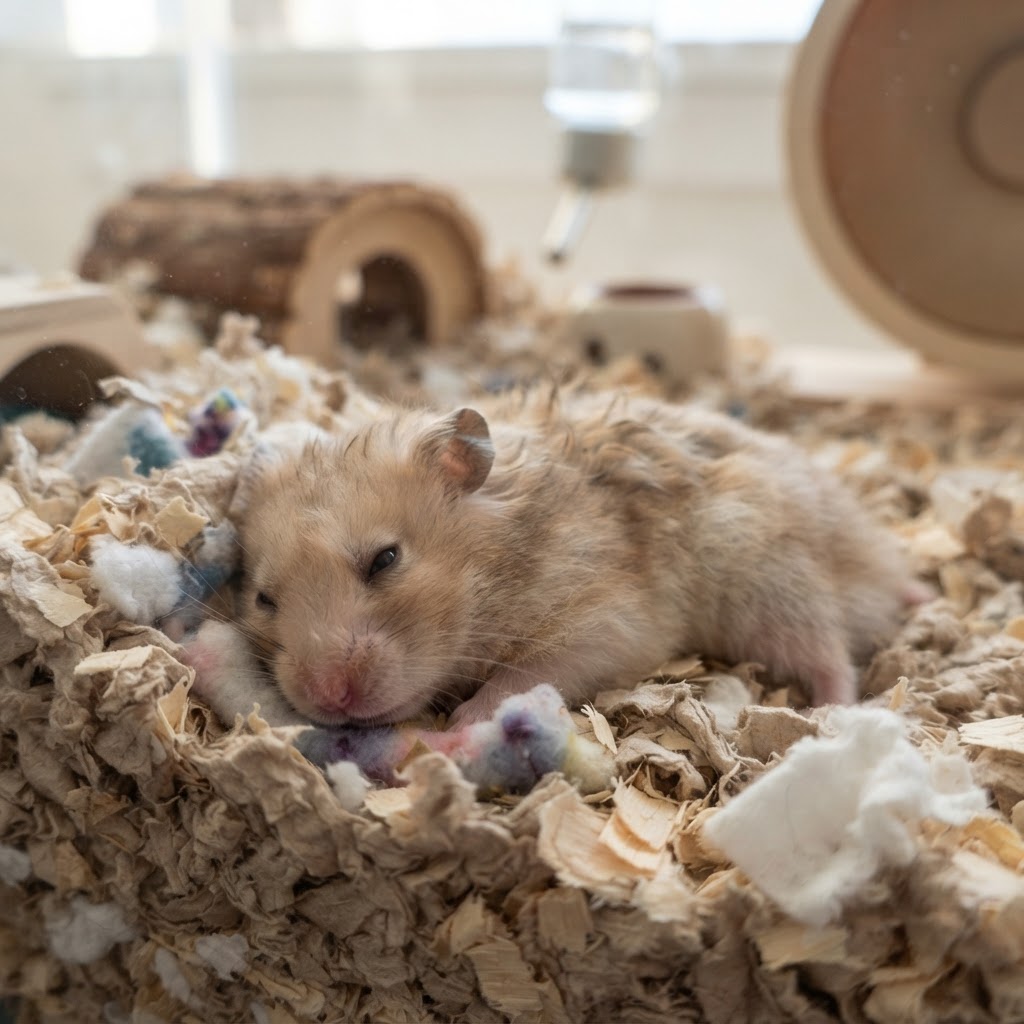
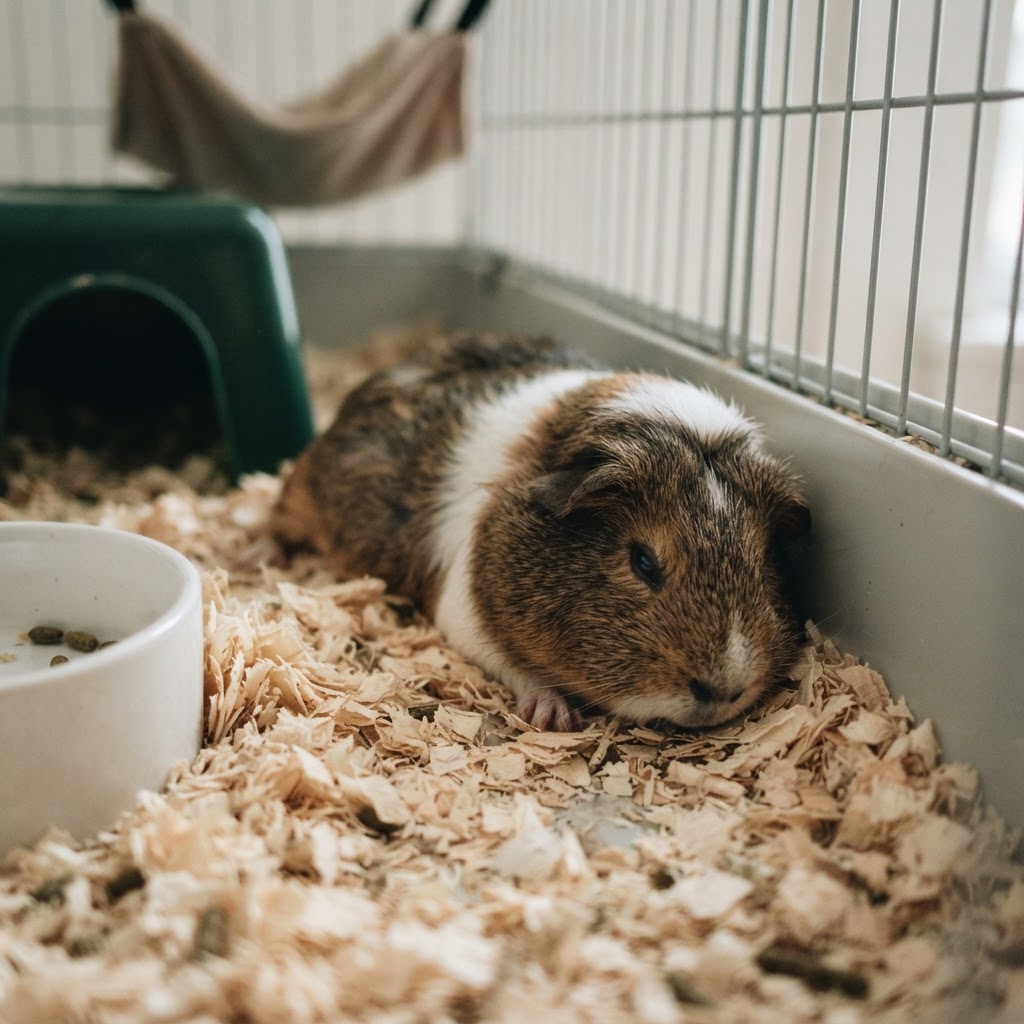
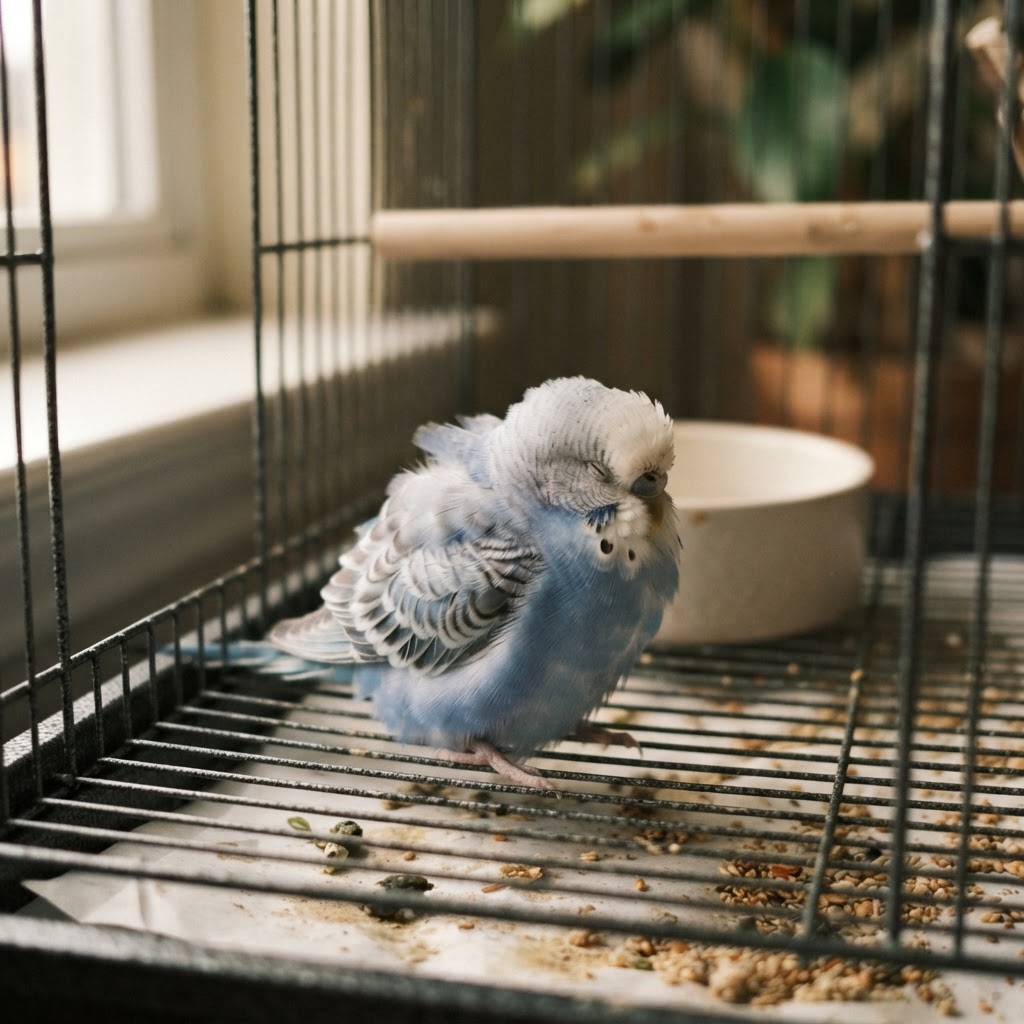
Bottom line: A bird sitting fluffed up and not moving is one of the most reliable signs of a seriously ill bird, birds hide illness until they're very sick, so a fluffed, quiet bird on the cage floor is often in real trouble and needs an avian vet the same day.
| Situation | Suggested action |
|---|---|
| Brief fluffing before sleep or in a draught, otherwise bright | Warm and quiet, monitor |
| Fluffed and not moving for hours, or off food | Same-day avian vet |
| Fluffed + on cage floor, breathing effort, or not eating | Emergency vet now |
Why a fluffed-up bird is a worry
Birds are prey animals and conceal signs of illness with extraordinary skill, a sick wild bird gets eaten, so pet birds carry the same instinct. By the time a bird is visibly fluffed up, quiet, and not moving, it is usually quite unwell. Fluffing the feathers traps air for warmth, which a sick bird does because its body temperature is dropping or it's fighting infection. A bird that's also sitting low, on the cage floor, or not eating is a genuine emergency, because birds have very little reserve and can decline over hours rather than days.
What can cause it
Illness of almost any kind makes a bird fluff up and go quiet: respiratory infection (the most common serious cause), a gut infection, egg binding in females, an internal mass, or organ disease. Cold or draughts make a bird fluff to keep warm, but if warming doesn't fix it within an hour or two, illness is likely. Stress and poor diet weaken the immune system. Egg binding in a female (straining, a swollen belly, and a fluffed, weak bird) is an emergency.
When to worry, the red flags
Brief fluffing before sleep or in a cool room, with a bright bird, can be warmed and watched. See an avian vet for:
- Fluffed and not moving for more than a few hours
- Sitting on the cage floor or unable to perch
- Not eating or drinking
- Tail bobbing, open-mouth breathing, or clicking, respiratory distress
- A swollen belly, or straining (possible egg binding in females)
- Weight loss, the breastbone feels sharp
- Discharge from eyes or nares, or a matted, dirty vent
- Lethargy, weakness, or unable to grip a perch
What to do right now
- Warm the bird, move to a quiet, draught-free spot and provide gentle heat (a heat lamp or a warm room around 28–30 °C).
- Offer favourite food and water within easy reach; a sick bird may not move to eat.
- Keep it quiet and dim to reduce stress.
- Note the breathing, tail bobbing or open-mouth breathing means a vet now.
- Call an avian vet the same day, a fluffed, quiet bird is not a "wait and see" situation.
What NOT to do
- ❌ Don't wait, birds decline over hours, not days.
- ❌ Don't use aerosols, smoke, or strong scents around a sick bird.
- ❌ Don't give human medications.
- ❌ Don't handle the bird more than needed; stress worsens a fragile patient.
How an avian vet diagnoses and treats it
An avian vet will examine the bird, check the weight and breathing, and may run bloodwork, a faecal test, or X-rays. Treatment depends on the cause, warmth, fluids, antibiotics, crop feeding, or surgery for egg binding. Because birds hide illness, hospitalisation with supportive care is often needed, and earlier treatment has far better outcomes.
Preventing illness in birds
Keep the cage clean and draught-free with a steady, comfortable temperature, feed a balanced diet (not just seed), and quarantine new birds. Watch your bird daily, a bird that's eating, perching, and vocalising normally is much easier to catch early when something changes.
When to wait, and when to act now
Brief fluffing in a cool room, with a bright bird, can be warmed and watched briefly. Fluffed and not moving for hours, on the floor, breathing hard, or not eating means an avian vet now, birds go downhill fast.
Run a free AI triage assessment for personalised next steps, or find an avian vet near you.
Frequently Asked Questions
Disclaimer: This article is for educational purposes only and is not a substitute for professional veterinary advice. If you're concerned about your pet's health, use our AI triage assessment or consult a licensed veterinarian.