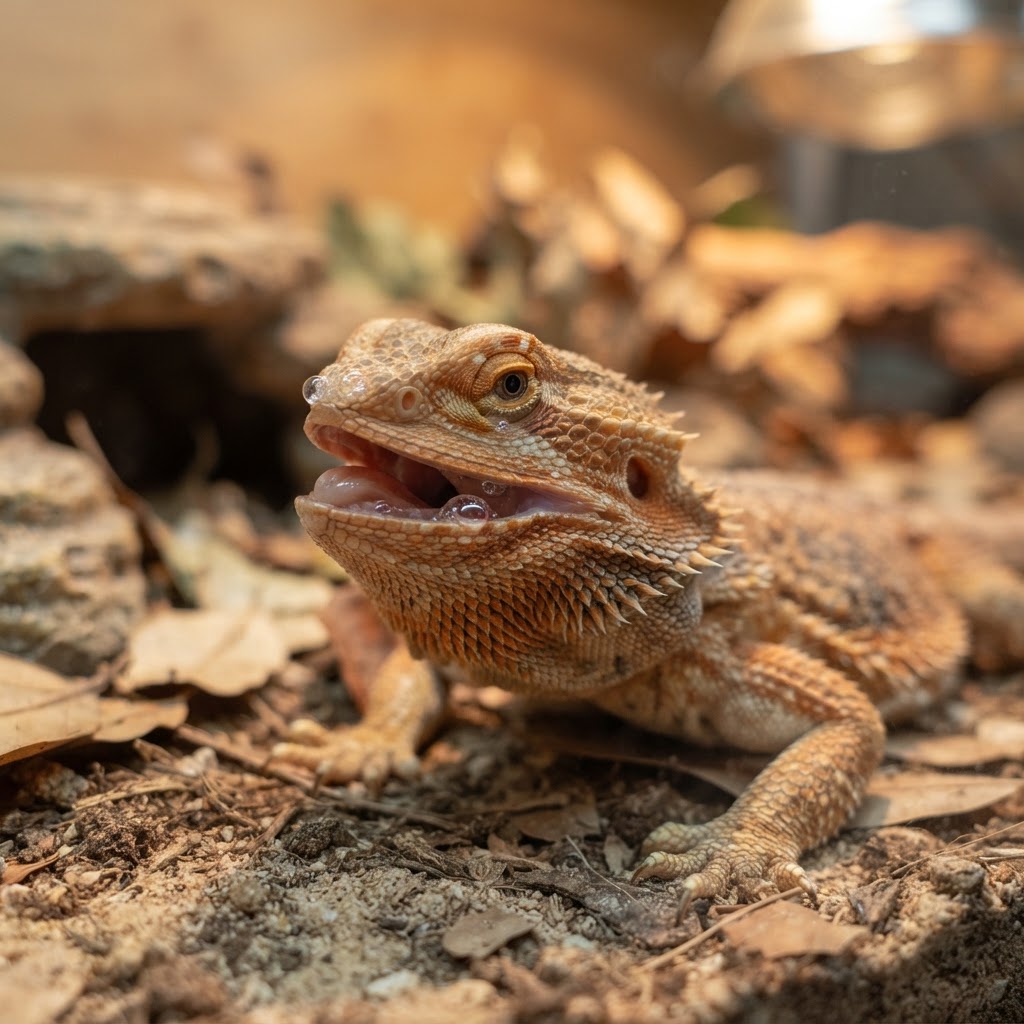
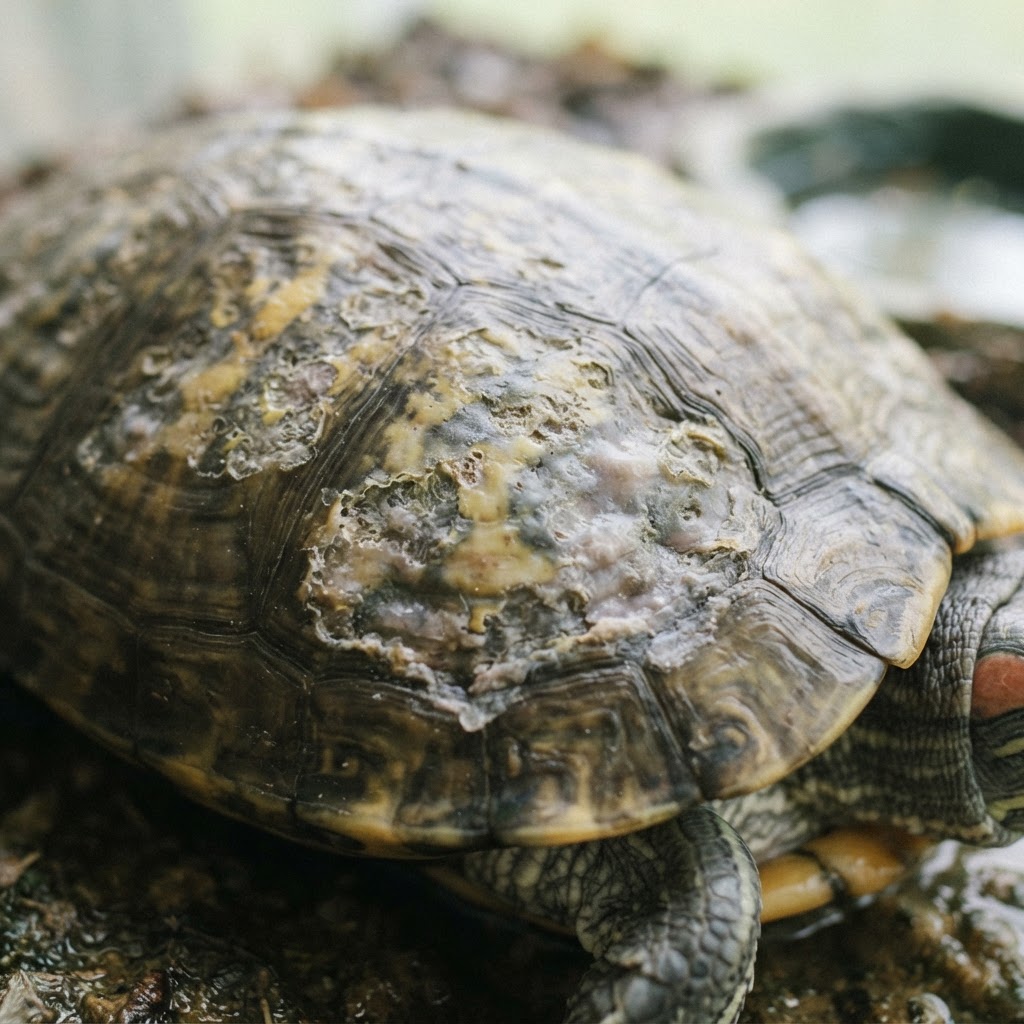
Bottom line: Bearded dragons can go off food for short, normal spells, a shed, a cool-down, or a brief stress, but a dragon that stops eating and also looks lethargic, weak, or thin, or has a soft jaw or no droppings, needs a reptile vet. The first step is always to check temperature, UVB, and hydration, because most feeding refusals are a husbandry problem, not disease.
| Situation | Suggested action |
|---|---|
| Skipped a few meals, otherwise bright and active | Check temps/UVB, offer favourites, monitor |
| Not eating for 1–2 weeks (adult), or with weight loss | Vet visit within a few days |
| Not eating + soft jaw, lethargy, or no droppings | Same-day / emergency vet |
Why a bearded dragon stops eating
Appetite in a bearded dragon is tightly linked to its environment. Reptiles are "cold-blooded," so they can only digest properly when the basking temperature is high enough and they have working UVB light to process calcium and vitamin D3. When something is off with the setup, the first sign is usually that the dragon stops eating, long before any other symptom appears. That's why a feeding refusal is as much a husbandry check as a health check, and why the answer almost always starts with thermometers and the UVB bulb.
What can cause it
Husbandry problems are the most common cause: a basking spot that's too cool, a UVB bulb that's old or the wrong type, or stress from over-handling, a new environment, or an aggressive cage-mate. Normal pauses include brumation (a winter slowdown in healthy adults) and a shed cycle, both of which can reduce appetite for a few days.
Medical causes include impaction from loose substrate, metabolic bone disease (calcium/UVB/vitamin D3 deficiency), parasites, a respiratory or gut infection, kidney disease in older dragons, and egg binding in females. A soft, rubbery jaw, bent legs, or tremors point to metabolic bone disease, which is common and serious.
When to worry, the red flags
A bright adult that skips a few meals during a shed or a mild cool spell can be watched. See a reptile vet for:
- Not eating for more than 1–2 weeks in an adult (or several days in a juvenile)
- Lethargy, weakness, or spending all day in the cool hide
- Weight loss, the tail and hips thin, and the fat pads on the head shrink
- A soft, rubbery jaw or bent legs (metabolic bone disease)
- No droppings, or straining to pass them
- Runny, smelly droppings, parasites or infection
- Sunken eyes (dehydration)
- A dark or black beard with other stress signs
What to do right now
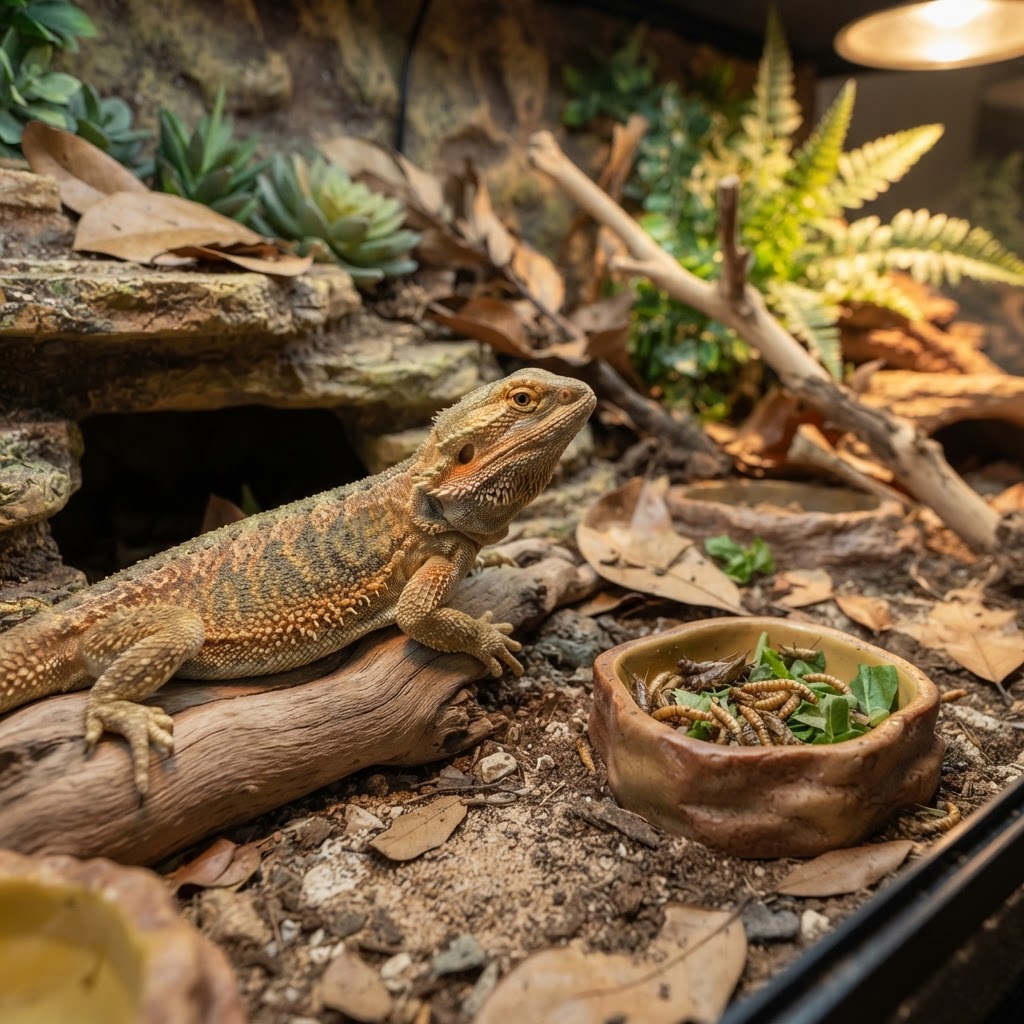
- Check the basking temperature (38–42 °C) and the cool end (24–28 °C) with a digital thermometer, not a guess.
- Check the UVB bulb is working and within its lifespan (tubes usually 6–12 months).
- Offer a favourite live insect or greens by hand or tong.
- Try a warm soak (shallow, 32–35 °C) for 15 minutes to hydrate and stimulate appetite.
- Check for stuck shed, a firm belly, or a black beard.
- Book a reptile vet if not eating persists beyond 1–2 weeks, or sooner with lethargy, weight loss, or a soft jaw.
What NOT to do
- ❌ Don't force-feed without vet guidance, it can cause injury or regurgitation.
- ❌ Don't use loose sand or calci-sand as substrate; impaction risk.
- ❌ Don't ignore a juvenile not eating, they weaken and dehydrate fast.
- ❌ Don't assume a black beard or skipped meals is "just attitude."
How a reptile vet diagnoses and treats it
The vet will review your husbandry (temperatures, UVB, diet), examine the dragon, and often run a faecal test for parasites. Bloodwork and X-rays help if impaction, organ disease, or egg binding are suspected. Treatment depends on the cause: rehydration, assisted feeding, deworming, antibiotics, calcium and vitamin D3 support, or, for severe impaction, surgery. Correcting the setup is almost always part of the fix.
Preventing appetite problems
Provide a verified basking gradient, replace UVB tubes on schedule, gut-load and dust feeder insects with calcium and a multivitamin, use solid substrate, and quarantine new reptiles with faecal checks. A correct setup prevents most feeding refusals before they start.
When to wait, and when to act now
A healthy adult skipping food for a week in winter may be brumating, but should still look bright and hydrated. Not eating with lethargy, weight loss, a soft jaw, or no droppings is not brumation, book a reptile vet this week, sooner for juveniles or soft-jaw cases.
Run a free AI triage assessment for personalised next steps, or find a reptile vet near you.
Frequently Asked Questions
Disclaimer: This article is for educational purposes only and is not a substitute for professional veterinary advice. If you're concerned about your pet's health, use our AI triage assessment or consult a licensed veterinarian.