Bottom line: Wet tail is a serious, contagious bacterial infection of the gut in hamsters, especially young Syrians, that causes watery diarrhoea, a wet soiled bottom, and rapid decline. It can be fatal within 24–48 hours, so a hamster with a wet bottom and diarrhoea needs an exotic vet the same day.
| Situation | Suggested action |
|---|---|
| Slight dampness, hamster bright and eating | Clean cage, monitor very closely |
| Wet bottom + diarrhoea, or hunched/quiet | Same-day exotic vet |
| Wet tail + not eating, lethargy, or blood | Emergency vet now |
What wet tail actually is
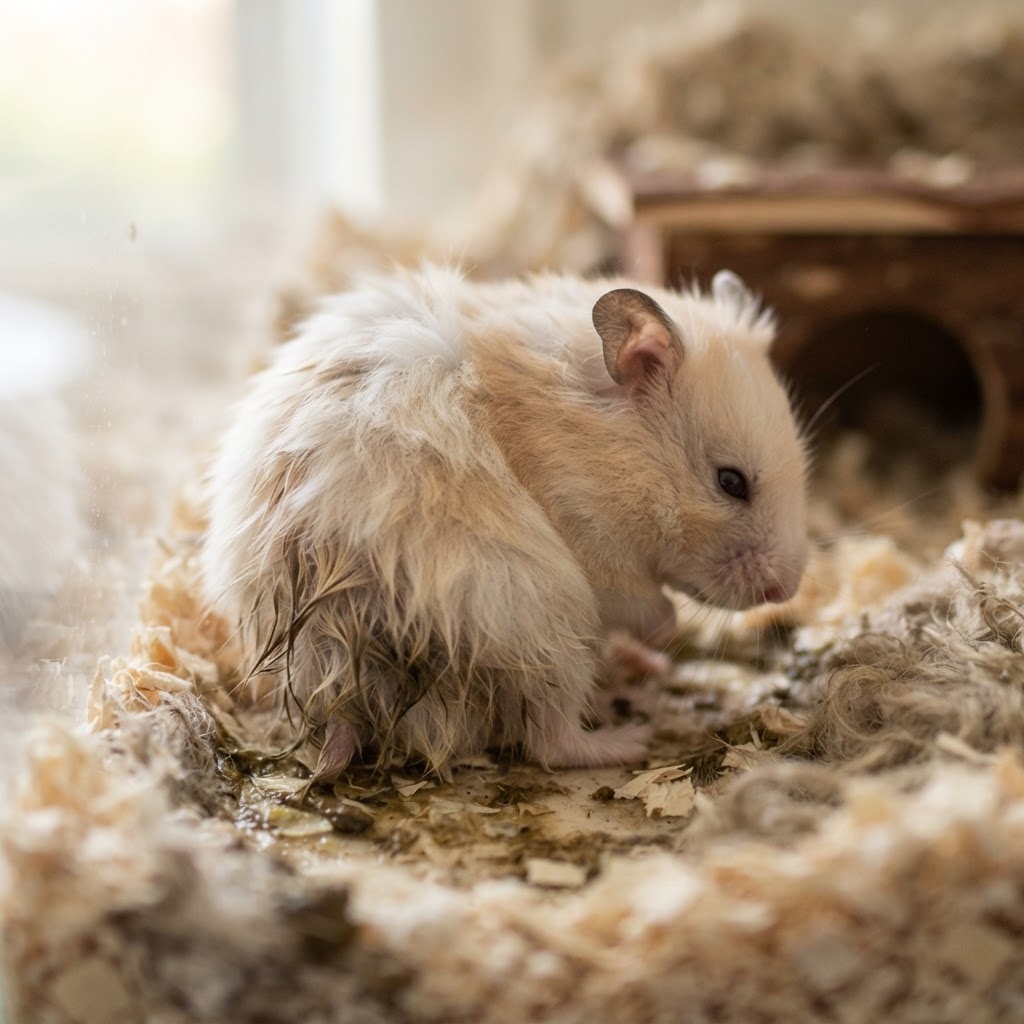
"Wet tail" (proliferative ileitis) is a bacterial infection, most often Lawsonia, that inflames the lower small intestine and causes profuse, watery diarrhoea. The "wet tail" name comes from the constantly soiled, damp fur around the bottom. It most often strikes young Syrian hamsters under about 3–4 months, often shortly after a move, weaning, or other stress, and it can kill quickly through dehydration. It is not the same as simple soft stools from a food change, and it is contagious to other hamsters.
What can cause it
Stress is the classic trigger: a new home, weaning, shipping, overcrowding, or a change in diet. Bacterial infection takes hold in a stressed gut, causing the inflammation and diarrhoea. Other things can look similar and need telling apart: dietary diarrhoea (a food change or too much veg/fruit), parasites, antibiotic-associated diarrhoea (some antibiotics are toxic to hamsters' gut flora), and a dirty cage.
When to worry, the red flags
Any hamster with a genuinely wet bottom and loose stool should see a vet, because wet tail moves fast. Treat as urgent if you see:
- A wet, soiled, matted bottom with diarrhoea
- A hunched, quiet, or lethargic hamster, pain and dehydration
- Not eating or drinking, or weight loss you can see
- Blood in the diarrhoea, or a swollen belly
- A matted, wet, or pasted-over bottom blocking the vent
- A young hamster that's recently been moved or stressed, high risk
- Other hamsters in the home, separate them, it's contagious
What to do right now
- Isolate the affected hamster from any others and wash your hands between handling.
- Keep them warm (around 22–24 °C) and offer water from a spoon or syringe; dehydration is the killer.
- Clean the bottom gently with warm water if it's matted, so they can pass stool.
- Don't change the diet abruptly or offer lots of watery veg.
- Call an exotic vet the same day, wet tail needs antibiotics and supportive care, and delay is often fatal.
What NOT to do
- ❌ Don't wait "to see if it clears up", wet tail can kill within a day or two.
- ❌ Don't use leftover or human antibiotics, many are fatal to hamsters' gut.
- ❌ Don't put the hamster back with others, wet tail is contagious.
- ❌ Don't withhold water, dehydration is the main danger.
How a vet diagnoses and treats it
An exotic vet will examine the hamster, assess hydration, and may test a stool sample. Treatment usually means antibiotics safe for hamsters, fluids under the skin or by mouth, pain relief, and sometimes probiotics and assisted feeding. Severe cases need hospitalisation. Caught early, many hamsters recover; left even a day, the outlook is poor.
Preventing wet tail
Reduce stress around moves and weaning, keep the cage clean and at a steady warm temperature, introduce new hamsters separately, and avoid sudden diet changes. A calm, clean environment is the best defence.
When to wait, and when to act now
A slightly damp bottom in a bright, eating hamster can be watched very closely for a few hours after a cage clean. A wet bottom with diarrhoea, a hunched hamster, or one that's stopped eating needs an exotic vet the same day, and lethargy with blood or a very quiet young hamster means an emergency now.
Run a free AI triage assessment for personalised next steps, or find an exotic vet near you.
Frequently Asked Questions
Disclaimer: This article is for educational purposes only and is not a substitute for professional veterinary advice. If you're concerned about your pet's health, use our AI triage assessment or consult a licensed veterinarian.