Bottom line
Most episodes of dog vomiting are mild and pass on their own within a few hours. Go to the vet immediately if your dog is vomiting repeatedly, vomits blood, has a swollen or painful belly, is collapsed, weak, or has a known toxin ingestion, these are emergencies. If your dog vomits once or twice but is otherwise bright and alert, you can usually monitor at home and withhold food for 6–12 hours.
Urgency action table
| What you see | Urgency | Action |
|---|---|---|
| Blood in vomit, collapse, bloated belly, known toxin, or vomiting with abdominal pain | 🔴 Emergency | Go to the nearest emergency vet now |
| Vomiting 3+ times in 24 hours, can't keep water down, lethargy, or vomiting lasting >24h | 🟠 Urgent | Contact your vet today |
| Vomiting once or twice, dog is bright and alert | 🟡 Soon | Monitor closely; bland diet; call vet if it continues |
| Single vomit after eating too fast, otherwise normal | 🟦 Monitor | Watch for further episodes |
Is dog vomiting always serious?
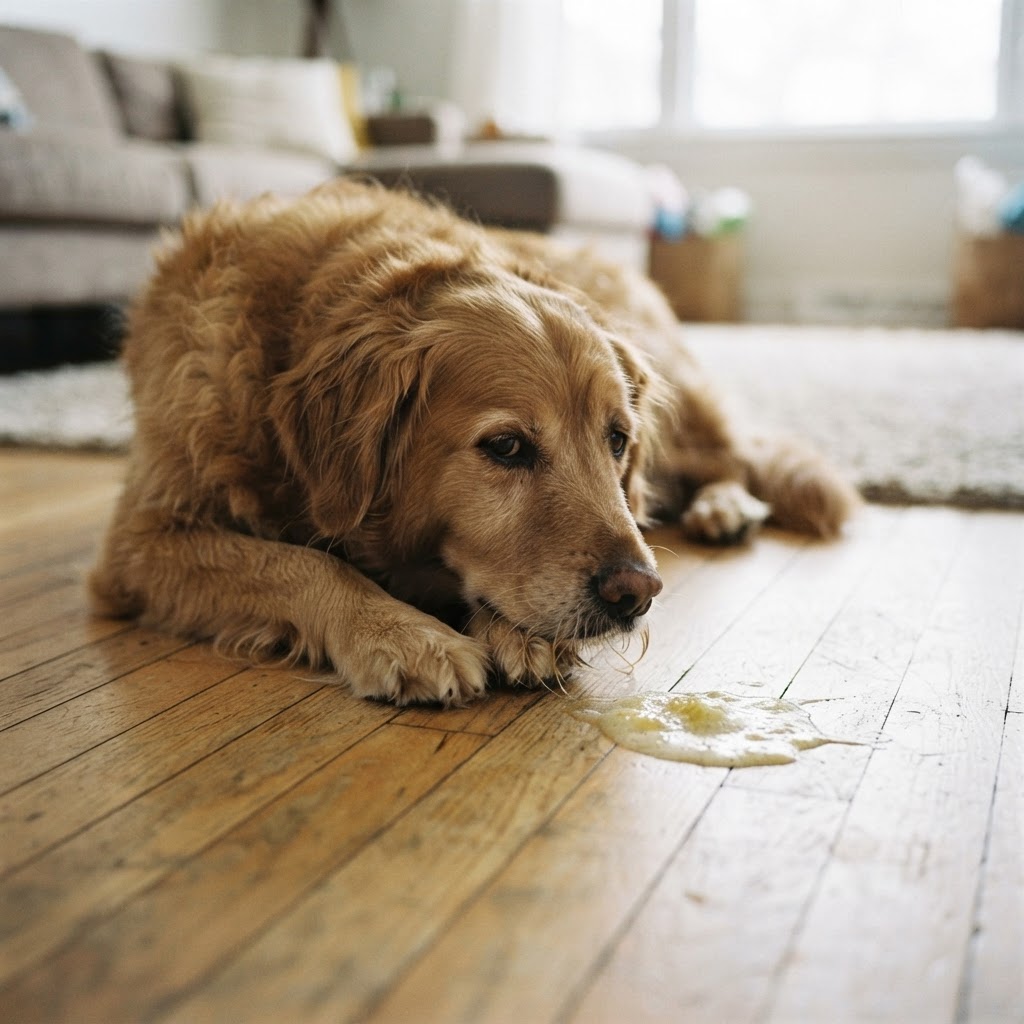
No. Dogs vomit for many harmless reasons, eating too fast, a sudden diet change, scavenging something foul, or motion sickness. A single vomit from an otherwise bright, hydrated dog is rarely an emergency. What matters is the pattern, the accompanying signs, and how your dog looks overall. A dog that vomits but then wants to play and eat again is very different from one that vomits and then becomes dull and withdrawn.
Red-flag signs, go to the emergency vet now
Seek immediate veterinary care if your dog shows any of the following alongside vomiting:
- Blood in the vomit (bright red, or dark and looking like coffee grounds)
- Vomiting that won't stop, repeated, forceful vomiting or inability to keep even water down
- A swollen, tight, or painful belly, especially with unproductive retching, which can indicate gastric dilatation-volvulus (GDV), a life-threatening emergency
- Collapse, weakness, or collapse, pale gums, or collapse
- Known ingestion of a toxin (xylitol, antifreeze, rat poison, chocolate, grapes/raisins, lilies if shared household, medication)
- Vomit that looks or smells like faeces (possible intestinal blockage)
- Vomiting with diarrhoea in a very young puppy, toy breed, or elderly dog, dehydration can develop quickly
What causes vomiting in dogs?
Common causes range from trivial to life-threatening:
- Dietary indiscretion, eating something they shouldn't (rubbish, fatty table scraps, a new treat)
- Sudden diet change, switching food too quickly
- Motion sickness, common in car travel, especially in puppies
- Infections, gastroenteritis, parvovirus (unvaccinated puppies), or other infectious causes
- Intestinal blockage, swallowed foreign body (toy, sock, bone, corn cob)
- Toxin ingestion, xylitol, chocolate, antifreeze, rat poison, grapes/raisins, human medications
- Pancreatitis, often triggered by fatty meals; causes repeated vomiting and abdominal pain
- Systemic illness, kidney or liver disease, Addison's disease, pyometra in unspayed females
- Motion, stress, or excitement, often self-limiting
What to do right now
- Withhold food for 6–12 hours to let the stomach settle. Keep water available in small, frequent amounts to prevent dehydration.
- Assess your dog's overall condition, bright and alert, or dull and weak? Check gum colour (should be pink) and skin tent (should snap back quickly when lifted).
- Do not force food or give human medications.
- If vomiting stops, reintroduce a bland diet, boiled, skinless chicken and white rice in small meals, over 24–48 hours before returning to normal food.
- If any red-flag sign appears, stop home care and go to the vet immediately.
What information your vet will need
To reach an accurate diagnosis, your vet will want to know:
- When the vomiting started and how many times it has happened
- What the vomit looked like (colour, presence of food, blood, or bile)
- What your dog last ate and whether the diet changed recently
- Any chance of scavenging, foreign-body ingestion, or toxin exposure
- Vaccination status (especially for puppies)
- Other symptoms, diarrhoea, lethargy, abdominal pain, changes in thirst or urination
- Current medications and pre-existing conditions
What to avoid
- Do not give human anti-nausea or pain medication (ibuprofen, paracetamol, Pepto-Bismol) unless a veterinarian has prescribed it.
- Do not force your dog to eat or drink large amounts at once, this often triggers more vomiting.
- Do not assume 'just a tummy bug' if your dog is a puppy, a toy breed, elderly, or has a swollen belly.
- Do not wait if you see blood, collapse, or a bloated abdomen, these are time-critical emergencies.
Assess your dog's symptoms now
Still unsure how urgent it is? Use our AI triage assessment for a personalised urgency rating based on your dog's symptoms, age, breed, and history. If your vet recommends urgent care, find an emergency vet near you.
Clinical reviewer: Dr. Mark Edwards, BVSc, MRCVS. Reviewed 3 August 2026.
This article is for educational purposes only and is not a substitute for professional veterinary diagnosis or treatment. Always consult a licensed veterinarian for proper care of your pet.
Frequently Asked Questions
Disclaimer: This article is for educational purposes only and is not a substitute for professional veterinary advice. If you're concerned about your pet's health, use our AI triage assessment or consult a licensed veterinarian.