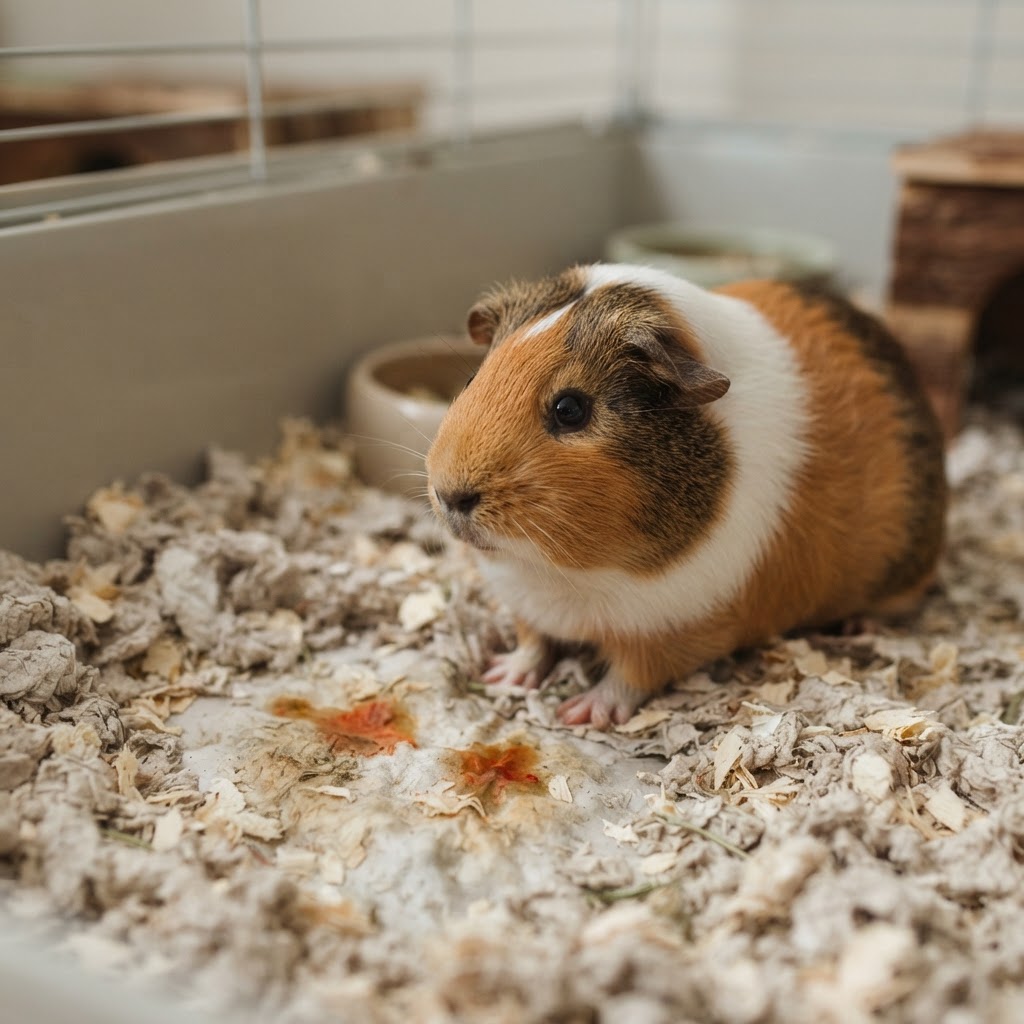
Bottom line: Guinea pigs can't safely go long without food, their gut must keep moving, so a guinea pig that stops eating is at risk of a dangerous gut shutdown and needs an exotic vet within a day. Common causes are dental disease, pain, or illness, and guinea pigs hide trouble until it's serious.
| Situation | Suggested action |
|---|---|
| Eating less but still bright and passing droppings | Tempt with favourites, monitor 12 hours |
| Not eating for 12–24 hours, or fewer droppings | Same-day exotic vet |
| Not eating + not pooping, or drooling, or breathing hard | Emergency vet now |
Why a guinea pig stops eating
Guinea pigs are designed to eat almost constantly. Their gut relies on a steady flow of fibre to keep moving, and their teeth grow continuously and need wearing. So when a guinea pig stops eating, two things happen fast: the gut can slow or stop (gastrointestinal stasis, a genuine emergency), and any dental problem gets worse. That's why "not eating" in a guinea pig is far more urgent than in a dog or cat, a pig off food for even 12–24 hours can become dangerously ill.
What can cause it
Dental disease is one of the most common reasons: overgrown or misaligned teeth (malocclusion), sharp spikes on the cheek teeth, or a tooth-root abscess make eating painful, often with drooling and weight loss. Pain from anywhere, bladder stones, bloat, an injury, or an ovarian cyst in older females, puts a pig off food. Illness includes respiratory infection (pneumonia), gut infection, or organ disease.
Vitamin C deficiency (scurvy) causes joint and mouth pain and poor appetite, guinea pigs can't make their own vitamin C. Stress, a food change, or a new companion can cause a temporary drop, and heatstroke in hot weather can stop a pig eating. A guinea pig off food also risks gut stasis, which then makes the not-eating worse, a vicious cycle.
When to worry, the red flags
A pig that's eating less but still bright, eating favourites, and passing normal droppings can be tempted and watched briefly. See a vet for:
- Not eating for more than 12–24 hours, gut stasis risk
- Fewer or no droppings, or small, hard droppings, the gut is slowing
- Drooling, wet chin, or dropping food, dental disease
- Lethargy, hunched posture, or teeth-grinding, pain
- A swollen or painful belly, or squealing when touched
- Laboured or fast breathing, or discharge from the nose, pneumonia
- Weight loss, rough coat, or limping (possible scurvy)
- A pig that's stopped drinking as well
What to do right now
- Tempt with favourites, fresh grass, bell pepper, cucumber, or critical-care mash from a syringe.
- Check the droppings, fewer or smaller droppings mean the gut is slowing; act now.
- Look for drooling or food dropping from the mouth, dental disease.
- Keep the pig warm and quiet, and offer water from a syringe if weak.
- Call an exotic vet the same day if not eating lasts more than a few hours, or immediately with no droppings, a swollen belly, or laboured breathing.
What NOT to do
- ❌ Don't wait, gut stasis can be fatal within a day in guinea pigs.
- ❌ Don't trim teeth at home, a vet does this safely.
- ❌ Don't give human medications or food with onion, garlic, or citrus.
- ❌ Don't let a "fussy" pig go without food, syringe-feed if needed until a vet is seen.
How a vet diagnoses and treats it
An exotic vet will examine your pig, check the teeth (often with a small scope), feel the belly, and listen to the chest. Treatment depends on the cause: dental trimming under sedation, pain relief, fluids, gut motility medication, and assisted feeding for stasis, antibiotics for infection, or surgery for stones or cysts. Most guinea pigs recover well with prompt care.
Preventing appetite problems
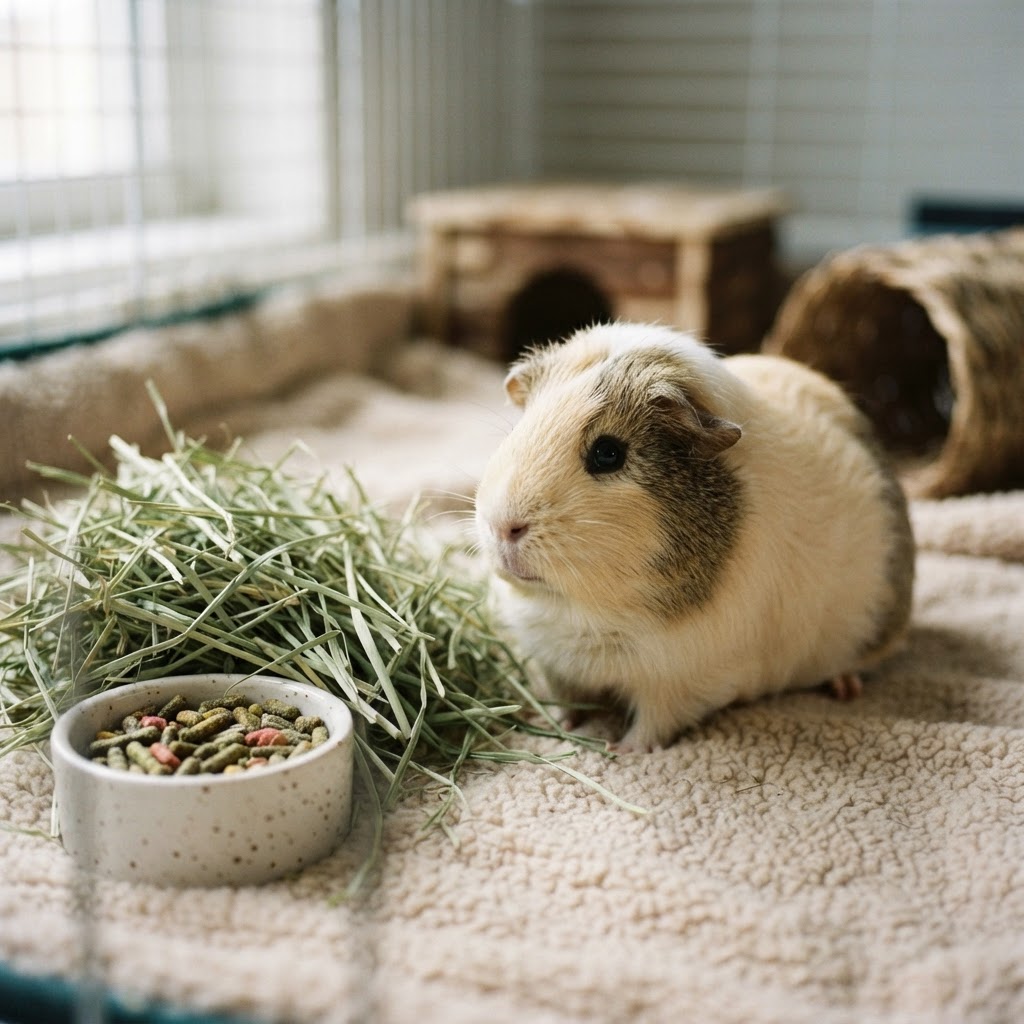
Feed unlimited grass hay (wears the teeth and keeps the gut moving), a measured pelleted diet, and a vitamin C–rich selection of fresh veg daily. Weigh your pig weekly, weight loss is the earliest sign of dental or chronic disease, and have an exotic vet check teeth at least yearly.
When to wait, and when to act now
A bright pig eating less but still passing normal droppings can be tempted and watched briefly. Not eating for 12–24 hours, fewer droppings, drooling, or a swollen belly needs an exotic vet the same day, and no droppings, laboured breathing, or a collapsed pig means an emergency now.
Run a free AI triage assessment for personalised next steps, or find an exotic vet near you.
Frequently Asked Questions
Disclaimer: This article is for educational purposes only and is not a substitute for professional veterinary advice. If you're concerned about your pet's health, use our AI triage assessment or consult a licensed veterinarian.