Bottom line: Fish gasping at the surface usually means low oxygen, poor water quality, or gill damage, and it can kill within hours. Test the water immediately, do a partial water change, increase aeration, and act fast; some causes need medication or a vet.
| Situation | Suggested action |
|---|---|
| Occasional surface gulp in an otherwise normal tank | Check temp and aeration, monitor |
| Many fish gasping, or rapid breathing | Test water, change water, aerate now |
| Gasping + deaths, red gills, or new fish | Emergency action / fish vet |
Why fish gasp at the surface
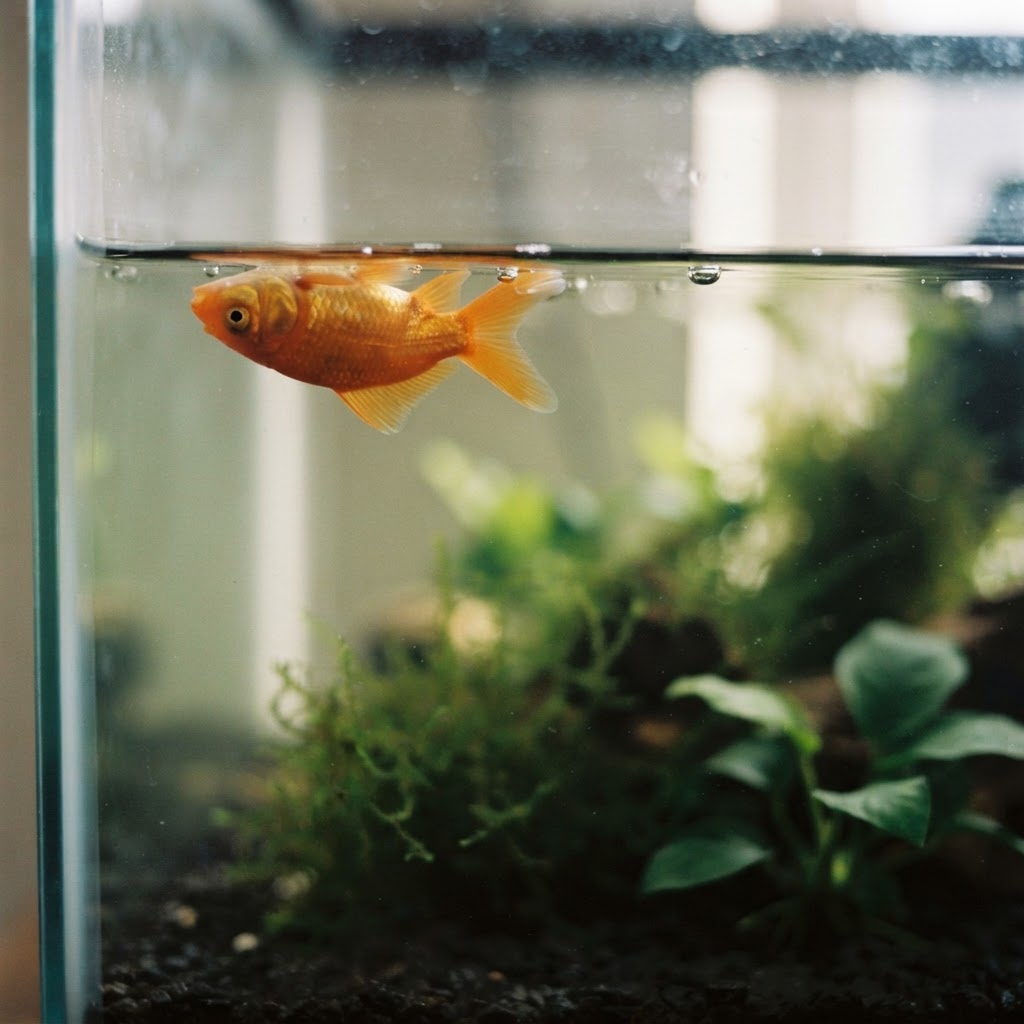
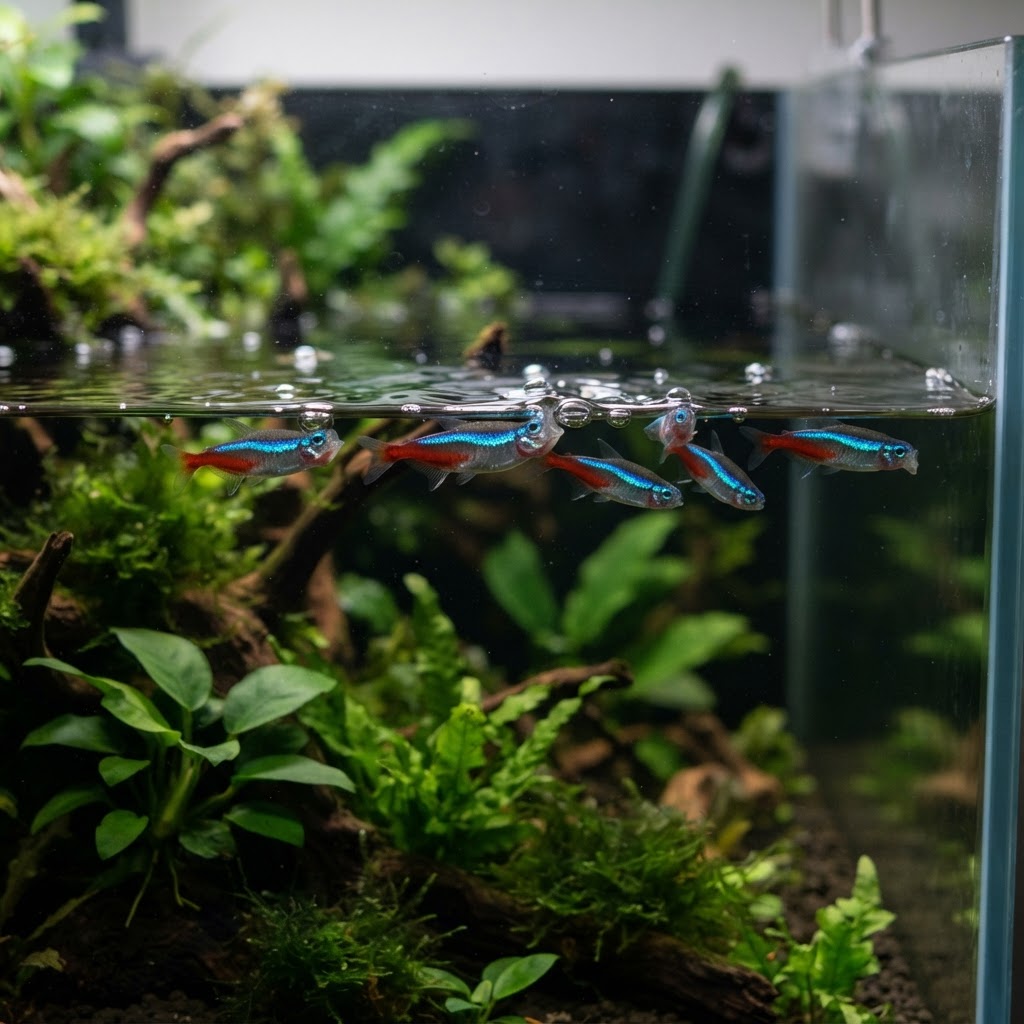
Fish breathe by pulling oxygen from the water across their gills, and the surface holds the most oxygen because it touches the air. When oxygen in the tank drops, or the gills are damaged so they can't extract oxygen, fish swim to the surface and gulp, a behaviour that says "I can't breathe." It's a distress sign, not a quirk, and because oxygen levels can crash within hours, gasping is a near-emergency. The two questions are always: is there enough oxygen, and is the water toxic or are the gills damaged?
What can cause it
Low oxygen is a leading cause, from high temperature (warm water holds less oxygen), overstocking, poor surface agitation, a stopped filter, or a power cut. Poor water quality, ammonia or nitrite poisoning, burns the gills so they can't work. Gill parasites (like gill flukes) or gill infection physically damage the gills. Chlorine from untreated tap water, and medication overdose, can also damage gills. New fish may bring gill disease.
When to worry, the red flags
A single brief gulp in an otherwise normal tank can be checked. Act now for:
- Many fish gasping at once, or rapid, laboured breathing
- Gasping after a power cut, a filter stop, or a heat spike
- Red, inflamed, or pale gills
- Deaths, or fish hanging listless at the surface
- A new tank, or a tank that's just been cleaned/medicated, water toxicity
- Warm water (above ~28–30 °C) in a tropical/goldfish tank
What to do right now
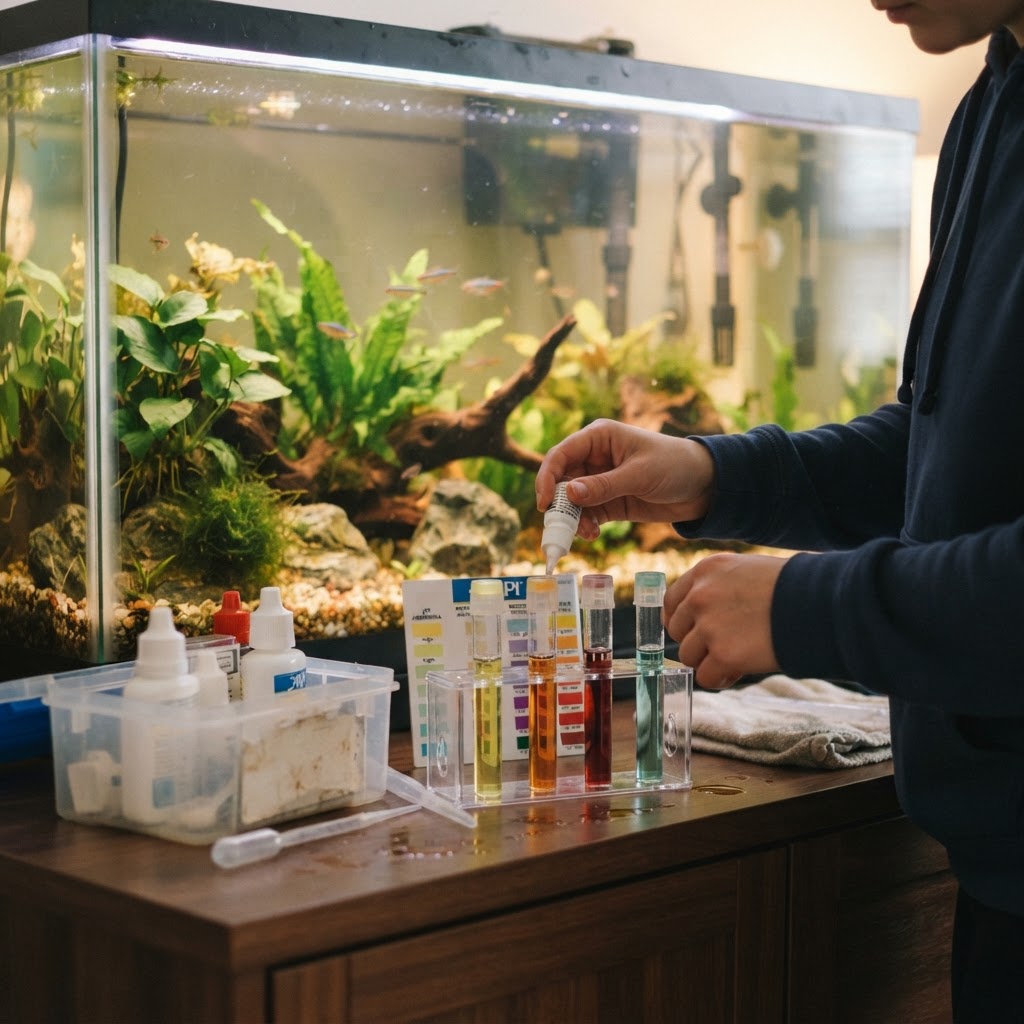
- Test the water, ammonia and nitrite should be zero; check temperature.
- Do a partial water change (25–50%) with dechlorinated, temperature-matched water if ammonia/nitrite are high.
- Increase aeration and surface agitation, add an air stone, lower the water level slightly so the filter splashes, or point a powerhead at the surface.
- Cool the tank if it's overheated (float a bag of cool water, don't drop the temperature fast).
- Stop feeding for a day to reduce waste and oxygen demand.
- Medicate for gill parasites if gills look damaged and other causes are ruled out; a fish vet can confirm.
What NOT to do
- ❌ Don't add untreated tap water, chlorine damages gills; always use dechlorinator.
- ❌ Don't overfeed, it lowers oxygen and raises ammonia.
- ❌ Don't crowd the tank or raise temperature without aeration.
- ❌ Don't delay with widespread gasping or deaths, oxygen crashes kill fast.
How to treat it
Fixing the water is step one for most cases. For gill parasites, a targeted antiparasitic (often a fluke treatment) helps; a fish vet can identify the parasite if needed. Recovering fish should be kept in clean, well-aerated water with light feeding. The underlying cause, an overstocked tank, an undersized filter, or no aeration, needs fixing to stop it coming back.
Preventing gasping
Keep stocking sensible, run a filter rated for the tank with good surface agitation, test water regularly, do weekly partial water changes with dechlorinated water, avoid overheating, and never add untreated tap water. A stable, well-aerated tank rarely has oxygen problems.
When to wait, and when to act now
A single brief gulp in a normal tank can be checked. Widespread gasping, rapid breathing, or deaths means act now, test, change water, and aerate immediately.
Run a free AI triage assessment for personalised next steps, or find a vet near you.
Frequently Asked Questions
Disclaimer: This article is for educational purposes only and is not a substitute for professional veterinary advice. If you're concerned about your pet's health, use our AI triage assessment or consult a licensed veterinarian.