Bottom line: Sudden, persistent drooling in cats is rarely normal and often signifies dental disease, toxin ingestion, or oral pain. If your cat is drooling excessively and acting strangely, it requires a prompt veterinary examination.
| Situation | Suggested action |
|---|---|
| Known contact with chemicals/plants | Emergency vet visit |
| Difficulty swallowing/not eating | Urgent vet visit |
| Chronic drooling (gradual) | Schedule vet appointment |
| Brief drooling during purring | Observe if temporary |
When Drooling Is Normal (and When It Is Not)
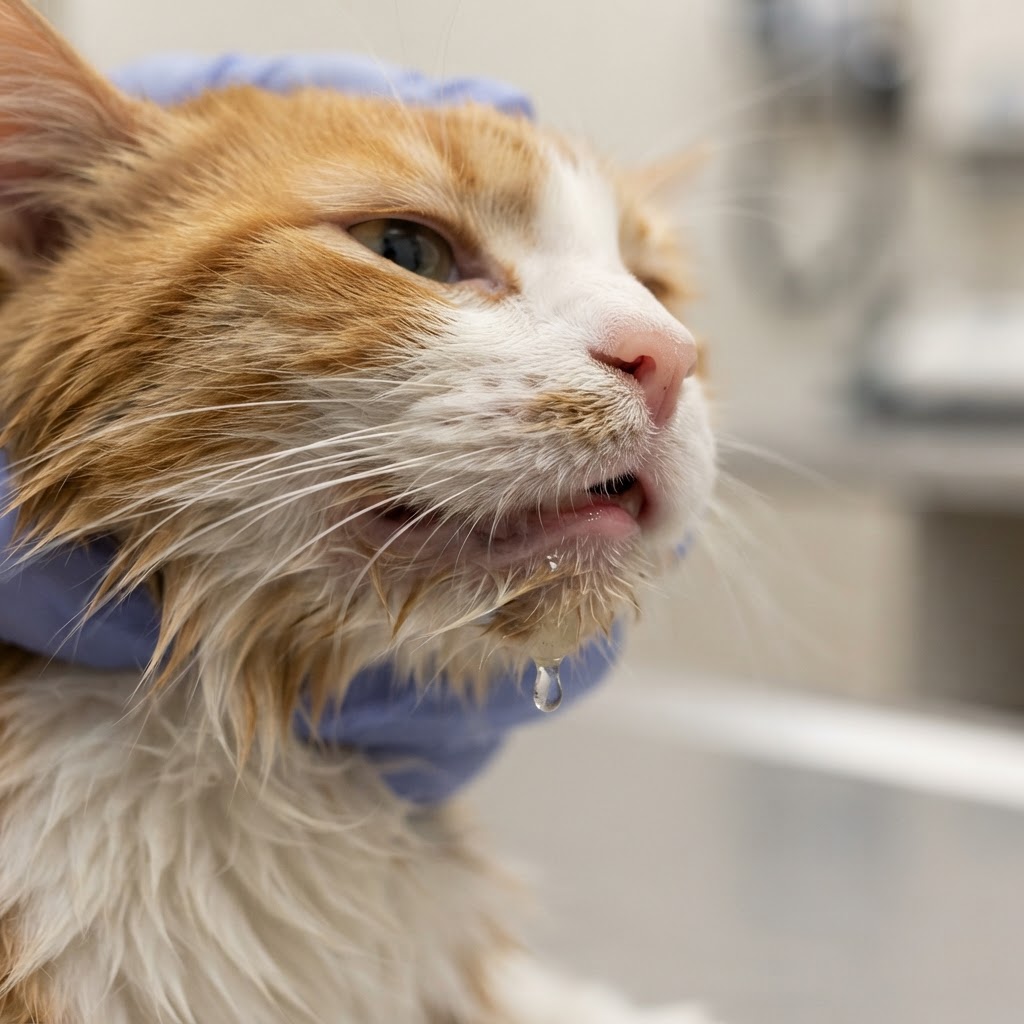
Unlike dogs, cats rarely drool as a normal behaviour. The occasional droplet while purring contentedly is generally harmless. However, sudden or excessive drooling is almost always a sign that something is wrong and warrants veterinary attention.
Here are the 7 most common causes of drooling in cats.
1. Dental Disease
Dental problems are the leading cause of drooling in cats. Periodontal disease, broken teeth, oral ulcers, and gum inflammation (stomatitis) can all cause pain that leads to excessive salivation.
Signs to watch for: Bad breath, pawing at the mouth, dropping food, reluctance to eat hard food, and visible tartar or red gums.
2. Nausea and Gastrointestinal Issues
Cats drool when they feel nauseous, just before vomiting. This can be caused by eating something that upset their stomach, gastrointestinal inflammation, or more serious conditions like kidney disease.
If your cat is also showing signs of cat vomiting or has persistent cat diarrhoea, the drooling is likely gastrointestinal in origin.
3. Toxin Exposure
Exposure to toxic plants, chemicals, or medications can cause drooling. Lilies are particularly dangerous - if you suspect your cat has had any contact with a lily plant, this is a life-threatening emergency.
Other common toxins that cause drooling include household cleaners, antifreeze, and certain essential oils.
4. Foreign Object in the Mouth
A piece of string, bone fragment, or other foreign object stuck in the mouth or throat can cause drooling. If your cat has potentially swallowed or chewed on something inappropriate, examine the mouth carefully if it is safe to do so.
If your cat has potentially swallowed a string or thread, do not pull on anything you see hanging from the mouth. This can cause serious internal damage. Seek veterinary care immediately.
5. Oral Trauma
Injuries to the mouth, such as burns from chewing on electrical cords, chemical burns, or physical trauma, can cause drooling. These injuries are painful and may become infected if left untreated.
6. Respiratory Infections
Upper respiratory infections can cause oral ulcers and nasal congestion, both of which can lead to drooling. Cats with respiratory infections often also show signs like runny eyes and cat sneezing.
7. Stress and Anxiety
Some cats drool in response to acute stress, such as car rides or veterinary visits. This type of drooling is temporary and resolves once the stressor is removed.
When Drooling Is an Emergency
Seek immediate veterinary care if the drooling is accompanied by any of the following:
- Known or suspected toxin exposure
- Difficulty breathing
- Vomiting blood or having blood in the saliva
- Lethargy or collapse
- Refusal to eat for more than 24 hours
- Pawing at the mouth in distress
If your cat is drooling and you know they have been near a toxic plant, chemical, or medication, do not wait for symptoms to worsen. Call your vet immediately.
What Your Vet Will Do
Your vet will perform a thorough oral examination, checking for dental disease, foreign objects, ulcers, and signs of trauma. They may recommend blood tests to check for underlying conditions like kidney disease, and X-rays if a foreign object is suspected.
Treatment will depend on the underlying cause: dental cleaning for periodontal disease, removal of foreign objects, supportive care for nausea, or specific treatment for toxin exposure.
Frequently Asked Questions
Disclaimer: This article is for educational purposes only and is not a substitute for professional veterinary advice. If you're concerned about your pet's health, use our AI triage assessment or consult a licensed veterinarian.