Bottom line: Cats naturally breathe faster during deep sleep and dreaming, but if your cat's resting or sleeping respiratory rate is consistently above 30 breaths per minute, or breathing is laboured, open-mouthed, or accompanied by other symptoms, it can signal heart disease, respiratory illness, or pain. If breathing is fast AND laboured, or your cat's gums are blue or pale, seek emergency veterinary care immediately.
| Situation | Suggested action |
|---|---|
| Open-mouth breathing, blue or pale gums, gasping, or extreme distress | Emergency veterinary care now |
| Resting respiratory rate consistently above 30 breaths per minute while fully asleep | Contact a veterinarian within 24 hours |
| Fast breathing during sleep that stops when the cat wakes up and is otherwise normal | Monitor and record the rate; mention at next vet visit |
| Breathing fast plus coughing, lethargy, weight loss, or reduced appetite | Urgent veterinary assessment |
Is this an emergency?
Cat breathing is an emergency if you notice any of the following:
- Open-mouth breathing or panting (cats do not pant like dogs; this is always a red flag unless it happens briefly after extreme exercise or stress)
- Blue, purple, or pale gums (signs of oxygen deprivation or shock)
- Laboured breathing (visible effort, abdominal muscles working hard, chest heaving)
- Gasping, choking, or wheezing that does not stop
- Collapse or inability to stand alongside rapid breathing
- Breathing rate above 40 breaths per minute while resting or fully awake
If any of these are present, contact an emergency veterinarian immediately. Do not wait.
What is a normal breathing rate for a sleeping cat?
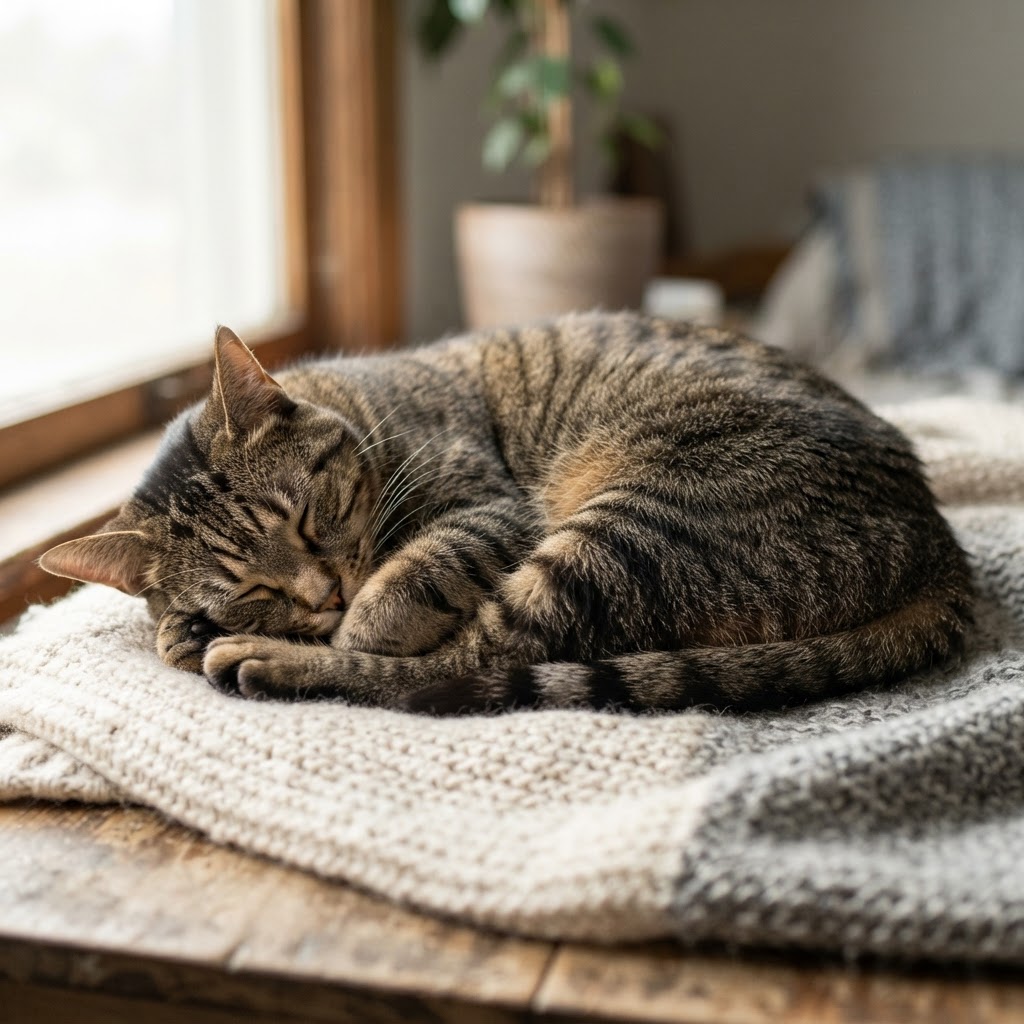
A healthy cat's respiratory rate while resting or sleeping is:
- 16 to 30 breaths per minute (most cats: 20-24)
- Breathing should be smooth, quiet, and effortless
- The chest should rise and fall gently without visible effort
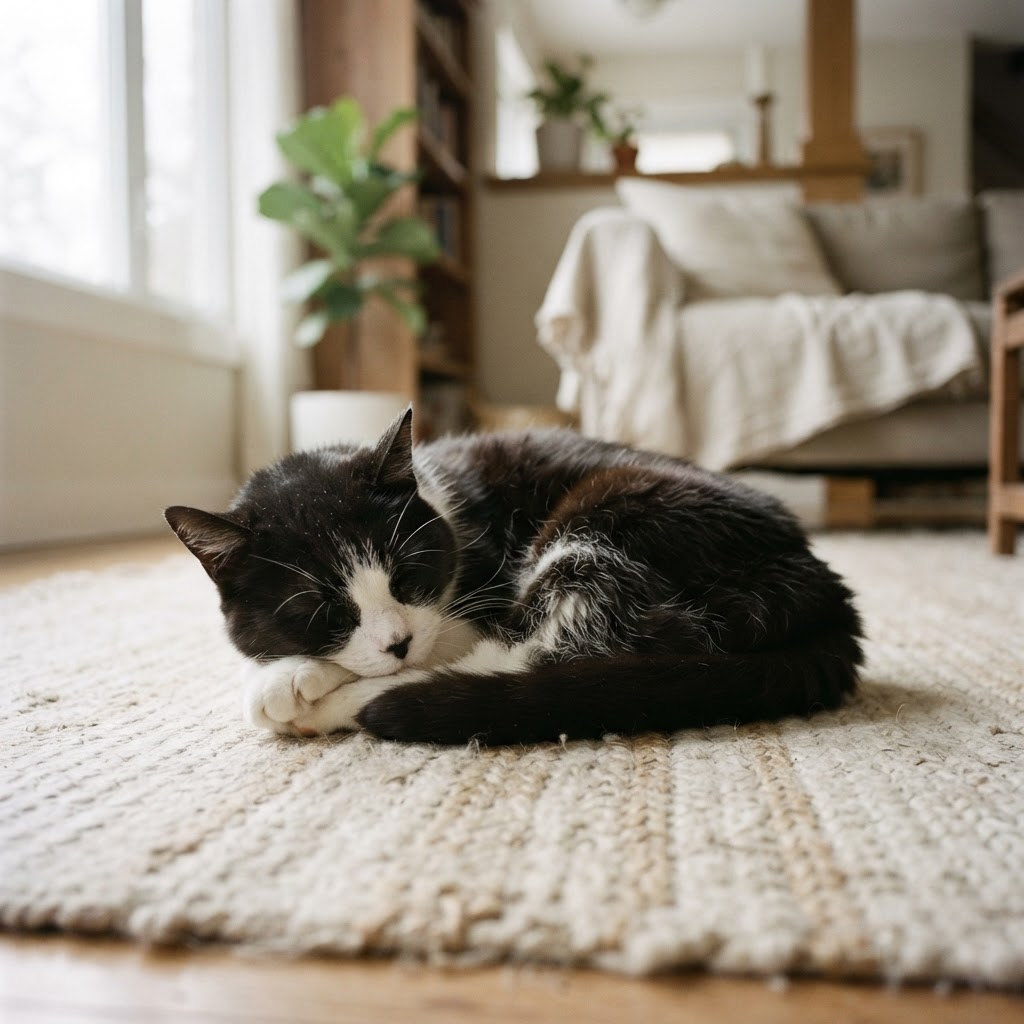
During REM (dreaming) sleep, cats may breathe faster, twitch, or move their paws. This is normal and should settle within a few minutes.
To measure your cat's sleeping respiratory rate: count the number of chest rises in 15 seconds while your cat is deeply asleep, then multiply by 4. Repeat a few times for accuracy.
When is fast breathing during sleep not normal?
Fast breathing during sleep that persists even when the cat is in a calm, deep sleep can indicate:
- Heart disease (hypertrophic cardiomyopathy is common in cats and can cause fluid buildup in or around the lungs)
- Respiratory infection (asthma, bronchitis, or upper respiratory infections)
- Pain (cats hide pain well; fast breathing during sleep can be a subtle sign)
- Fever (infection or inflammation raises body temperature and breathing rate)
- Anaemia (low red blood cells reduce oxygen-carrying capacity)
- Obesity (excess weight makes breathing harder, especially when lying down)
- Stress or anxiety (though this usually resolves when the cat is calm)
- Heat (warm environments increase breathing rate)
How long is too long?
- If fast breathing during sleep is a one-time event and your cat is otherwise normal, monitor and mention it at the next vet visit.
- If fast sleeping breathing is persistent (happening every night for more than 2-3 days), book a veterinary appointment.
- If breathing is fast AND laboured while awake, or accompanied by any red flag symptoms, seek emergency care immediately.
What should I check at home?
- Count the respiratory rate while your cat is deeply asleep (not dreaming or twitching).
- Check gum colour: lift the lip. Gums should be pink. Blue, purple, white, or very pale gums are an emergency.
- Watch for effort: is the breathing smooth and easy, or is the abdomen working hard with each breath?
- Look for other symptoms: coughing, sneezing, nasal discharge, lethargy, reduced appetite, weight loss, or hiding.
- Check the environment: is the room too warm? Is there dust, smoke, or strong scents that could irritate airways?
- Record a video: take a short video of your cat breathing while asleep. This is invaluable for your veterinarian.
What should I avoid doing?
- Do not wait if gums are blue, pale, or the cat is open-mouth breathing. This is a life-threatening emergency.
- Do not assume fast sleeping breathing is always normal. Persistent elevation, even during sleep, can be the first sign of heart disease in cats.
- Do not use essential oils, incense, or aerosols near cats. These can irritate sensitive airways and worsen breathing problems.
- Do not give human medication to a cat. Many are toxic.
What information should I give the veterinarian?
- The measured sleeping respiratory rate (breaths per minute, counted multiple times)
- A video of your cat breathing while asleep
- Whether the fast breathing happens every night or only occasionally
- Whether your cat has any other symptoms (coughing, sneezing, lethargy, appetite changes, weight loss)
- Your cat's breed, age, weight, and any known health conditions
- Whether your cat has had a heart murmur diagnosed before
- Any recent changes in environment, diet, or household products
How will a veterinarian investigate this?
Your vet may:
- Listen to the heart and lungs with a stethoscope
- Measure oxygen levels with a pulse oximeter
- Take chest X-rays to check for fluid, masses, or heart enlargement
- Perform an echocardiogram (heart ultrasound) if heart disease is suspected
- Run blood tests to check for infection, anaemia, or organ dysfunction
- Recommend a resting respiratory rate monitoring plan for you to track at home
When is home monitoring reasonable?
Home monitoring is reasonable when:
- Your cat's sleeping respiratory rate is 30 or below and stable
- Breathing is smooth, quiet, and effortless
- Gums are pink
- No other symptoms (coughing, lethargy, appetite loss, hiding)
- Your cat is otherwise eating, drinking, and behaving normally
If monitoring, record the sleeping respiratory rate daily. If it rises above 30 consistently, or any new symptoms appear, contact your veterinarian.
Ready for a personalised assessment?
If you are concerned about your cat's breathing, use our free AI triage assessment for an instant urgency rating.
Need to find an emergency vet?
If your cat needs urgent care, find the nearest open veterinary clinic.
References
This article is informed by veterinary cardiology and respiratory medicine guidelines, including feline hypertrophic cardiomyopathy research and standard veterinary references on resting respiratory rate monitoring. Last clinically reviewed: August 2026.
Frequently Asked Questions
Disclaimer: This article is for educational purposes only and is not a substitute for professional veterinary advice. If you're concerned about your pet's health, use our AI triage assessment or consult a licensed veterinarian.