Bottom line: Hair loss in cats is usually secondary to another issue like parasites, allergies, or stress-related over-grooming. It is generally not an emergency, but it requires a vet visit to diagnose the underlying medical condition.
| Situation | Suggested action |
|---|---|
| Red, raw, or bleeding skin | See vet promptly |
| Excessive scratching/grooming | Schedule vet visit |
| Patches of hair loss | Monitor and schedule check-up |
| Small, isolated spot | Observe for growth |
Normal Shedding vs. Problem Hair Loss
First, it is important to distinguish between normal shedding and abnormal hair loss.
Normal Shedding
- Even hair loss across the body
- More noticeable in spring and autumn
- No bald patches or skin irritation
- The coat remains full and healthy-looking
Abnormal Hair Loss
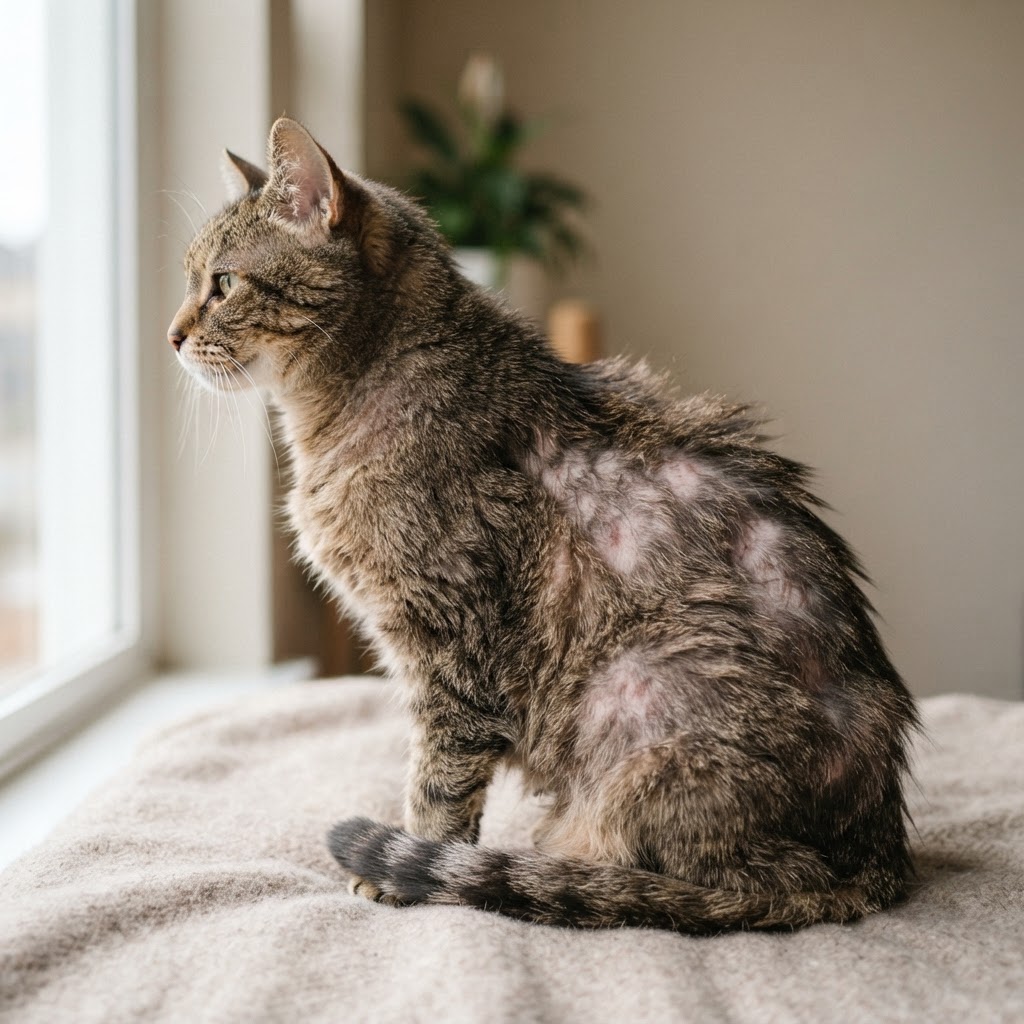
- Patchy or symmetrical bald spots
- Short, broken hairs (indicating over-grooming)
- Skin redness, scabs, or lesions
- Itching, scratching, or excessive licking
- Changes in skin colour or texture
Common Causes of Hair Loss in Cats
1. Fleas and Parasites
Fleas are the single most common cause of hair loss in cats. Even if you do not see fleas, they can still be the culprit. Cats with flea allergy dermatitis can lose hair from a single flea bite - the allergic reaction to flea saliva causes intense itching, leading to excessive grooming and hair loss.
Key sign: Hair loss typically occurs on the lower back, base of the tail, back of the thighs, and around the neck.
Other parasites that can cause hair loss include:
- Ear mites (around the ears and head)
- Demodex mites (localised or generalised)
- Cheyletiella (walking dandruff mite)
2. Allergies
Just like humans, cats can have allergies. The three main types are:
Flea Allergy
As mentioned above, an allergic reaction to flea saliva causes intense itching and hair loss, even from a single bite.
Food Allergy
Cats can develop allergies to specific proteins in their food. Common culprits include beef, fish, dairy, and chicken. Food allergies often cause hair loss around the head, neck, and ears, and may be accompanied by vomiting or diarrhoea.
Environmental Allergy (Atopy)
Cats can be allergic to pollens, moulds, dust mites, and other environmental allergens. This often causes seasonal hair loss, itching around the face, ears, and belly, and may be accompanied by respiratory symptoms.
3. Over-Grooming (Psychogenic Alopecia)
Cats are meticulous groomers, but some cats take it too far. Stress, anxiety, or boredom can cause a cat to groom compulsively, leading to hair loss. This is called psychogenic alopecia.
Key signs:
- Short, broken hairs in easily reached areas (belly, inner thighs, legs)
- "Fur mower" lines - lines of short hair where the cat has been licking
- No visible skin lesions (in pure cases)
- The cat is observed grooming excessively
Common stress triggers include:
- New pets or family members
- Moving house
- Changes in routine
- Inadequate environmental enrichment
- Multi-cat household tensions
4. Ringworm (Fungal Infection)
Despite its name, ringworm is not a worm - it is a fungal infection. It is one of the few causes of hair loss that can be transmitted to humans.
Key signs:
- Circular patches of hair loss
- Scaly, crusty, or red skin in the affected area
- Broken, stubbly hairs
- Most common on the face, ears, paws, and tail
- May be itchy, but not always
Important: Ringworm is contagious to humans and other pets. If you suspect ringworm, wash your hands after handling your cat and see your vet promptly.
5. Hormonal Imbalances
Less common but important, hormonal conditions can cause symmetrical hair loss in cats:
- Hyperthyroidism: Common in older cats, causes weight loss, increased appetite, and sometimes hair loss
- Cushing's disease: Rare in cats, but can cause symmetrical hair loss and thin skin
- Hypothyroidism: Very rare in cats but can cause hair thinning
6. Skin Infections
Bacterial infections (pyoderma) or yeast infections can cause hair loss, usually accompanied by redness, scaling, crusting, and sometimes pus.
7. Pain or Localised Discomfort
Cats may lick and over-groom a specific area that is painful. For example, a cat with arthritis in a hip joint may lick the area over the hip, causing localised hair loss.
8. Poor Nutrition
A diet lacking in essential nutrients (especially certain fatty acids, vitamins, or minerals) can lead to a dull, thin coat and increased shedding.
9. Cancer
In rare cases, hair loss can be associated with skin tumours or more systemic cancers. This is more common in older cats.
What to Look For
When you notice hair loss, try to gather the following information for your vet:
- Where is the hair loss located? (belly, back, ears, face, symmetrical or patchy?)
- When did it start?
- Is the skin underneath normal, red, scaly, crusty, or ulcerated?
- Is your cat itching, scratching, or over-grooming?
- Are there any other symptoms? (weight loss, vomiting, diarrhoea, changes in appetite or behaviour)
- Have there been any changes in the household? (new pet, moving, diet change)
- When was the last flea treatment?
When to See the Vet
Schedule a veterinary examination if:
- Your cat has significant or spreading hair loss
- There are skin lesions, redness, crusting, or scabs
- Your cat is scratching, licking, or chewing excessively
- The hair loss is accompanied by any other symptoms
- The hair loss has been present for more than a few days
- You have multiple cats and one is losing hair (possible contagious cause)
Seek Urgent Care If:
- The skin is raw, bleeding, or ulcerated
- Your cat seems painful or distressed
- There are signs of infection (pus, foul odour, swelling)
- Your cat is also lethargic, not eating, or showing signs of systemic illness
How Hair Loss Is Diagnosed
Your vet may perform:
- Physical examination
- Flea combing
- Skin scrapings (to check for mites)
- Fungal culture (for ringworm)
- Blood tests (for hormonal conditions)
- Allergy testing or dietary trials
- Skin biopsy (in some cases)
If you are unsure how urgent the situation is, use our AI triage tool for a personalised assessment. You can also find a vet near you using your postcode.
The Bottom Line
Hair loss in cats is a symptom, not a disease. The key to resolving it is identifying and treating the underlying cause. With proper diagnosis and treatment, most causes of feline hair loss can be successfully managed.
Frequently Asked Questions
Disclaimer: This article is for educational purposes only and is not a substitute for professional veterinary advice. If you're concerned about your pet's health, use our AI triage assessment or consult a licensed veterinarian.