Bottom line: Never give your dog human pain medication like ibuprofen, paracetamol, or aspirin, as they are toxic and can be fatal to dogs. Always consult your vet for pet-safe pain relief tailored to your dog's specific needs.
| Situation | Suggested action |
|---|---|
| Ingested human pain meds | Rush to emergency vet immediately |
| Accidental dose (no symptoms) | Call poison control/vet immediately |
| Seeking pain management | Consult your vet for prescriptions |
| No ingestion observed | Store meds safely away |
The Medicine Cabinet Temptation
Your dog is limping. Or whimpering. Or just seems "off." You open your medicine cabinet, see a bottle of paracetamol or ibuprofen, and think: "It works for me. Can I just give him one?"
Stop right there.
Giving your dog human pain medication without explicit veterinary instruction is one of the most common - and most dangerous - mistakes pet owners make. Medications that are safe and effective for humans can be toxic, even fatal to dogs. The differences in how dogs and humans metabolise drugs are profound, and what seems like a small, harmless dose can cause irreversible damage.
Why Human Medications Are Dangerous for Dogs
Dogs are not small humans. Their livers process drugs differently - they lack certain enzymes that humans use to break down medications, and they have different pathways for excretion. This means a drug that's safely metabolised in a human can accumulate to toxic levels in a dog's body.
The three medications most commonly - and most dangerously - given to dogs by well-meaning owners are paracetamol, ibuprofen, and aspirin. Let's look at each one.
Paracetamol (Acetaminophen)
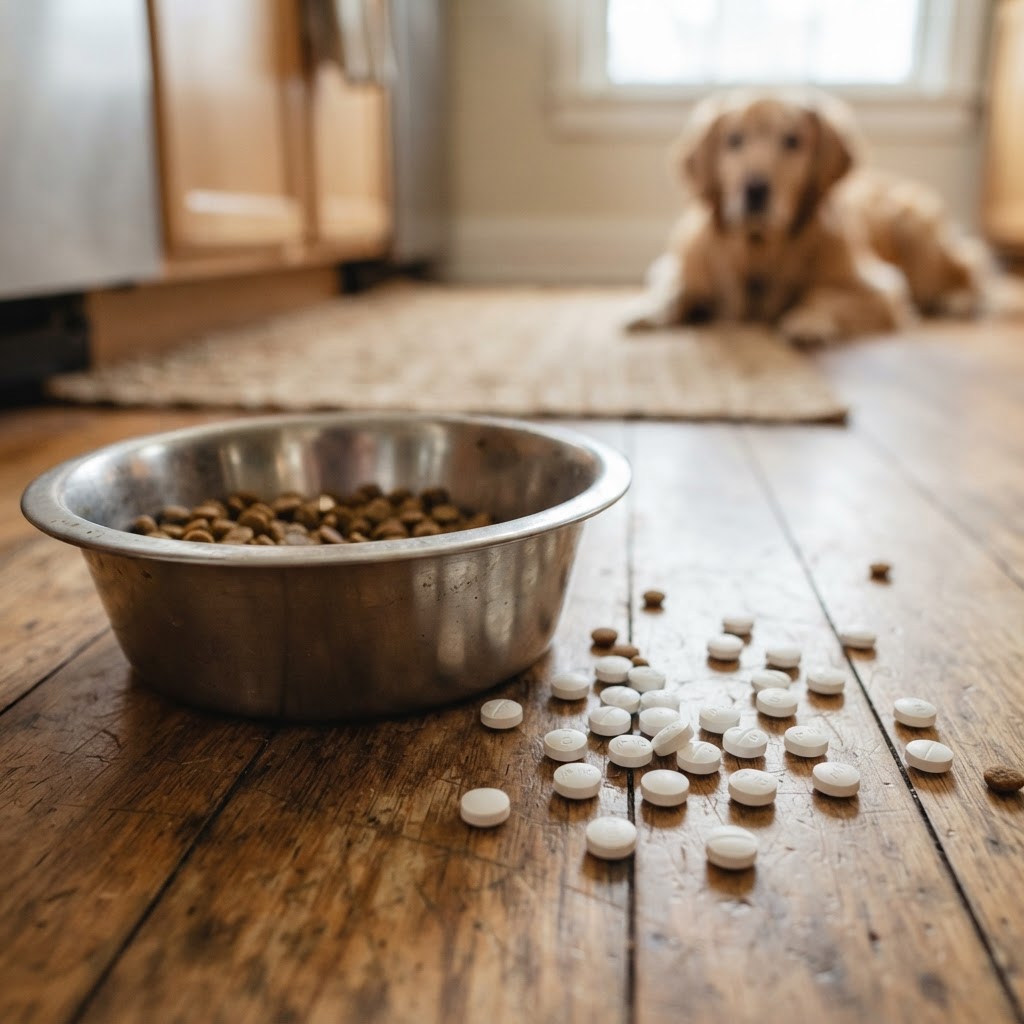
Paracetamol - sold as Panadol, Tylenol, and under many other names - is one of the most widely used human pain medications. In humans, it's generally safe at recommended doses.
In dogs, paracetamol can cause:
- Liver damage - dogs are less efficient at metabolising paracetamol than humans, and toxic by-products accumulate in the liver
- Damage to red blood cells - paracetamol can cause methaemoglobinaemia, a condition where red blood cells can't carry oxygen effectively
- Gastrointestinal ulcers and bleeding
In cats, paracetamol is even more dangerous - a single tablet can be fatal. Cats lack the enzyme needed to process paracetamol at all, and even tiny doses cause rapid, irreversible damage to red blood cells.
Toxic dose in dogs: As low as 75 mg per kg of body weight. A standard paracetamol tablet is 500mg - that means just two tablets could be toxic to a medium-sized dog.
Ibuprofen (Nurofen, Advil, Brufen)
Ibuprofen is a non-steroidal anti-inflammatory drug (NSAID). In humans, it's used for pain, inflammation, and fever. In dogs, it's one of the most common causes of poisoning.
Ibuprofen can cause:
- Stomach ulcers and bleeding - even at low doses, ibuprofen reduces the protective mucous lining of the stomach
- Kidney failure - ibuprofen reduces blood flow to the kidneys, which can cause acute and irreversible damage
- Liver damage
- Neurological signs - tremors, seizures, and coma at high doses
Toxic dose in dogs: As low as 25 mg per kg. A standard ibuprofen tablet is 200mg - just 3–4 tablets can be life-threatening to a medium-sized dog. In small breeds, a single tablet can cause serious toxicity.
Symptoms of ibuprofen poisoning: Vomiting (often with blood), black or tarry stools, lethargy, increased thirst and urination, loss of appetite, abdominal pain, and - in severe cases - seizures and collapse.
Aspirin
Aspirin is another NSAID, and it's sometimes recommended by vets in specific circumstances. However, it should never be given without veterinary instruction.
Aspirin can cause:
- Gastrointestinal ulcers and bleeding - aspirin is particularly harsh on the stomach lining
- Kidney damage
- Bleeding disorders - aspirin interferes with blood clotting
- Overdose risk - the dose that relieves pain in dogs is very close to the dose that causes toxicity
The bigger problem with aspirin: If you give your dog aspirin and then take them to the vet, your vet cannot safely prescribe proper veterinary pain medication for at least 5–7 days. Aspirin stays in the system and can interact dangerously with veterinary NSAIDs, potentially causing fatal gastrointestinal bleeding. You've effectively blocked the safest and most effective treatment options.
What About Other Human Medications?
The rule is simple: never give your dog any human medication without explicit instruction from your vet. This includes:
- Naproxen (Naprogesic, Aleve) - highly toxic to dogs, causes kidney failure
- Diclofenac (Voltaren) - toxic, causes gastrointestinal ulcers and kidney damage
- Codeine and other opioids - can be used in dogs but only at veterinary-prescribed doses
- Any combination medication - cold and flu remedies often contain multiple active ingredients, some of which may be toxic
What Should You Do If Your Dog Is in Pain?
- Call your vet. They can prescribe safe, effective, species-appropriate pain relief. Veterinary NSAIDs (such as carprofen, meloxicam, or grapiprant) are specifically formulated for dogs and are far safer than human medications.
- Describe the symptoms clearly - when the pain started, what your dog is doing, and any potential causes (injury, surgery, etc.)
- Mention any medications your dog is already on - including supplements
- Be honest about anything you may have already given - this is critical information that affects treatment options
What If You've Already Given Human Medication?
If you have already given your dog any human pain medication, call your vet or a pet poison helpline immediately. Do not wait for symptoms to appear.
Have this information ready:
- The name of the medication
- The strength (milligrams per tablet)
- How many tablets you gave
- When you gave them (the time)
- Your dog's weight and breed
- Any symptoms your dog is showing
Do not induce vomiting unless instructed to by a vet - some medications cause more damage coming back up.
The Bottom Line
Your medicine cabinet is not a pet pharmacy. The medications that make you feel better can make your dog desperately ill - and in some cases, can be fatal. When your dog is in pain, resist the temptation to self-medicate and call your vet instead. They have safe, effective options designed specifically for dogs, and they can help your pet feel better without risking their life.
Frequently Asked Questions
Disclaimer: This article is for educational purposes only and is not a substitute for professional veterinary advice. If you're concerned about your pet's health, use our AI triage assessment or consult a licensed veterinarian.