Bottom line: Ibuprofen is highly toxic to dogs and can cause fatal kidney failure, stomach ulcers, or neurological issues. If your dog has ingested any amount, contact a veterinarian or pet poison control immediately.
| Situation | Suggested action |
|---|---|
| Known ingestion of any amount | Rush to emergency vet immediately |
| Observed vomiting or weakness | Emergency vet care required |
| Suspected ingestion (no signs yet) | Call poison control immediately |
| Seeking advice | Call your vet while driving to the clinic |
Why Ibuprofen Is Dangerous for Dogs
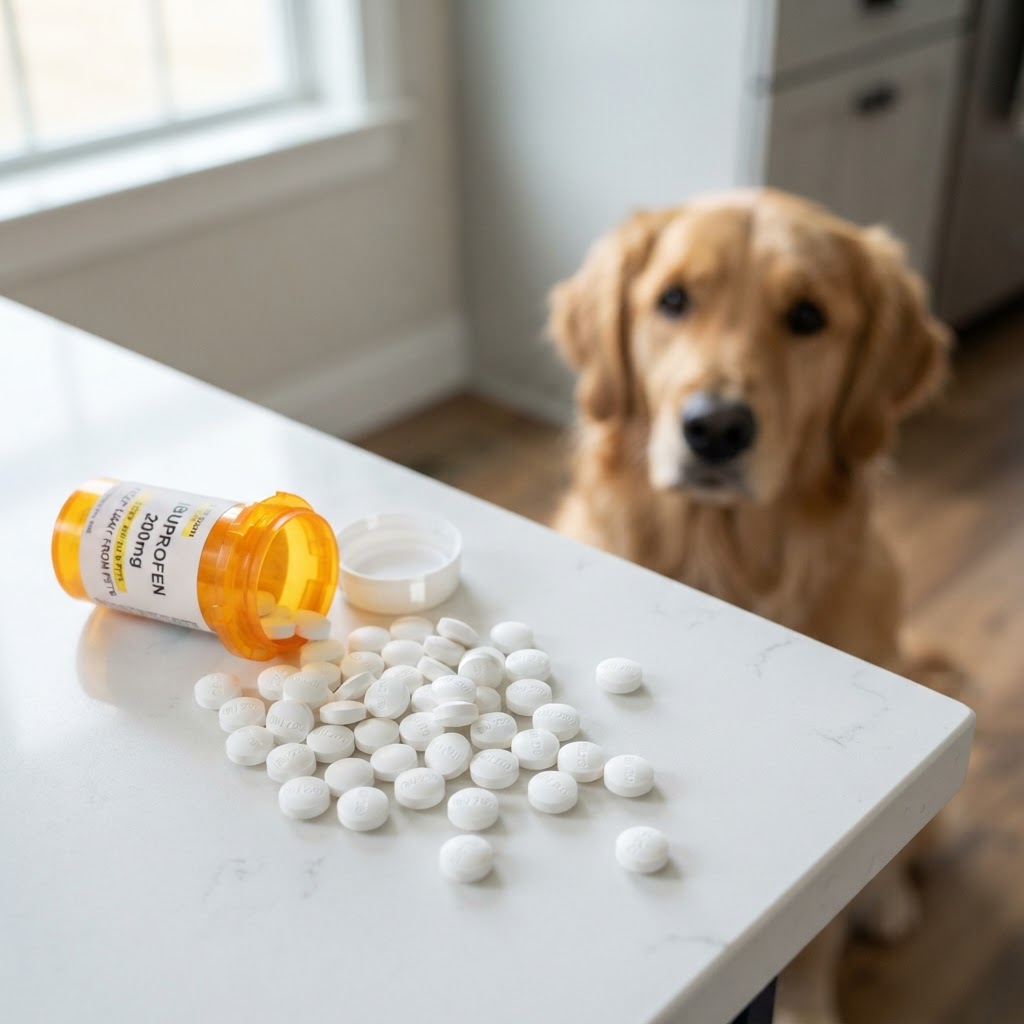
Ibuprofen is one of the most common causes of medication poisoning in dogs. Even a single 200mg tablet can cause serious harm to a small dog, and larger doses can be fatal. Dogs are far more sensitive to ibuprofen than humans because their bodies metabolise it differently, and they produce different forms of the enzyme (COX) that the drug targets.
The drug attacks two major systems in a dog's body simultaneously: the stomach lining and the kidneys. This double threat is what makes ibuprofen ingestion a time-critical emergency.
Toxic Doses at a Glance
The toxic threshold depends on your dog's weight:
- Stomach ulcers can occur at doses as low as 5-10 mg per kg of body weight
- Kidney failure typically develops at 25-50 mg per kg
- Life-threatening toxicity occurs above 50 mg per kg
To put that in perspective: a single 200mg tablet could cause stomach ulceration in a 20 kg dog, and two tablets could begin damaging the kidneys of a medium-sized dog.
Signs of Ibuprofen Poisoning
Symptoms typically appear within 2 to 6 hours of ingestion and may include:
- Vomiting (sometimes with blood)
- Dark, tarry stools (digested blood)
- Lethargy and weakness
- Loss of appetite
- Increased thirst and urination
- Abdominal pain (your dog may adopt a praying position with front legs down)
- Pale gums
- Seizures or tremors in severe cases
If your dog is showing pale gums or vomiting blood, do not wait. Go to the nearest emergency vet immediately.
What to Do in the First Hour
Step 1: Gather Information
Note down the brand name, milligram strength, and number of tablets your dog may have eaten. Estimate the time of ingestion. This information is critical for the vet to determine treatment.
Step 2: Call Your Vet or Poison Helpline Immediately
Do not attempt home treatment. Call your vet, the nearest emergency animal hospital, or a pet poison helpline right away. They will advise whether to induce vomiting based on the amount ingested and the time elapsed.
Never induce vomiting without veterinary guidance. If too much time has passed or your dog is already showing symptoms, inducing vomiting can make things worse.
Step 3: Do Not Give Human Pain Medication
Never give your dog additional human pain medication in an attempt to manage symptoms. Combining ibuprofen with other medications can cause severe interactions.
How Vets Treat Ibuprofen Toxicity
Treatment depends on the dose and timing:
- Induced vomiting if ingestion was recent (typically within 1-2 hours)
- Activated charcoal to bind remaining drug in the gut
- Intravenous fluids to protect the kidneys and maintain hydration
- Gastroprotectant medications to heal or prevent stomach ulcers
- Blood tests to monitor kidney function over 24-72 hours
Preventing Future Incidents
Keep all human medications in locked cabinets or high shelves. Never leave pills on countertops or in handbags within your dog's reach. Store medications in their original childproof containers, and remind all household members that ibuprofen, even a dropped tablet, is a serious hazard to dogs.
Frequently Asked Questions
Disclaimer: This article is for educational purposes only and is not a substitute for professional veterinary advice. If you're concerned about your pet's health, use our AI triage assessment or consult a licensed veterinarian.