Bottom line: Red or pinkish urine in a guinea pig can be caused by bladder stones, a urinary infection, or, sometimes, harmless plant pigments, but it should never be ignored. Bladder stones are painful and can block the bladder, so any genuinely red urine needs an exotic vet, and a pig straining or unable to pass urine is an emergency.
| Situation | Suggested action |
|---|---|
| Pink urine after beetroot/dandelion, pig bright | Stop the food, recheck in 24 hours |
| Red urine, or blood clots, pig otherwise bright | Vet visit within a day |
| Straining, crying, or unable to pass urine | Emergency vet now |
What "blood in the urine" means
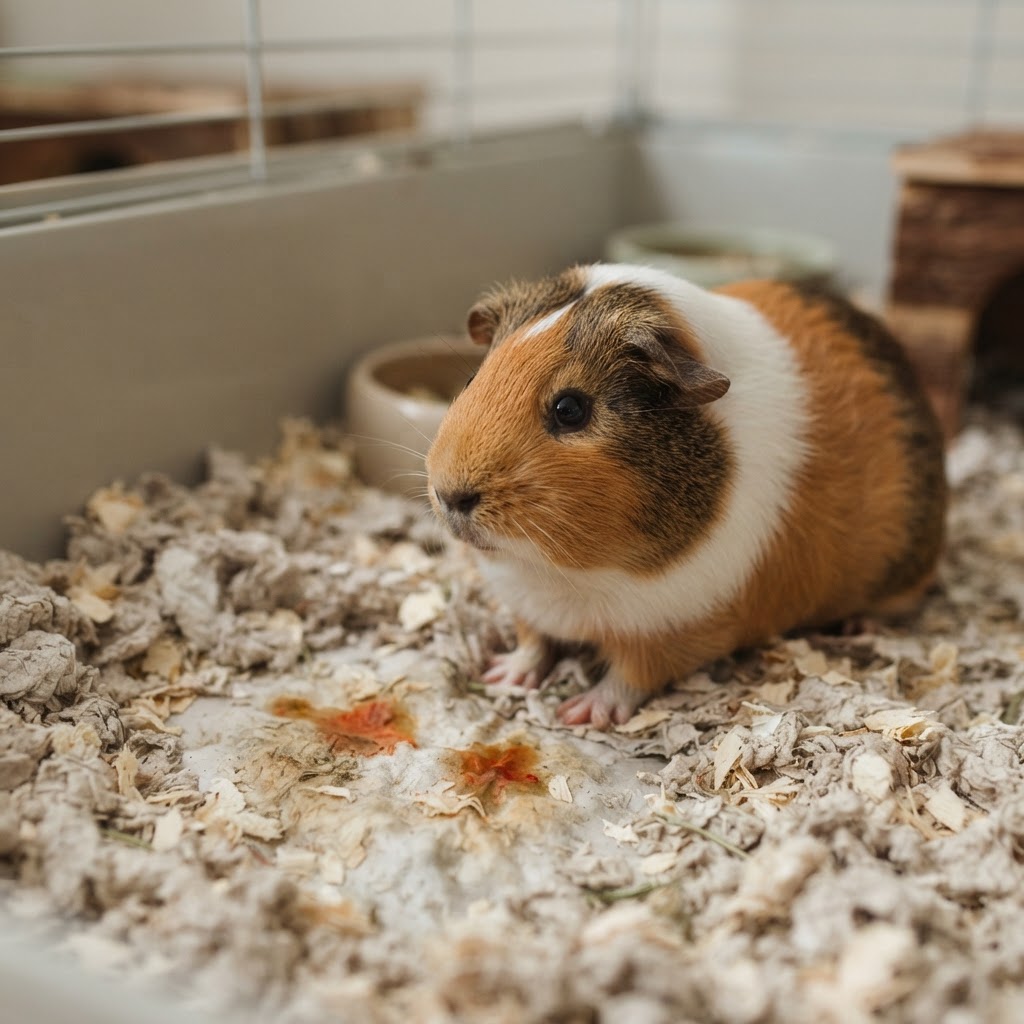
Guinea pig urine is normally clear to slightly cloudy yellow, sometimes with an orange tint. Red or rust-coloured urine usually means blood, but it can also come from plant pigments in foods like beetroot, dandelion, or red cabbage, harmless but easily confused with bleeding. The difference matters: pigment clears when the food is stopped, while true blood means the urinary tract is irritated, infected, or harbours stones. When in doubt, a vet can test a urine sample.
What can cause it
Bladder stones (uroliths) are common in guinea pigs and a leading cause of bloody urine; they're painful and can block the bladder, especially in males. Urinary tract infection (cystitis) inflames the bladder lining and causes blood, often with straining. Sludge, gritty calcium sediment in the bladder, irritates the lining and is linked to a high-calcium diet.
Other causes include kidney disease, a uterine problem in females, trauma, and (less often) tumours. Diet plays a role: too much high-calcium food (certain greens, alfalfa in adults) contributes to stones and sludge, and low vitamin C can weaken the urinary tract lining.
When to worry, the red flags
Pink urine after a pigment food, in a bright pig, can be rechecked after stopping the food. See a vet for:
- Genuinely red urine, blood clots, or rust-coloured urine that isn't linked to a pigment food
- Straining, crying, or passing only drops, possible blockage (emergency, especially in males)
- A pig that can't pass urine at all, or a swollen, painful belly, emergency
- Repeated bloody urine, or blood with weight loss or lethargy
- Squealing when touched on the belly, or a hunched, painful posture
- More frequent urination, or wet, sore skin around the bottom
- Not eating, or reduced droppings, pain or secondary gut stasis
What to do right now
- Think about diet, have they eaten beetroot, dandelion, or red cabbage? If so, stop it and recheck the urine in 24 hours.
- Check the cage for fresh urine spots on light bedding or paper towel to judge the colour.
- Watch for straining, crying, or a painful belly, these mean a vet today.
- Keep the pig eating, offer hay and favourite veg; a pig in pain can stop eating and risk gut stasis.
- Call an exotic vet for genuinely red urine, and go straight to an emergency vet if there's straining or no urine.
What NOT to do
- ❌ Don't assume red urine is "just food" unless you've confirmed the cause, stones are common and painful.
- ❌ Don't wait with straining or no urine, a blocked bladder is life-threatening.
- ❌ Don't feed high-calcium greens (spinach, kale, alfalfa) if stones or sludge are suspected.
- ❌ Don't give human or leftover medications.
How a vet diagnoses and treats it
An exotic vet will examine your pig, feel the bladder, and may test a urine sample, take X-rays to look for stones, and run bloodwork. Treatment depends on the cause: antibiotics for infection, pain relief, dietary changes for sludge, and surgery to remove bladder stones (they rarely dissolve on their own). A blocked bladder needs emergency drainage. Most pigs do well with prompt treatment.
Preventing urinary problems
Feed unlimited grass hay (not alfalfa for adults), a balanced, low-calcium selection of greens, and ensure enough vitamin C. Keep fresh water available, encourage exercise, and have an exotic vet check any pig with recurring urinary signs, stones often recur.
When to wait, and when to act now
Pink urine after a pigment food, in a bright pig, can be rechecked after stopping the food. Genuinely red urine needs a vet within a day, and straining, crying, or no urine means an emergency right now, especially in males.
Run a free AI triage assessment for personalised next steps, or find an exotic vet near you.
Frequently Asked Questions
Disclaimer: This article is for educational purposes only and is not a substitute for professional veterinary advice. If you're concerned about your pet's health, use our AI triage assessment or consult a licensed veterinarian.