Bottom line: Knowing basic first aid skills like stopping bleeding and CPR can stabilize your pet during a crisis. Always follow first aid with a trip to the vet, as internal injuries may still be present.
| Situation | Suggested action |
|---|---|
| Unresponsive or not breathing | CPR and emergency visit |
| Active, heavy arterial bleeding | Pressure and emergency visit |
| Minor cuts or abrasions | Clean and bandage |
| Uncertain of injury severity | Call vet for advice |
Every Pet Owner Needs a First Aid Kit - and a Plan
Accidents happen. Dogs get into fights, cats fall from balconies, pets ingest things they shouldn't. In those critical minutes before you reach the vet, what you do - and what you don't do - can make all the difference.
This guide covers the essentials of pet first aid: what to keep on hand, how to handle common emergencies, and when to skip first aid entirely and drive straight to the vet.
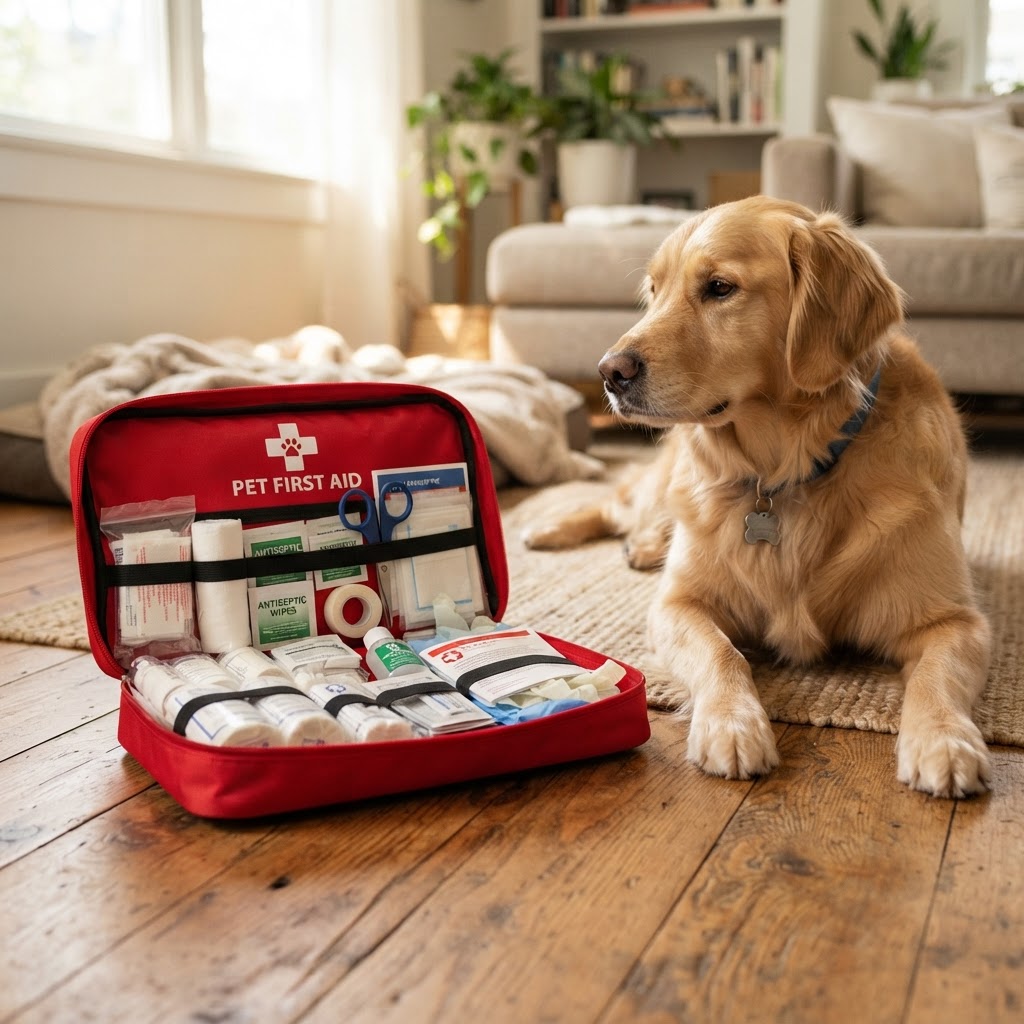
Build Your Pet First Aid Kit
Every pet owner should have a dedicated first aid kit - kept at home and, ideally, a smaller version in the car. Here's what to include:
The basics:
- 🐾 Gauze pads and rolls - for bandaging wounds and controlling bleeding
- Non-stick dressings - so they don't stick to the wound
- Adhesive tape - medical tape or Vetwrap (self-adhesive bandage)
- Cotton wool and swabs
- Tweezers - for splinters, grass seeds, or ticks
- Blunt-nosed scissors - for cutting bandages and fur
- Digital thermometer - and petroleum jelly for lubrication
- Disposable gloves
- Syringe (without needle) - for flushing wounds or administering oral fluids
- Saline solution (0.9% sodium chloride) - for flushing eyes and wounds
- Antiseptic wipes - chlorhexidine-based
- Styptic powder - for torn nails that are bleeding
- Torch - for examining eyes, ears, and mouth
- Tick remover tool
Medications (vet-approved only):
- Antiseptic spray or cream
- Wound gel (such as Vetericyn)
- Activated charcoal - only use if instructed by a vet or poison helpline
Important information:
- Your vet's phone number and the nearest emergency clinic
- A pet poison helpline number
- Your pet's vaccination and medical records
- A recent photo of your pet (in case they go missing after an accident)
How to Handle Common Emergencies
Bleeding
- Apply firm, direct pressure to the wound with a clean gauze pad or cloth
- Keep pressure on for at least 3–5 minutes - don't peek, it dislodges the clot
- If blood soaks through, add more layers - don't remove the original
- For limb wounds, elevate the limb above heart level if possible
- Bandage firmly but not too tight - you should be able to slide a finger under the wrap
- Transport to the vet - even if bleeding has stopped, the wound may need cleaning, stitching, or antibiotics
For severe bleeding that won't stop, apply a tourniquet only as a last resort, and note the time it was applied. Tourniquets left on too long cause tissue death.
Cuts and Wounds
- Control bleeding (as above)
- Flush the wound with saline or clean water - remove dirt and debris
- Don't use antiseptic meant for humans (Dettol, Savlon, hydrogen peroxide) - these can damage tissue. Use a vet-approved antiseptic or plain saline
- Don't apply creams without veterinary advice - some can interfere with healing
- Cover with a non-stick dressing and bandage
- See your vet - even small wounds can become infected, and deeper wounds may need stitches
Burns
- Cool the burn immediately with cool running water for at least 10 minutes
- Don't use ice - it can cause further tissue damage
- Don't apply butter, oil, or any creams - these trap heat and cause infection
- Cover loosely with a clean, non-stick dressing
- Go to the vet - burns are painful, prone to infection, and can be deeper than they appear
Choking
Signs: Pawing at the mouth, gagging, difficulty breathing, blue gums, collapse.
- If your pet can still breathe (coughing, making noise), keep them calm and transport to the vet
- If they cannot breathe: For a dog, open the mouth and look for the object - be careful not to push it further in. If you can see it and safely reach it, use pliers or tweezers to remove it
- If you can't remove it: Perform the Heimlich manoeuvre - place your hands just below the ribcage and give firm upward thrusts
- For cats and small dogs: Hold them with their head down and give sharp blows between the shoulder blades
- Get to the vet immediately - even if you've dislodged the object, there may be damage to the throat
Heatstroke
- Move to a cool area immediately
- Cool with cool (not ice-cold) water - focus on belly, inner thighs, neck, and paws
- Use wet towels or a hose
- Offer small amounts of water to drink
- Call your vet and transport immediately
See our full guide: Heatstroke in Dogs
Seizures
- Keep calm and note the time
- Clear the area of furniture and hazards
- Do not restrain your pet or put your hands near their mouth - they cannot swallow their tongue, and they can bite involuntarily
- Keep the environment quiet and dim
- Film the seizure on your phone - this is incredibly valuable to your vet
- Call your vet - if the seizure lasts more than 2–3 minutes, or if multiple seizures occur, go immediately
Toxin Ingestion
- Call your vet or a poison helpline immediately - before doing anything else
- Have the packaging of the substance ready (or know what was ingested, how much, and when)
- Do not induce vomiting unless instructed by a vet - some substances cause more damage coming back up
- If the substance is on the skin or fur, wash it off with mild soap and water
- Transport to the vet as directed
See our guides: Chocolate Toxicity, Grape and Raisin Toxicity, Xylitol Poisoning
The Golden Rules of Pet First Aid
- Stay calm - your pet can sense your panic, and it makes everything harder
- Call your vet first if you're unsure - they can advise you on what to do while you're on the way
- Do no harm - if you don't know how to do something, don't attempt it
- Transport carefully - wrap your pet in a blanket, keep them warm, and minimise movement
- First aid is not a substitute for veterinary care - it's a bridge to keep your pet stable until a professional can treat them
Know Your Pet's Normal Vitals
In an emergency, knowing what "normal" looks like for your pet is invaluable. While they're healthy, check:
- Gum colour: pink and moist
- Capillary refill time: press the gum with a finger; colour should return in 1–2 seconds
- Heart rate (dogs): 60–140 beats per minute (smaller dogs are faster)
- Heart rate (cats): 140–220 beats per minute
- Breathing rate (resting): dogs 10–30 breaths per minute; cats 20–30
- Temperature: dogs and cats 38.3–39.2°C (101–102.5°F)
The Bottom Line
First aid knowledge gives you confidence and the ability to act in an emergency - but it's not a replacement for veterinary care. Keep a kit, know the basics, and always have your vet's number saved. Because in a real emergency, the few minutes before you reach the clinic are the most important ones of all.
Frequently Asked Questions
Disclaimer: This article is for educational purposes only and is not a substitute for professional veterinary advice. If you're concerned about your pet's health, use our AI triage assessment or consult a licensed veterinarian.