Bottom line: Xylitol causes a rapid, dangerous drop in blood sugar and potential liver failure in dogs. If you suspect your dog ate anything containing xylitol, call your vet immediately, even if they look fine.
| Situation | Suggested action |
|---|---|
| Known or suspected ingestion | Immediate emergency visit |
| Shaking or lethargic | Immediate emergency visit |
| Seizures | Immediate emergency visit |
| Ingested over 2 hours ago | Immediate emergency visit |
The Sweetener That's Deadly to Dogs
Xylitol is a sugar substitute found in an ever-growing list of everyday products. It's safe for humans, widely used by people with diabetes, and increasingly popular in "sugar-free" and "natural" products.
For dogs, xylitol is extremely toxic. Even tiny amounts can cause a rapid, life-threatening drop in blood sugar, liver failure, and death.
What makes xylitol especially dangerous is how commonly it's encountered - and how little owners know about it. Many people have no idea that the sugar-free gum in their handbag, or the peanut butter they're using to stuff a Kong toy, could kill their dog.
What Is Xylitol - and Where Is It Hiding?
Xylitol is a sugar alcohol used as a sweetener. It occurs naturally in small amounts in some fruits and vegetables, but the xylitol used in commercial products is produced industrially - and in much higher concentrations.
Common products containing xylitol:
- 🐾 Sugar-free gum - the most common source of toxicity
- Sugar-free mints and sweets
- Some peanut butters - always check the label before giving peanut butter to your dog
- Sugar-free baked goods - cakes, cookies, muffins
- Some protein bars and diet products
- Sugar-free puddings and yogurts
- Some cough syrups and throat lozenges
- Some chewable vitamins and supplements
- Toothpaste and mouthwash (though these usually contain small amounts and are less commonly ingested in toxic quantities)
Always read the label. If a product is labelled "sugar-free," "no sugar added," or "diet," check the ingredients for xylitol. If you're giving your dog peanut butter - a common treat - check every time. Brands can change their recipes.
Why Xylitol Is So Dangerous for Dogs
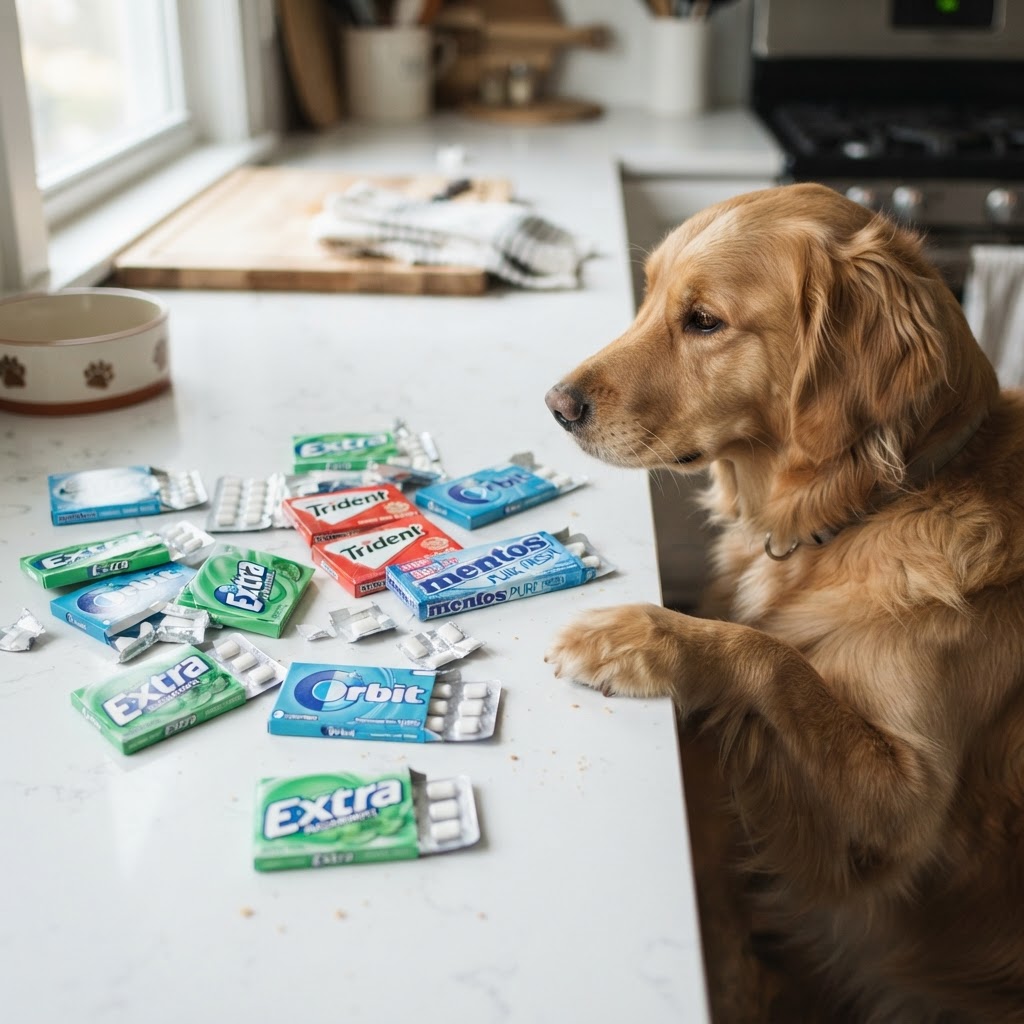
In humans, xylitol is absorbed slowly and has minimal effect on blood sugar. In dogs, xylitol is absorbed rapidly and causes a massive, rapid release of insulin from the pancreas. This results in a sudden, severe drop in blood sugar (hypoglycaemia) - sometimes within 10–15 minutes of ingestion.
In addition to the blood sugar crash, xylitol can cause acute liver failure in dogs. The mechanism is not fully understood, but the liver damage is severe, rapid, and can occur even when the initial blood sugar crisis has been managed.
Symptoms of Xylitol Poisoning
Symptoms can appear within 10–60 minutes of ingestion, though some dogs may not show signs for up to 12 hours.
Early signs (hypoglycaemia):
- Vomiting
- Weakness and lethargy - your dog may stumble or be unable to stand
- Tremors or shaking
- Seizures
- Collapse
- Disorientation - acting "drunk" or confused
- Pale gums
Severe signs (liver failure, developing over 12–72 hours):
- Jaundice - yellowing of the gums, skin, and whites of the eyes
- Bruising or bleeding (liver produces clotting factors; when it fails, bleeding occurs)
- Vomiting blood or passing dark, tarry stools
- Severe lethargy
- Coma
- Death
Hypoglycaemia is a life-threatening emergency. If your dog is showing signs of weakness, tremors, or seizures after ingesting something sugar-free, go to the vet immediately - do not wait.
What to Do If Your Dog Ingests Xylitol
Step 1: Call your vet or a pet poison helpline immediately. This is a true emergency. Time is critical.
Step 2: Gather the information:
- What product did your dog eat? (Bring the packaging if possible)
- How much did they eat? (How many pieces of gum, how many grams of peanut butter, etc.)
- When did they eat it?
- Your dog's weight
Step 3: Go to the vet immediately.
If ingestion was very recent (within 30 minutes), your vet may induce vomiting - but only if your dog is still bright and alert. If symptoms have already begun, inducing vomiting is dangerous (your dog could aspirate while seizuring).
At the vet, treatment will include:
- Inducing vomiting (if safe and recent)
- Activated charcoal - to bind remaining xylitol
- Dextrose (sugar) intravenously - to treat and prevent hypoglycaemia
- Hospitalisation and monitoring - blood sugar will be checked every 1–2 hours
- Liver protectants - such as SAMe, silymarin, or N-acetylcysteine
- Blood work - monitoring liver enzymes every 12–24 hours for at least 72 hours
- IV fluids - to support liver and kidney function
Even with aggressive treatment, xylitol toxicity can be fatal. The prognosis depends on the dose and how quickly treatment was initiated.
What NOT to Do
- ❌ Do not induce vomiting at home without veterinary instruction - if your dog is already hypoglycaemic, vomiting can lead to aspiration
- ❌ Do not wait for symptoms to appear - by the time weakness or seizures develop, the blood sugar has already crashed dangerously low
- ❌ Do not assume "it was just one piece of gum" - a single piece of some sugar-free gums contains enough xylitol to be toxic to a small dog
- ❌ Do not give your dog anything sugar-free without checking the label first
Prevention - The Only Reliable Protection
- Keep all sugar-free products out of reach - handbags, kitchen cupboards, bathroom cabinets
- Check every peanut butter label before giving it to your dog - or buy dog-specific peanut butter
- Don't share sugar-free baked goods with your dog
- Be vigilant about guests' handbags - many dogs have been poisoned by gum found in visitors' bags
- Educate your family - children and visitors may not know that sugar-free treats are dangerous
The Bottom Line
Xylitol is one of the most dangerous toxins a dog can encounter - tiny amounts can be fatal, and it's hiding in products you probably have in your home right now. Read labels, keep sugar-free products secured, and if you suspect your dog has eaten anything containing xylitol, call your vet immediately. Minutes matter.
Frequently Asked Questions
Disclaimer: This article is for educational purposes only and is not a substitute for professional veterinary advice. If you're concerned about your pet's health, use our AI triage assessment or consult a licensed veterinarian.