Bottom line: Heatstroke is a fatal emergency; if your dog is panting excessively, has bright red gums, or seems disoriented, you must cool them slowly and get to a vet. Never leave a dog in a parked car.
| Situation | Suggested action |
|---|---|
| Collapse or seizures | Immediate emergency clinic |
| Bright red/purple gums | Immediate cooling and vet |
| Excessive, distressed panting | Move to shade and water |
| Mild heat after play | Rest and water indoors |
Your Dog Can't Sweat - Here's Why That Matters
Humans sweat to cool down. We have sweat glands all over our bodies, and when the mercury rises, evaporation does the heavy lifting.
Dogs? They have sweat glands only in their paw pads. Their primary cooling system is panting - rapid, shallow breaths that evaporate moisture from the lungs and airways. It works well enough in mild conditions. But when the temperature climbs above 27°C (80°F), or when humidity is high, panting simply can't keep up.
The result is heatstroke - a body temperature above 41°C (105.8°F) that cooks organs from the inside out. It can cause brain damage, kidney failure, heart arrhythmias, and death. And it can happen terrifyingly fast.
How Dogs Overheat
Heatstroke doesn't just happen on 40°C summer days. Some of the most common scenarios are surprisingly mundane:
The classic danger: A dog left in a parked car. On a 22°C (72°F) day - a mild spring afternoon - the temperature inside a car can reach 47°C (117°F) within 60 minutes. Cracking the windows makes almost no difference.
Other common causes:
- Exercise in warm weather - running, hiking, or even an enthusiastic game of fetch
- Being outdoors without access to shade or water
- High humidity - even moderate temperatures become dangerous when the air is saturated, because evaporation (the whole point of panting) becomes ineffective
- Flat-faced breeds - Pugs, French Bulldogs, Bulldogs, and Boxers have compressed airways that make panting far less efficient
A note on flat-faced breeds: Brachycephalic dogs are overrepresented in heatstroke cases by a wide margin. If you own one of these breeds, you need to be extra vigilant in any temperature above 20°C (68°F).
The Signs - From "Getting Warm" to Emergency
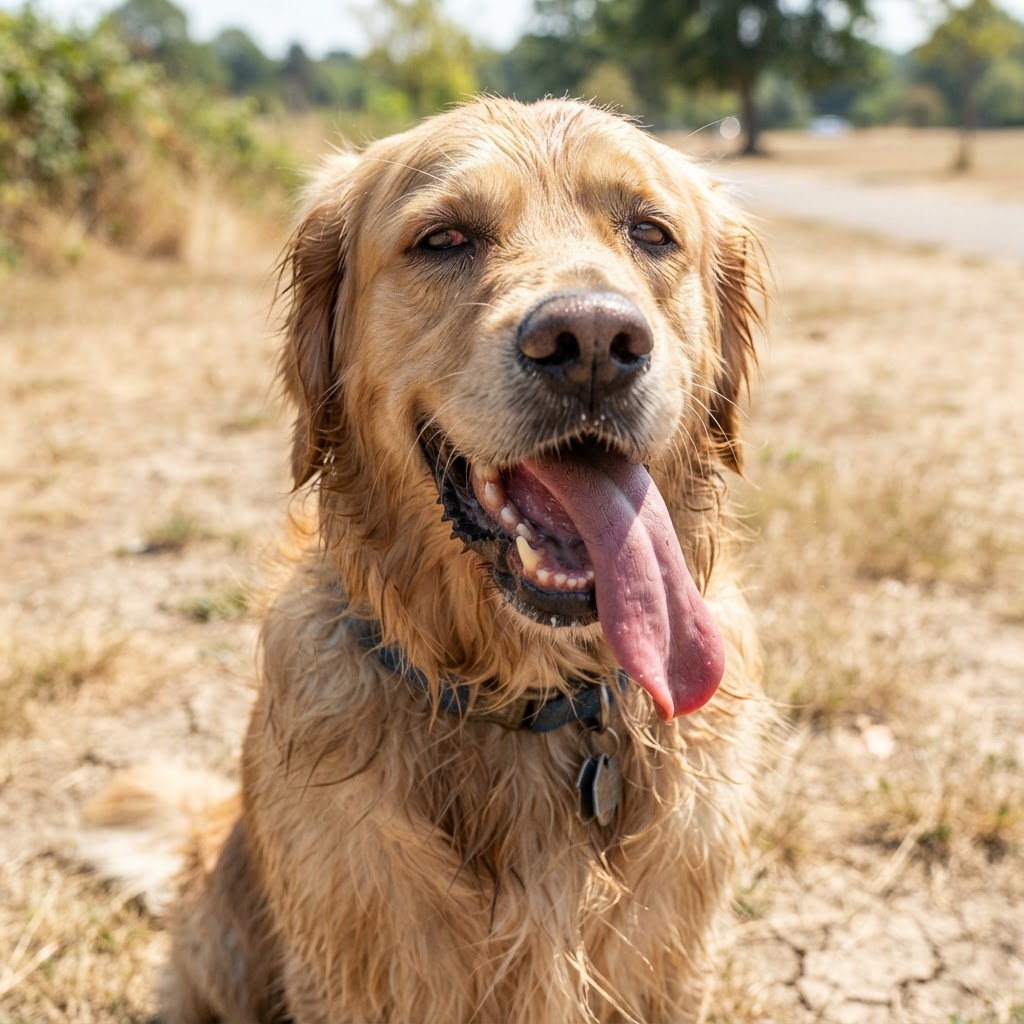
Heatstroke develops in stages. The earlier you catch it, the better the outcome.
Early warning signs:
- 🐾 Excessive, heavy panting - louder and more frantic than usual
- Thick, ropey drooling
- Bright red or dark red gums and tongue
- Restlessness and agitation - your dog is clearly uncomfortable
- Rapid heart rate
Severe signs - this is now a life-threatening emergency:
- Vomiting and diarrhoea (may contain blood)
- Weakness, stumbling, or collapse
- Seizures
- Blue, pale, or grey gums - a sign of oxygen deprivation and shock
- Loss of consciousness
What to Do - Step by Step
Heatstroke is a medical emergency. Start cooling your dog immediately and call your vet on the way.
Step 1: Move your dog to a cool, shaded area or an air-conditioned room.
Step 2: Start cooling with cool - not cold - water. Focus on the belly, inner thighs, neck, and paw pads, where blood vessels are close to the surface. Use a hose, wet towels, or even pour water from a bottle.
Step 3: Offer small amounts of water to drink - but don't force it.
Step 4: Call your vet. Even if your dog seems to be recovering, internal organ damage may already be underway. Blood tests can reveal kidney and liver injury that isn't visible from the outside.
Step 5: Transport carefully. Turn the air conditioning on high and keep windows down for airflow. Keep cooling measures going during transport if possible.
What NOT to Do
These well-meaning interventions can make things worse:
- ❌ Do not use ice or ice-cold water. Extreme cold causes blood vessels at the skin surface to constrict, trapping heat inside the body and potentially sending your dog into shock.
- ❌ Do not submerge your dog in a pool or bath - they can inhale water or panic.
- ❌ Do not force water into their mouth - aspiration pneumonia is a real risk.
- ❌ Do not stop cooling too early. Aim to get the body temperature down to around 39°C, then transport - but don't over-cool, as hypothermia is also dangerous.
Prevention Is Better Than Cure
The tragedy of heatstroke is that it's almost always preventable:
- Never, ever leave your dog in a parked car - not even for "just a minute"
- Walk early or late - before 8 AM or after 7 PM in summer
- Test the pavement: Press the back of your hand against the ground for 5 seconds. If it's too hot for your hand, it's too hot for your dog's paws
- Always provide shade and fresh water - carry a collapsible bowl on walks
- Know your dog's risk factors: flat-faced breeds, overweight dogs, seniors, and dogs with heart or breathing conditions need extra caution
- Consider cooling gear: cooling vests and mats can help, but they're not a substitute for common sense
The Bottom Line
Heatstroke is fast, it's deadly, and it's almost always preventable. Know your dog's limits. When in doubt, choose the cooler part of the day, the shorter walk, the shadier path. And if you see the signs - act immediately. Minutes matter.
Frequently Asked Questions
Disclaimer: This article is for educational purposes only and is not a substitute for professional veterinary advice. If you're concerned about your pet's health, use our AI triage assessment or consult a licensed veterinarian.