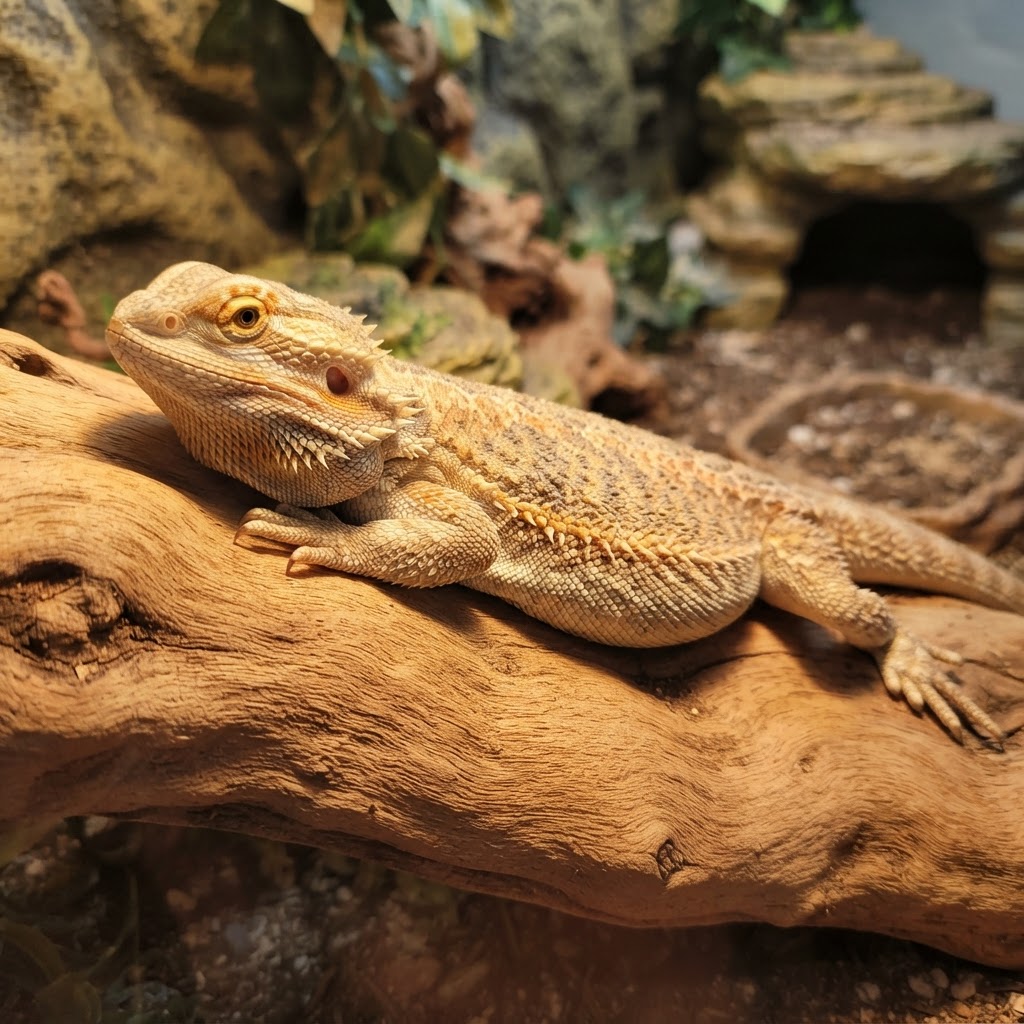
Bottom line: Impaction, a blockage in the gut, often from swallowed substrate like sand or bark, can be fatal if not treated. A dragon that stops passing droppings, won't eat, and has a swollen or firm belly may be impacted; see a reptile vet rather than waiting for it to pass.
| Situation | Suggested action |
|---|---|
| Missed a day of droppings, otherwise bright | Warm soak, monitor closely |
| No droppings for days, or a firm/swollen belly | Vet visit within a day |
| No droppings + not eating, dragging legs, or straining | Same-day / emergency vet |
Why impaction happens
Reptiles digest slowly, and anything that blocks or slows the gut, swallowed loose substrate, an oversized or hard-bodied insect, dehydration, or a cold enclosure, can build up into an impaction. The intestine fills, the dragon stops eating and passing droppings, and the belly becomes firm or swollen. Loose substrates like sand, calci-sand, bark, and gravel are the classic culprits, because dragons naturally lick and ingest bits of their substrate. Left untreated, an impaction can rupture the bowel or cause death.
What can cause it
Swallowed loose substrate (sand, calci-sand, bark, gravel) is the most common cause. Large or hard prey (mealworms, superworms) in a small or dehydrated dragon can do it too. Low basking temperature slows digestion so material sits in the gut. Dehydration and a low-fibre diet add to the slowdown, and internal parasites can contribute.
When to worry, the red flags
A missed day of droppings can be normal. See a reptile vet for:
- No droppings for days to weeks
- A swollen or firm abdomen
- Not eating, lethargy, or dragging the back legs
- Straining to pass a stool with nothing produced
- A "back leg shuffle" walk or weak hind limbs
- Weight loss
What to do right now
- Give a warm soak (shallow, around 32–35 °C) for 15–20 minutes to hydrate and stimulate the gut.
- Stop feeding hard-bodied insects and offer hydration.
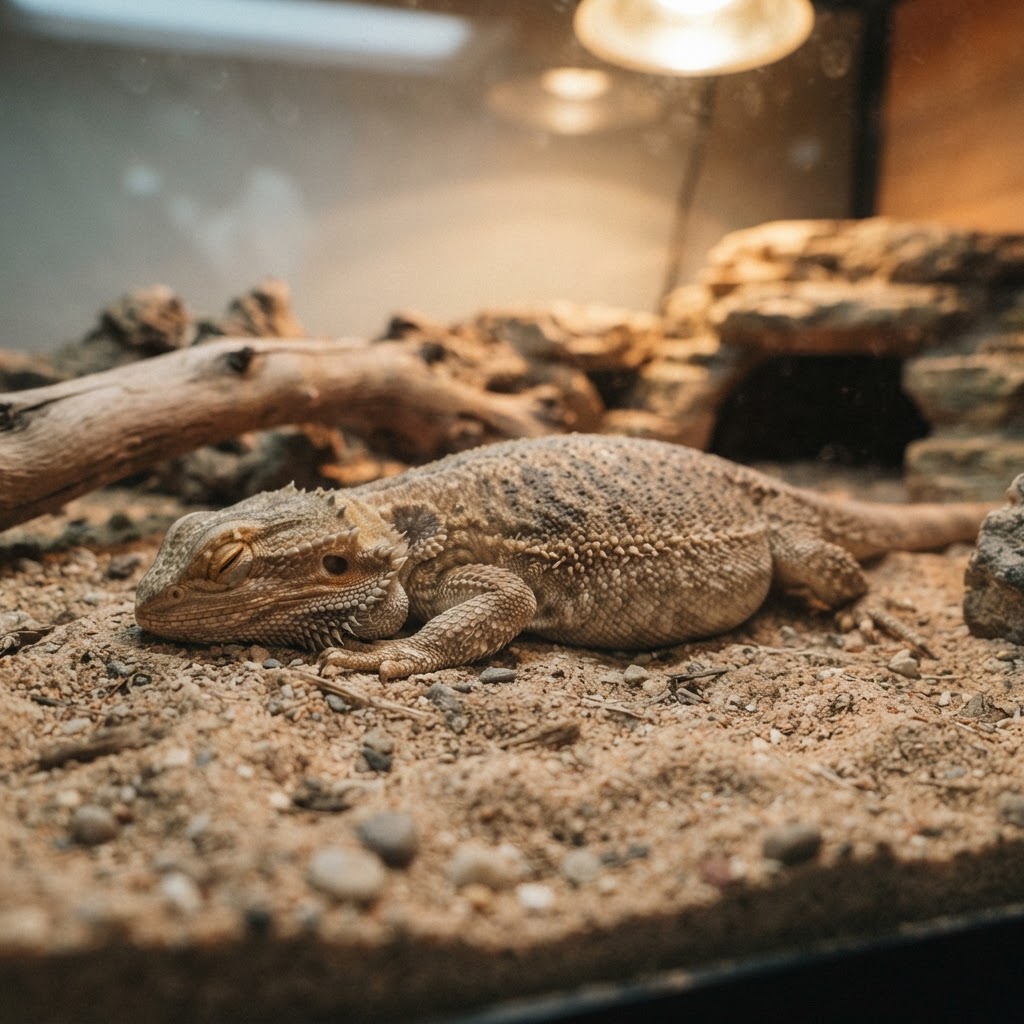
- Check the substrate, loose sand, calci-sand, bark, or gravel are common causes.
- Confirm the basking temperature is correct; low heat slows digestion.
- Book a reptile vet if there's no dropping within a few days of the soak or the belly is firm/swollen.
What NOT to do
- ❌ Don't use calci-sand or loose gravel as substrate.
- ❌ Don't feed oversized or hard prey to small dragons.
- ❌ Don't use home laxatives or oils without vet advice.
- ❌ Don't wait for it to "pass on its own" with a firm belly, it often doesn't.
How a reptile vet diagnoses and treats it
The vet palpates the abdomen and often takes an X-ray to confirm a blockage and its size. Mild cases may respond to warm soaks, hydration, and a prescribed laxative; severe blockages need surgery. The vet also checks for parasites and reviews your substrate and temperatures.
Preventing impaction
Use solid substrate (paper towel, tile, reptile carpet) rather than loose sand or bark, feed appropriately sized prey, keep the basking spot hot enough for proper digestion, and offer water and regular soaks to maintain hydration.
When to wait, and when to act now
A missed day of droppings can be normal. No droppings for several days, a firm or swollen belly, dragging legs, or not eating needs a reptile vet, don't wait for it to pass on its own.
Run a free AI triage assessment for personalised next steps, or find a reptile vet near you.
Frequently Asked Questions
Disclaimer: This article is for educational purposes only and is not a substitute for professional veterinary advice. If you're concerned about your pet's health, use our AI triage assessment or consult a licensed veterinarian.