Bottom line: A reptile that hasn't passed droppings for an unusually long time may have constipation or impaction, a gut blockage. Normal intervals vary by species, so the key is a change from your reptile's normal, plus a swollen belly or straining. A prolapse is an emergency.
| Situation | Suggested action |
|---|---|
| Missed a day or two, reptile otherwise bright | Warm soak, monitor |
| No droppings for far longer than normal, or a firm belly | Vet visit within a day |
| Straining, a prolapsed vent, or a swollen painful belly | Emergency vet now |
Why a reptile stops passing droppings
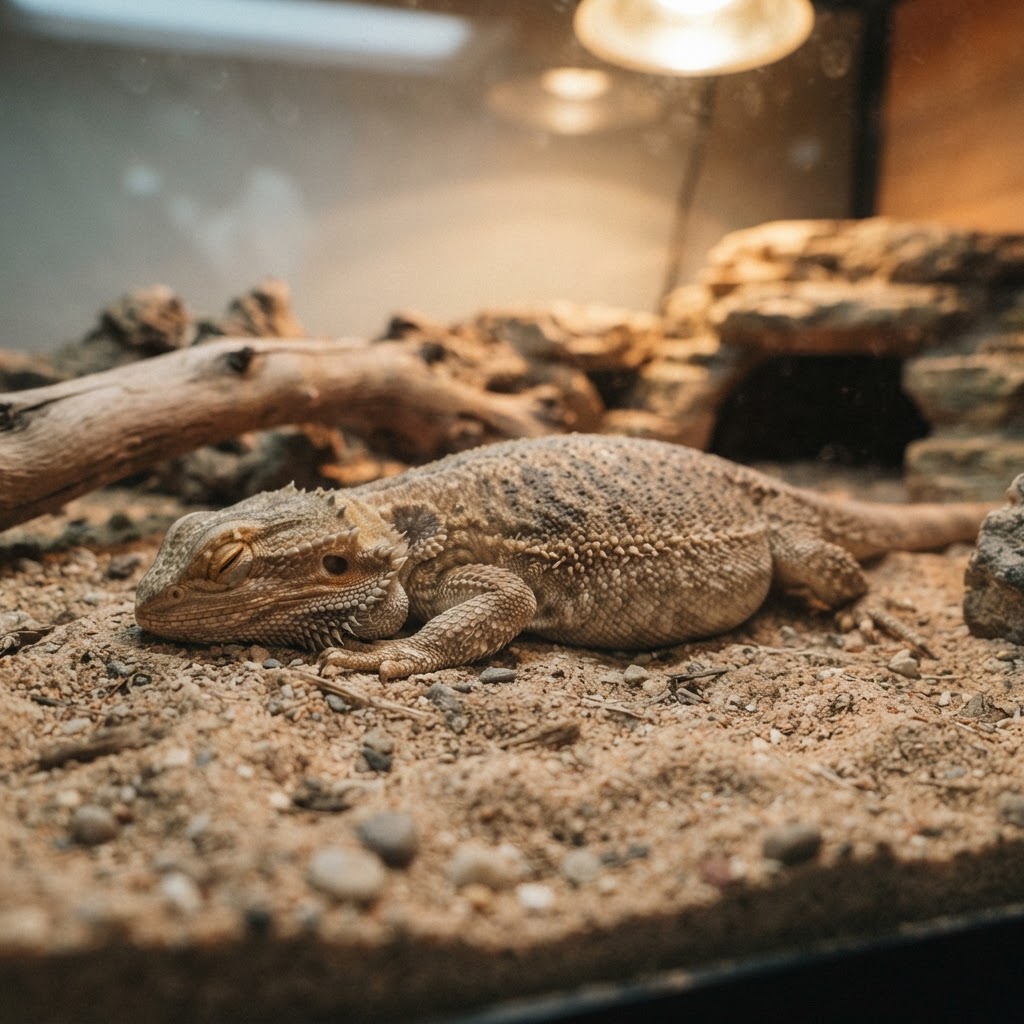
Dropping frequency varies a lot across reptiles, a snake may pass one every week or two, a bearded dragon daily, and a gecko every few days. What matters is a change from your animal's normal. When the gut slows or blocks, droppings stop, the belly swells, and the reptile becomes uncomfortable or stops eating. The causes range from simple dehydration and a cool enclosure to a serious impaction from swallowed substrate. Knowing your reptile's normal rhythm is what lets you spot a real problem.
What can cause it
Low basking temperature slows digestion and the gut. Swallowed loose substrate (sand, bark, gravel) causes impaction. Dehydration and a low-fibre diet thicken the stool and slow things down. Parasites or an internal blockage contribute. Stuck shed can block the vent in some species. Egg binding in females (a swollen belly with straining) is an emergency.
When to worry, the red flags
Missing a day or two can be normal depending on the species. See a reptile vet for:
- No droppings for much longer than normal for your species
- A swollen or firm abdomen
- Straining, or a prolapsed vent (tissue sticking out)
- Not eating, lethargy, or dragging the back legs
- Weight loss, or very dry, hard stool
What to do right now
- Check the basking temperature is correct for your species (warmth drives digestion).
- Give a warm soak (shallow, species-appropriate) for 15–20 minutes to hydrate.
- Check the substrate for impaction risk (loose sand, bark, gravel).
- Offer hydration; stop feeding hard prey temporarily.
- Book a reptile vet if no droppings within several days of the soak, the belly is firm, or a prolapse is present.
What NOT to do
- ❌ Don't use loose sand or bark substrates.
- ❌ Don't use home laxatives or oils without vet advice.
- ❌ Don't ignore a swollen belly or a prolapse, both are emergencies.
- ❌ Don't force-feed a blocked reptile.
How a reptile vet diagnoses and treats it
The vet palpates the abdomen and often X-rays to confirm a blockage. Mild constipation may respond to warm soaks, hydration, and sometimes a prescribed laxative; impaction can need surgery. The vet also checks for parasites and reviews husbandry.
Preventing constipation and impaction
Keep the basking gradient correct with verified thermometers, use solid substrate and avoid loose sand or bark, maintain hydration (water dish, regular soaks), and feed appropriate prey size and fibre where the species needs it.
When to wait, and when to act now
Missing a day or two can be normal depending on the species. No droppings for far longer than normal, a firm or swollen belly, straining, or a prolapse needs a reptile vet, a prolapse is an emergency.
Run a free AI triage assessment for personalised next steps, or find a reptile vet near you.
Frequently Asked Questions
Disclaimer: This article is for educational purposes only and is not a substitute for professional veterinary advice. If you're concerned about your pet's health, use our AI triage assessment or consult a licensed veterinarian.