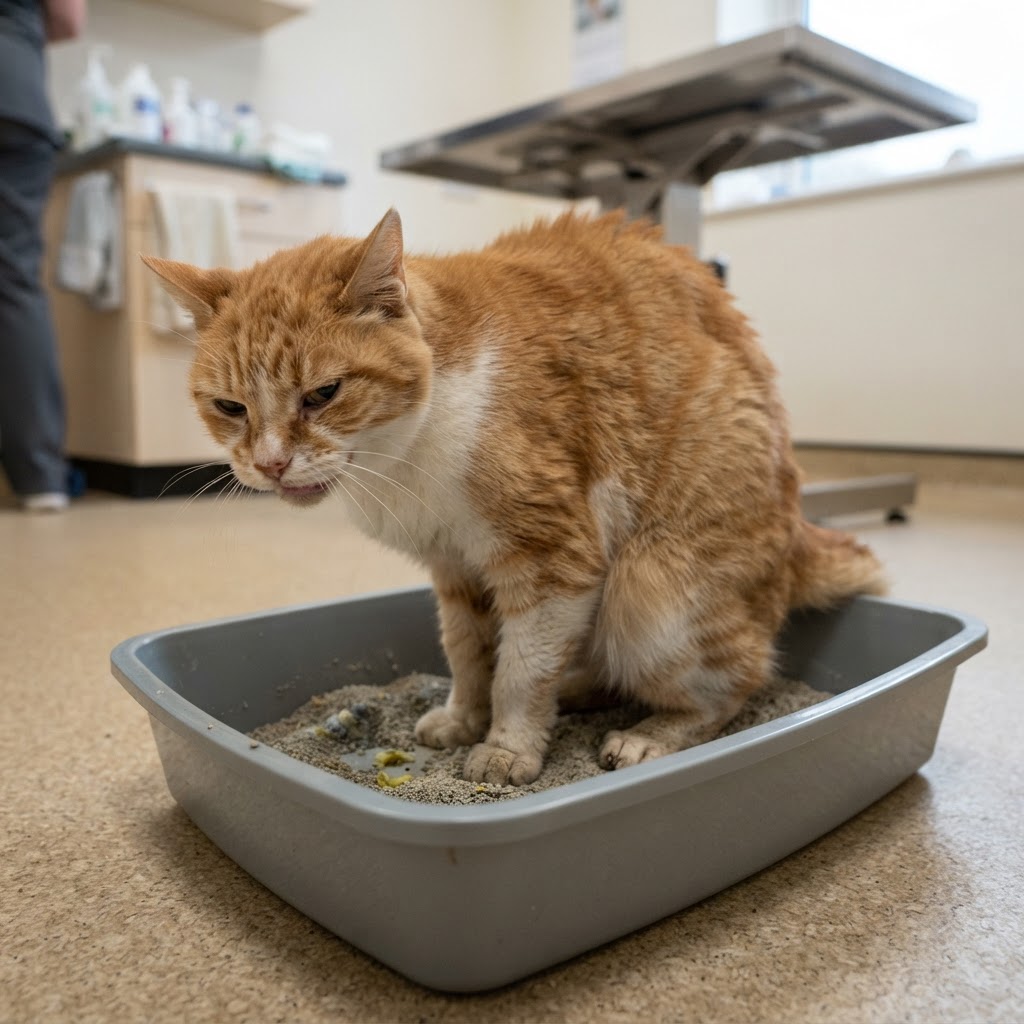
Bottom line: String or thread is a dangerous 'linear foreign body' that can cut through a cat's intestines under tension. If you see string protruding from your cat's mouth or anus, do not pull it; seek immediate emergency care.
| Situation | Suggested action |
|---|---|
| String visible from mouth/anus | Do not pull; go to emergency vet |
| Vomiting and not eating | Emergency vet visit |
| String ingested (no symptoms) | Call vet for immediate advice |
| Just observed play | Monitor stool carefully |
The Unique Danger of Linear Foreign Bodies
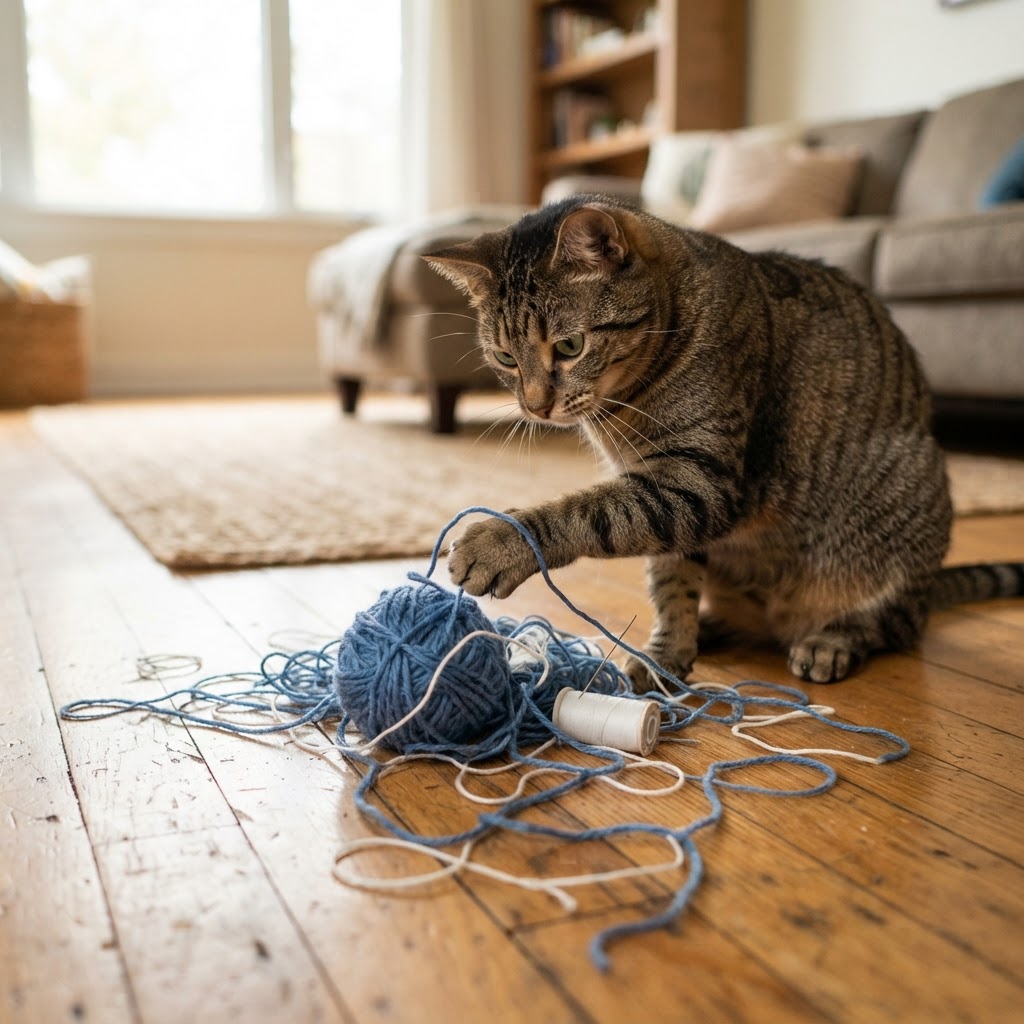
Cats love to play with string, thread, yarn, and dental floss. Unfortunately, these seemingly harmless objects are among the most dangerous things a cat can swallow. In veterinary medicine, they are classified as linear foreign bodies, and they pose a unique and life-threatening risk.
Here is why they are so dangerous: when a cat swallows a piece of string, it can become anchored somewhere in the digestive tract - often under the tongue or at the base of the stomach. As the intestines try to move the string along through normal contractions (peristalsis), they bunch up around it like a drawstring. The tension can cause the string to slice through the intestinal wall, leading to peritonitis, a life-threatening abdominal infection.
How to Tell If Your Cat Ate String
Cats are secretive about what they eat, so you may not witness the ingestion. Watch for these signs:
- Vomiting, especially repeated episodes
- Loss of appetite
- Lethargy
- Abdominal pain (your cat may resist being touched on the belly)
- Hiding more than usual
- Straining to defecate or no stool production
- Excessive drooling
If you see string or thread hanging from your cat's mouth or anus, this is a strong indicator of a linear foreign body.
If you see string hanging from your cat's mouth or anus, do NOT pull it. Pulling can cause the string to slice through the intestines or other internal organs. Cut it short to prevent it from being pulled further and take your cat to the vet immediately.
What to Do If You Suspect Your Cat Ate String
Step 1: Do Not Pull
If you see string hanging from your cat's mouth or anus, resist the urge to pull it. Cutting it short with scissors is safe and prevents the string from being caught on objects and pulled further into the digestive tract.
Step 2: Check Under the Tongue
If it is safe to do so, gently lift your cat's tongue and check if the string is wrapped around the base of the tongue. This is a common anchoring point. If you see this, do not attempt to remove it yourself - take your cat to the vet.
Step 3: Call Your Vet Immediately
This is a time-sensitive emergency. Even if your cat seems fine, the string may be anchored internally and causing progressive damage. The sooner your cat receives veterinary care, the better the outcome.
Step 4: Bring What You Know
If you know what type of string or how much was ingested, share this information with the vet. If there is a remaining piece (for example, the rest of a ball of yarn), bring it so the vet can estimate the length swallowed.
Do not induce vomiting. If the string is anchored at one end, bringing it back up can cause the same slicing damage as pulling it through.
How Vets Diagnose and Treat Linear Foreign Bodies
Diagnosis
Your vet will perform a physical examination and may feel bunched intestines in the abdomen. Diagnostic tools include:
- X-rays: Often reveal plicated (bunched) intestines characteristic of a linear foreign body
- Ultrasound: Can sometimes identify the string and assess intestinal wall integrity
- Endoscopy: May be used to visualise the oesophagus and stomach
Treatment
Treatment almost always requires surgery:
- Surgical exploration: The vet opens the abdomen to locate and remove the string
- Multiple intestinal incisions: Depending on the length and position, several incisions along the intestinal tract may be needed
- Intestinal repair: Damaged sections of intestine may need to be removed and reconnected (resection and anastomosis)
- Peritoneal lavage: If the intestine has been perforated, the abdomen must be thoroughly cleaned to treat peritonitis
- Post-operative care: Hospitalisation with intravenous fluids, pain management, and antibiotics
Why Early Intervention Matters
If the string is removed before it causes perforation, the prognosis is excellent. Once perforation occurs and peritonitis develops, the prognosis becomes guarded and treatment costs increase significantly.
Cats that receive surgical treatment within 24 hours of ingestion generally recover well. Delays beyond 48 hours significantly increase the risk of complications, including sepsis and death.
Prevention
Keep all string, thread, yarn, dental floss, rubber bands, and similar items out of your cat's reach. Store sewing supplies in closed containers, dispose of dental floss in a sealed bin, and supervise play with string-based toys - never leave them out when you are not present.
Frequently Asked Questions
Disclaimer: This article is for educational purposes only and is not a substitute for professional veterinary advice. If you're concerned about your pet's health, use our AI triage assessment or consult a licensed veterinarian.