Bottom line: Pale or white gums are a sign of low oxygen or low blood volume and are always a medical emergency. You must treat this as a life-threatening situation and get to a vet immediately.
| Situation | Suggested action |
|---|---|
| White or grey gums | Immediate emergency clinic |
| Pale gums with lethargy | Immediate emergency clinic |
| Sudden collapse | Immediate emergency clinic |
| Pale gums after injury | Immediate emergency clinic |
The 5-Second Check That Could Save Your Dog's Life
Lift your dog's lip. What colour are their gums? If they're pink and moist, that's a good sign. If they're pale, white, blue, or brown, your dog could be in serious trouble.
Gum colour is one of the most valuable - and quickest - health checks you can do. It takes five seconds, requires no equipment, and can tell you volumes about your dog's circulation, oxygenation, and blood health. Every dog owner should know what normal looks like - and what the warning colours mean.
What Normal Gums Look Like
Healthy gums in dogs are:
- 🐾 Pink - a light to medium pink colour
- Moist - slick and wet to the touch
- Slippery - gums should feel smooth and slick
The capillary refill test: Press your finger firmly against the gum until it turns white, then release. The pink colour should return within 1–2 seconds. If it takes longer than 2 seconds, your dog's circulation may be compromised.
Do this test now, while your dog is healthy. That way, you'll know what normal looks like and can spot changes quickly.
What Pale Gums Mean
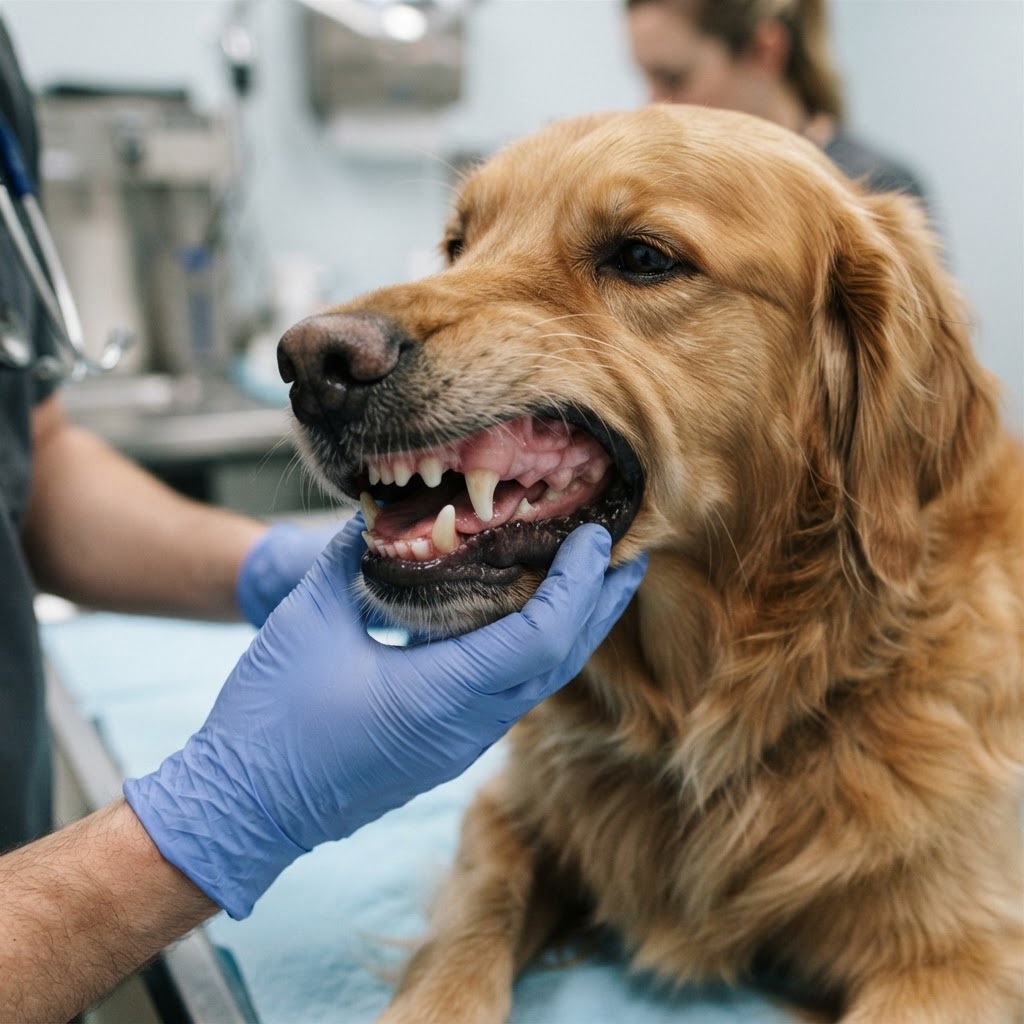
Pale or white gums indicate poor blood circulation or blood loss. The blood isn't reaching the gums in sufficient quantity - either because there isn't enough blood, or because it's not being pumped effectively.
Pale or white gums can indicate:
- Internal bleeding - from trauma (hit by a car, fall), ruptured tumours (such as a ruptured splenic mass), or rodenticide poisoning (rat bait causes fatal internal bleeding)
- Shock - from trauma, blood loss, severe infection (sepsis), or dehydration
- Anaemia - a shortage of red blood cells. Causes include:
- Blood loss (from bleeding or parasites like heavy flea infestations)
- Destruction of red blood cells (immune-mediated haemolytic anaemia, onion/garlic toxicity, zinc toxicity)
- Failure to produce red blood cells (chronic kidney disease, bone marrow disease)
- Heart disease - if the heart isn't pumping effectively, circulation is compromised
- Dehydration - severe dehydration reduces blood volume and can make gums appear pale and tacky
Pale gums are a medical emergency. If your dog's gums are white or very pale, go to the vet immediately. Do not wait.
What Other Gum Colours Mean
While pale gums are the most commonly missed sign of trouble, other colours are equally important:
Blue or purple gums (cyanosis):
This indicates oxygen deprivation. The blood is not carrying enough oxygen to the tissues. Causes include:
- Heart failure
- Severe lung disease (pneumonia, pulmonary oedema)
- Airway obstruction (choking, severe asthma)
- Toxin ingestion
Blue gums are a life-threatening emergency. Go to the vet immediately.
Bright red gums:
This can indicate:
- Heatstroke - the blood vessels dilate to release heat
- Carbon monoxide poisoning - from fire, car exhaust, or faulty heaters
- Sepsis - severe systemic infection
- Inflammation - such as stomatitis or gingivitis
Bright red gums, especially with panting, weakness, or collapse, are an emergency.
Brown or muddy gums:
This is a sign of methaemoglobinaemia - a condition where haemoglobin is altered and can't carry oxygen. It can be caused by:
- Paracetamol (acetaminophen) toxicity - even a single tablet can be fatal to a dog
- Certain toxins (nitrates, some chemicals)
Brown gums are a medical emergency. Go to the vet immediately.
Yellow gums (jaundice):
This indicates liver disease or red blood cell destruction. Causes include:
- Liver disease - hepatitis, liver failure, liver cancer
- Immune-mediated haemolytic anaemia - the body destroying its own red blood cells
- Leptospirosis - a bacterial infection
- Xylitol toxicity - can cause acute liver failure
Yellow gums are a serious sign. See your vet promptly.
Bleeding gums:
Bleeding from the gums can indicate:
- Dental disease - gingivitis, tooth root abscess
- Trauma - cut from a bone or stick
- Clotting disorders - including rodenticide (rat bait) poisoning, which interferes with blood clotting
Spontaneous bleeding (not from an obvious injury) is an emergency - especially if there's no history of dental disease.
What to Do If Your Dog's Gums Are Abnormal
Step 1: Stay calm. Panic won't help your dog, and they can sense your fear.
Step 2: Check the colour and capillary refill time.
- What colour are the gums?
- How long does it take for colour to return after you press?
Step 3: Note any other symptoms:
- 🐾 Is your dog lethargic, weak, or collapsed?
- Are they breathing rapidly or with effort?
- Are they panting excessively?
- Have they eaten something unusual? (rat bait, human medication, onions, garlic)
- Have they been injured recently?
- Are they vomiting, having diarrhoea, or showing blood anywhere?
Step 4: Call your vet or emergency clinic immediately. Describe the gum colour and any other symptoms.
Step 5: Transport carefully. Keep your dog warm and calm. Don't let them exert themselves - carry them if possible.
What NOT to Do
- ❌ Do not wait to see if the colour improves - pale or blue gums indicate a serious problem that needs immediate treatment
- ❌ Do not give food or water - if your dog needs anaesthesia, they need an empty stomach
- ❌ Do not give human medications - especially paracetamol, which can cause brown gums and fatal liver damage
- ❌ Do not try to treat at home - there is no home remedy for pale, blue, or brown gums
The Bottom Line
Lift your dog's lip. Right now. Look at their gums. Learn what "normal" looks like. Then check them regularly - once a week, or any time something seems off. Because when your dog is sick or injured, those five seconds could be the difference between catching a problem early and losing your dog. Pale, blue, or brown gums are an emergency. Don't wait. Go.
Frequently Asked Questions
Disclaimer: This article is for educational purposes only and is not a substitute for professional veterinary advice. If you're concerned about your pet's health, use our AI triage assessment or consult a licensed veterinarian.