Bottom line: Wheezing, often mistaken for coughing or hairballs, requires a diagnosis to rule out feline asthma or heart conditions. If your cat is panting or has blue-tinted gums, this is a crisis.
| Situation | Suggested action |
|---|---|
| Panting with blue gums/tongue | Emergency vet visit |
| Persistent wheezing attacks | Scheduled vet appointment |
| Occasional mild wheezing | Record video for vet |
| No breathing symptoms | No action needed |
The Sound That Stops You in Your Tracks
You're in the other room and you hear it - a wheezing, whistling, or hacking sound from your cat. You rush in and find them crouched low, neck extended, breathing with visible effort. It's terrifying.
Wheezing in cats is not normal. It's a sign that something is obstructing or inflaming the airways - and it ranges from a mild irritation to a life-threatening emergency. If your cat is wheezing, they need to see a vet.
What Is Wheezing?
Wheezing is a high-pitched, whistling sound made during breathing - usually on the exhale. It occurs when air is forced through narrowed airways. In cats, wheezing is most commonly a sign of feline asthma - but it can also indicate other serious conditions.
Feline Asthma
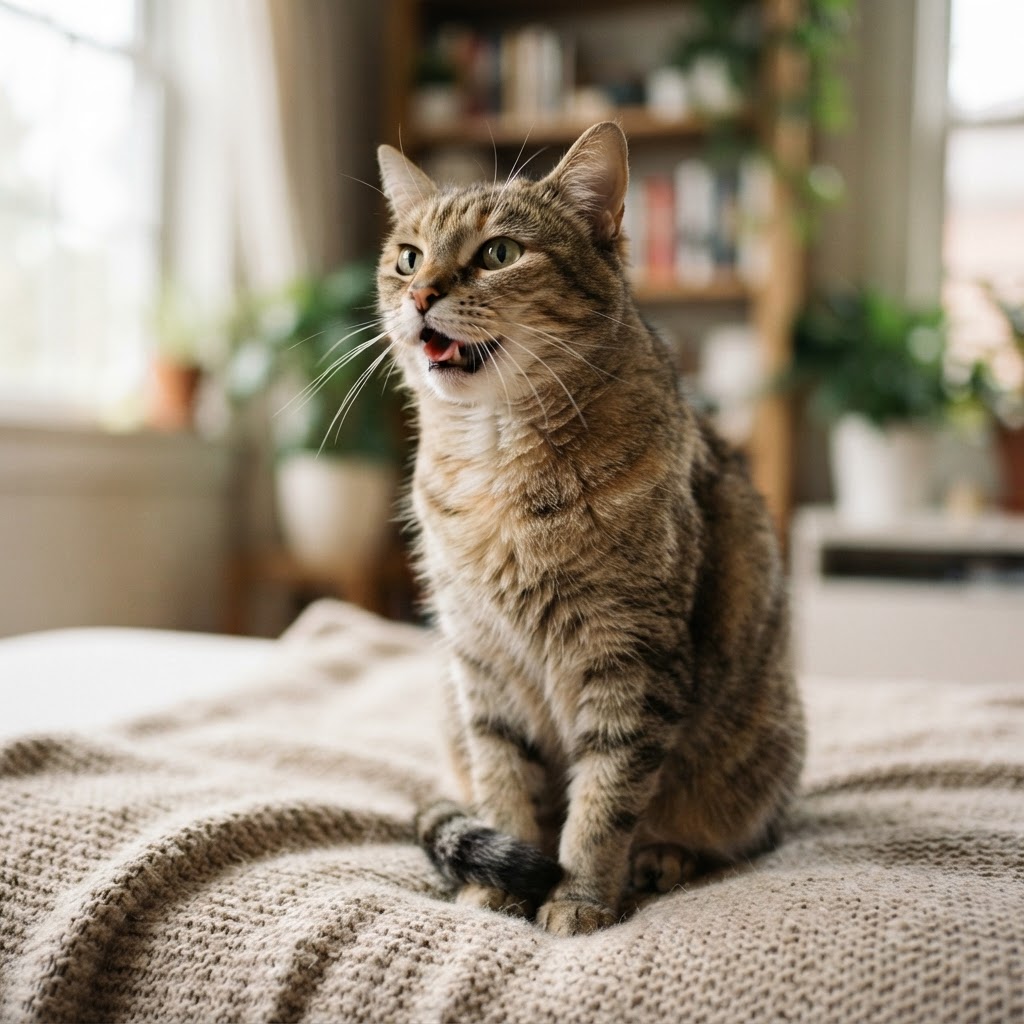
Feline asthma is a chronic inflammatory disease of the airways. It's estimated to affect about 1–5% of cats, and it's one of the most common causes of wheezing.
What happens in feline asthma:
- The immune system overreacts to an inhaled allergen (dust, pollen, mould, smoke, etc.)
- The airways become inflamed and swollen
- The muscles around the airways constrict (bronchoconstriction)
- Mucus production increases, further narrowing the airways
- The result: difficulty breathing, wheezing, and coughing
Signs of feline asthma:
- 🐾 Wheezing - a whistling sound during breathing
- Coughing - often dry and hacking, sometimes mistaken for hairball retching
- Difficulty breathing - rapid, laboured breathing
- Open-mouth breathing - a sign of severe respiratory distress
- Squatting or crouching with neck extended and elbows out - a posture cats adopt to maximise airway opening
- Lethargy and reluctance to move
- Blue or grey gums - a sign of oxygen deprivation
Asthma triggers:
- Dust and dust mites - in litter, bedding, and carpets
- Pollen - seasonal allergies
- Mould - especially in damp environments
- Smoke - cigarette, fireplace, or candle smoke
- Perfumes and air fresheners - strong scents irritate sensitive airways
- Aerosol sprays - cleaning products, hairspray
- Obesity - excess weight worsens breathing difficulties
- Stress - can trigger asthma attacks in some cats
Asthma attacks can range from mild to life-threatening. A severe attack - with open-mouth breathing, blue gums, or collapse - is an emergency.
Other Causes of Wheezing in Cats
While asthma is the most common cause, wheezing can also indicate:
1. Heart disease
In older cats, heart disease can cause fluid to build up in or around the lungs. This causes breathing difficulty, wheezing, and coughing.
- 🐾 More common in older cats
- Often accompanied by lethargy, loss of appetite, and weight loss
- May cause sudden hind-limb paralysis (if a blood clot forms - a saddle thrombus)
2. Respiratory infections
Severe upper respiratory infections (herpesvirus, calicivirus) or bacterial pneumonia can cause wheezing, coughing, and nasal discharge.
3. Foreign body
An inhaled object - such as a grass seed - can lodge in the airways, causing sudden onset wheezing, coughing, and distress.
- 🐾 Sudden onset
- Often accompanied by pawing at the mouth or gagging
- Can progress rapidly to breathing distress
4. Tumours
Lung tumours or tumours pressing on the airways can cause wheezing, coughing, and breathing difficulty. More common in older cats.
5. Pleural effusion
Fluid accumulation in the chest cavity (around the lungs) can compress the lungs and cause breathing difficulty. Causes include heart failure, infections, and cancer.
When to Go to the Emergency Vet
Go to the emergency vet IMMEDIATELY if your cat is:
- 🐾 Open-mouth breathing - cats should never breathe through their mouths; this is always an emergency
- Breathing rapidly or with effort - more than 40 breaths per minute at rest, or visible abdominal effort
- Gums are blue, grey, or pale - oxygen deprivation
- Coughing continuously and unable to stop
- Collapsing, weak, or unable to stand
- Squatting with neck extended and elbows out - a sign of severe respiratory distress
- A severe asthma attack - with any of the above signs
When to See the Vet (Non-Emergency)
Book an appointment if:
- Your cat is wheezing intermittently but otherwise well
- Your cat has a chronic cough - especially if it's dry and hacking
- Your cat has been diagnosed with asthma and symptoms are worsening or not controlled
- Your cat is breathing faster than usual at rest
If your cat has been diagnosed with asthma, your vet may prescribe an inhaler (with a spacer and mask designed for cats) - this delivers medication directly to the airways and is highly effective with minimal side effects.
How to Help a Wheezing Cat
1. Reduce environmental triggers:
- 🐾 Switch to a low-dust, unscented cat litter
- Avoid perfumes, air fresheners, and aerosol sprays
- Don't smoke around your cat - and don't allow them near fireplaces or candles
- Use a HEPA air purifier to reduce dust and allergens
- Vacuum regularly and wash bedding weekly
- Control humidity - high humidity encourages mould and dust mites
2. Maintain a healthy weight:
Obesity worsens asthma and breathing difficulties. If your cat is overweight, work with your vet on a weight loss plan.
3. Reduce stress:
Stress can trigger asthma attacks. Provide a calm, stable environment and use Feliway diffusers if needed.
4. Follow your vet's treatment plan:
- Inhalers (such as fluticasone) - the gold standard for feline asthma
- Oral medications (such as prednisolone) - for acute attacks or when inhalers aren't feasible
- Bronchodilators - to open the airways during an attack
5. Monitor breathing rate:
Count your cat's breaths per minute while they're sleeping. Normal is 20–30. If it's consistently above 30, or increasing over time, see your vet.
The Bottom Line
Wheezing in cats is not normal - it's a sign that the airways are narrowed, inflamed, or obstructed. Feline asthma is the most common cause and is very manageable with the right treatment. But wheezing can also indicate heart disease, infections, or other serious conditions. If your cat is wheezing, especially with open-mouth breathing or blue gums, don't wait - this is an emergency. Early diagnosis and treatment can dramatically improve quality of life and prevent life-threatening attacks.
Frequently Asked Questions
Disclaimer: This article is for educational purposes only and is not a substitute for professional veterinary advice. If you're concerned about your pet's health, use our AI triage assessment or consult a licensed veterinarian.