Bottom line: Runny eyes in cats are often linked to viral infections. If you notice swelling, cloudiness, or thick discharge, you need to see a vet to prevent eye damage or vision loss.
| Situation | Suggested action |
|---|---|
| Squinting or rubbing eye | Same-day vet appointment |
| Cloudy or yellow/green discharge | Same-day vet appointment |
| Swollen eyelid | Same-day vet appointment |
| Clear watery tear | Monitor for 24 hours |
Those Gunky Eyes - When to Worry
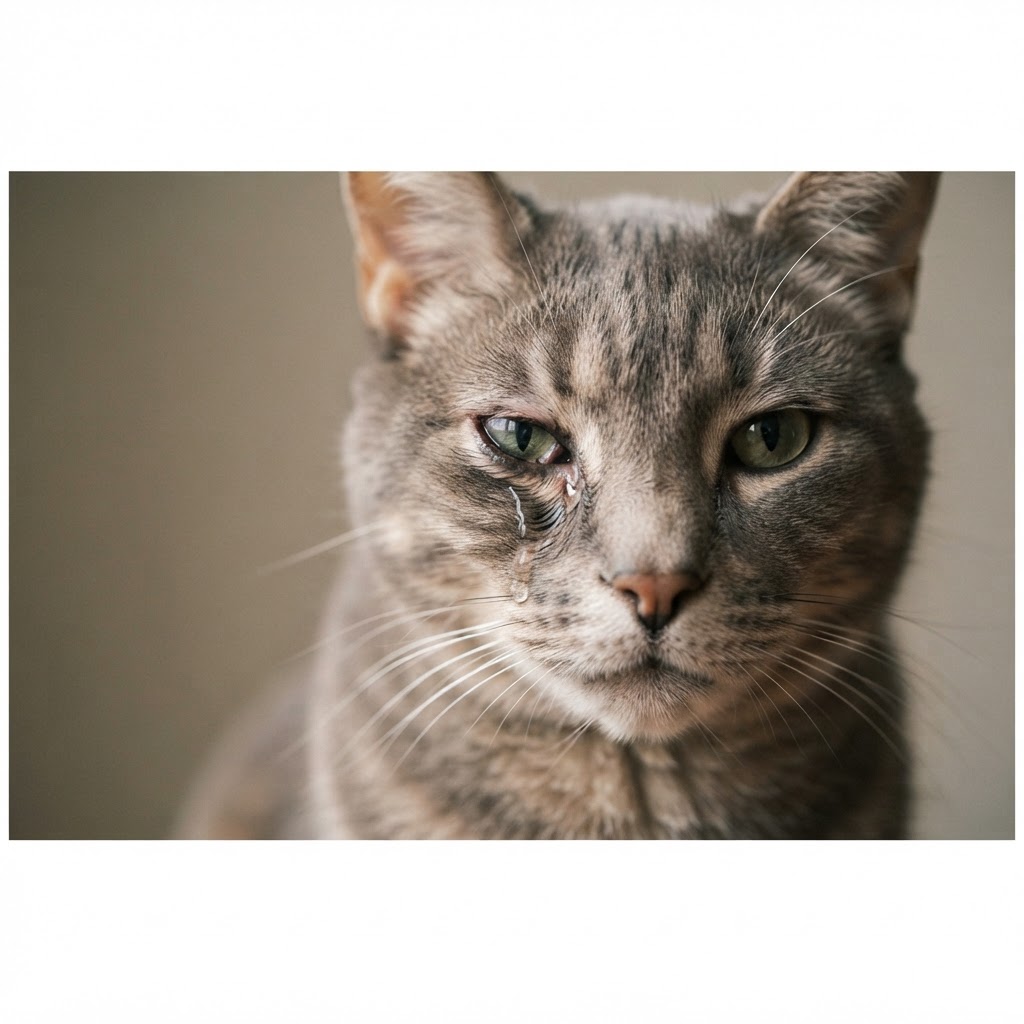
You look at your cat and notice their eyes are a bit weepy. There's a dark crust in the corner, or a clear dribble running down their cheek. Is this normal, or should you be concerned?
Eye discharge in cats is incredibly common - and it ranges from completely harmless to a sign of a serious problem. The key is knowing what kind of discharge, how much, and what else is going on.
Understanding Cat Eye Discharge
A small amount of clear, watery discharge from a cat's eyes is normal - just as humans have a bit of "sleep" in their eyes in the morning. Cats produce tears to keep their eyes lubricated, and a small amount of overflow is nothing to worry about.
The concern is when the discharge:
- 🐾 Becomes thick, yellow, or green (suggests infection)
- Is excessive or constant
- Is from one eye only (can indicate a foreign body or localised problem)
- Is accompanied by redness, swelling, or squinting
- Is accompanied by other symptoms - sneezing, nasal discharge, lethargy, loss of appetite
Common Causes of Runny Eyes in Cats
1. Upper respiratory infections
The most common cause of eye discharge in cats is an upper respiratory infection (URI) - the cat equivalent of a cold. Two viruses are responsible for the majority of cases:
- Feline herpesvirus (FHV) - the most common cause. Once infected, cats carry the virus for life, and symptoms can recur during times of stress
- Feline calicivirus (FCV) - also common, often causes oral ulcers
Symptoms of a URI:
- 🐾 Eye discharge - clear at first, then thick and yellow or green
- Sneezing
- Nasal discharge
- Loss of appetite - cats who can't smell often won't eat
- Lethargy
- Fever
- Squinting or red, inflamed eyes
URIs are especially common in kittens, rescued cats, and unvaccinated cats. Most are viral and resolve with supportive care, but secondary bacterial infections may need antibiotics.
2. Conjunctivitis
Inflammation of the conjunctiva - the thin membrane lining the eyelids and covering the white of the eye. Conjunctivitis can be caused by:
- Viruses (herpesvirus, calicivirus)
- Bacteria (Chlamydia felis, mycoplasma)
- Allergies
- Irritants (dust, smoke, chemicals)
Signs of conjunctivitis:
- 🐾 Red, inflamed eyes
- Squinting - your cat may hold the eye partially or fully closed
- Discharge - clear, yellow, or green
- Pawing at the eye
- Swelling of the eyelids
Important: Conjunctivitis is painful. A squinting cat needs to see a vet - untreated conjunctivitis can cause corneal ulcers and permanent eye damage.
3. Corneal ulcers
A scratch or ulcer on the surface of the eye (the cornea) is a serious problem. Corneal ulcers are extremely painful and can deteriorate rapidly - sometimes within hours.
Signs of a corneal ulcer:
- 🐾 Squinting - often severe, the eye may be held tightly closed
- Excessive tearing
- Redness of the eye
- Cloudiness or a white spot on the surface of the eye
- Pawing at the eye
- Sensitivity to light
A squinting, weeping eye should be seen by a vet within 24 hours. Corneal ulcers can progress quickly and, if untreated, can lead to rupture of the eye and permanent blindness.
4. Allergies
Cats can develop environmental allergies - to pollen, dust, mould, or smoke. Allergic eye discharge is usually clear and watery, and often accompanied by sneezing and itchy skin.
5. Blocked tear ducts
Some cats are born with narrow or blocked tear ducts, causing tears to overflow onto the face. This is common in certain breeds (Persians, Himalayans, and other flat-faced cats) and is usually harmless - just cosmetically noticeable.
6. More serious causes
In older cats, eye discharge can indicate:
- Uveitis - inflammation inside the eye, sometimes associated with systemic diseases like feline leukaemia (FeLV), feline immunodeficiency virus (FIV), or toxoplasmosis
- Glaucoma - increased pressure inside the eye, which is painful and can cause blindness
- Eye tumours
When to See the Vet
Contact your vet if:
- 🐾 The discharge is thick, yellow, or green
- The discharge is from one eye only
- Your cat is squinting or holding the eye closed
- The eye is red, swollen, or cloudy
- Your cat is pawing at the eye
- Your cat is sneezing, has nasal discharge, or isn't eating
- Your cat is lethargic or has a fever
- The discharge has been present for more than 2–3 days
- Your cat is a kitten or senior
If your cat is squinting, has a cloudy eye, or is in pain, see a vet within 24 hours. Eye problems can deteriorate rapidly, and early treatment is critical to prevent permanent damage.
What to Do at Home
While waiting for your vet appointment:
- Gently wipe away discharge with a cotton ball soaked in warm water or saline - wipe from the inner corner outward, using a fresh cotton ball for each eye
- Do not use human eye drops - many contain ingredients that are harmful to cats
- Do not use salt water - it can irritate the eye
- Keep your cat's eyes clean and prevent them from pawing at them (a soft collar may be needed)
- Ensure your cat is eating - if they're not, see your vet promptly
Preventing Eye Problems
- Vaccinate your cat - core vaccines protect against herpesvirus and calicivirus
- Keep your cat indoors - or supervise outdoor access, especially for young or unvaccinated cats
- Reduce irritants - avoid perfumes, air fresheners, and smoke
- Regular vet check-ups - especially for flat-faced breeds prone to eye problems
- Manage stress - stress can reactivate latent herpesvirus infections
The Bottom Line
A small amount of clear discharge from your cat's eyes is usually nothing to worry about. But thick, coloured discharge, squinting, or any sign of pain or discomfort warrants a vet visit. Eye problems can deteriorate quickly - and early treatment can mean the difference between a quick recovery and permanent damage. When it comes to your cat's eyes, always err on the side of caution.
Frequently Asked Questions
Disclaimer: This article is for educational purposes only and is not a substitute for professional veterinary advice. If you're concerned about your pet's health, use our AI triage assessment or consult a licensed veterinarian.