Bottom line: Clear discharge is often normal, but yellow, green, or thick discharge often indicates an infection, injury, or underlying condition like dry eye. Never apply human eye drops and seek veterinary care for any persistent or painful eye issues.
| Situation | Suggested action |
|---|---|
| Sudden vision loss or squinting | Emergency vet visit |
| Green/yellow thick discharge | Schedule vet visit within 24h |
| Redness or swelling | Schedule vet visit |
| Small amount of clear mucus | Monitor for changes |
Understanding Dog Eye Discharge
Some eye discharge in dogs is perfectly normal. Just like humans, dogs produce tears to keep their eyes lubricated and flush out dust and debris. However, the colour, consistency, and amount of discharge can tell you a lot about what is happening.
The 6 Types of Eye Discharge
1. Clear, Watery Discharge
This is the most common and least concerning type. It is typically caused by allergies, wind, dust, or mild irritants. If it is occasional and not accompanied by other symptoms, it usually resolves on its own.
When to worry: If the discharge becomes persistent or is accompanied by redness, swelling, or pawing at the eye.
2. Clear, Stringy Discharge
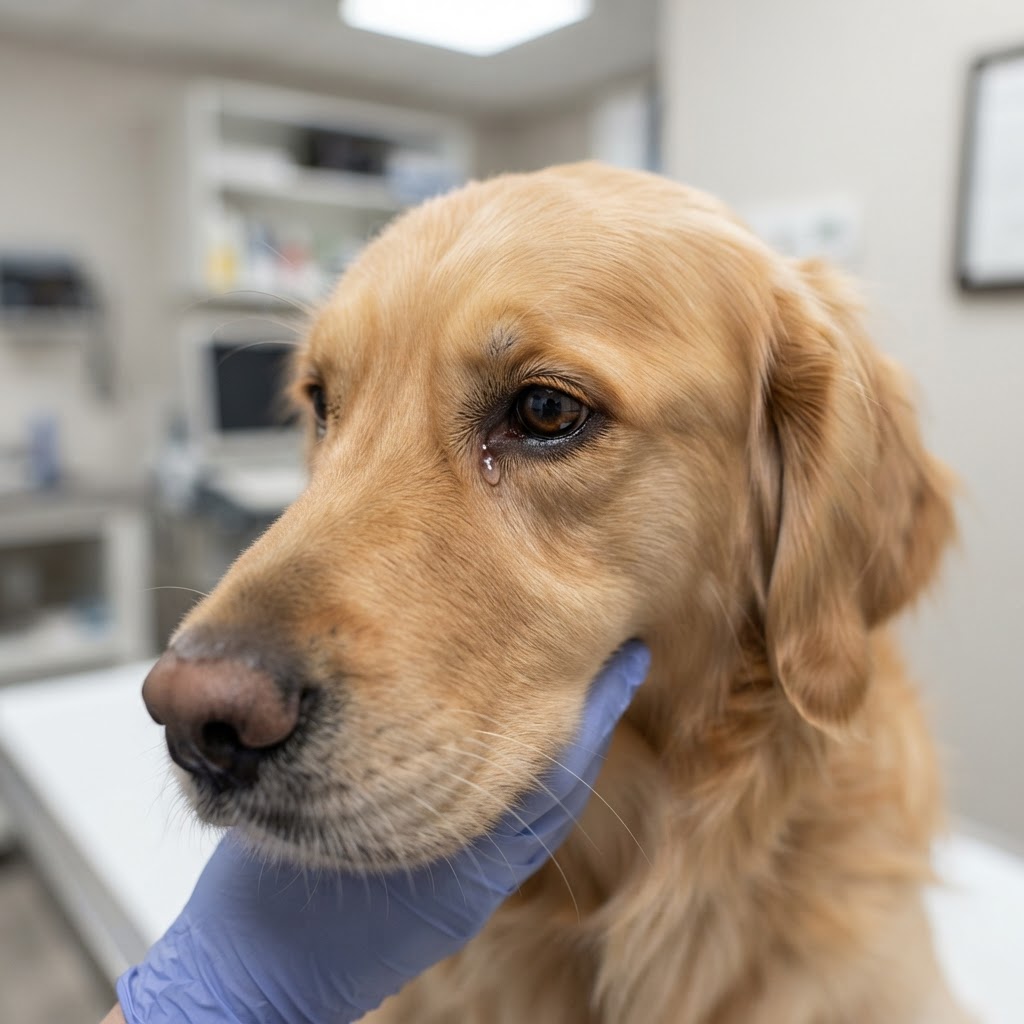
Stringy or mucous-like clear discharge can indicate dry eye (keratoconjunctivitis sicca), a condition where the eye does not produce enough tears. This is uncomfortable and can lead to corneal ulcers if left untreated.
3. White or Grey Mucous Discharge
This often indicates mild irritation or early conjunctivitis. It can be caused by allergies, irritants, or a minor bacterial infection. Gentle cleaning with a damp, warm cloth may help, but persistent discharge should be checked by a vet.
4. Yellow or Green Discharge
Yellow or green discharge almost always indicates a bacterial infection. This type of discharge is thicker and more pus-like. Bacterial conjunctivitis requires veterinary treatment with antibiotic eye drops or ointment.
Yellow or green eye discharge that persists for more than 24 hours requires veterinary attention. Untreated eye infections can cause corneal ulcers and permanent vision damage.
5. Thick, Sticky Discharge with Redness
If your dog has thick discharge combined with significant redness, swelling, and squinting, this may indicate a more serious condition such as a corneal ulcer, glaucoma, or uveitis. These are painful conditions that can lead to vision loss if not treated promptly.
6. Bloody Discharge
Blood in the eye discharge is always a reason for concern. It can be caused by trauma, a foreign object scratching the eye, or a serious condition like glaucoma or a tumour. Seek veterinary care immediately.
Common Causes of Eye Discharge
- Allergies: Often cause clear, watery discharge in both eyes
- Conjunctivitis: Inflammation of the conjunctiva, can be bacterial or viral
- Dry eye: Inadequate tear production leading to mucous discharge
- Foreign body: Grass seeds or debris trapped under the eyelid
- Corneal ulcer: A scratch or erosion on the cornea surface
- Glaucoma: Increased pressure in the eye - a painful emergency
- Eyelid abnormalities: Entropion (inward-turning eyelids) or distichiasis (extra eyelashes)
When to Seek Immediate Veterinary Care
Contact your vet right away if you notice any of the following:
- Yellow, green, or bloody discharge
- Squinting or holding the eye closed
- Significant swelling or redness around the eye
- Pawing at the eye or rubbing it against furniture
- Sensitivity to light
- A visible foreign object in the eye
- Sudden change in the appearance of the eye
- Discharge affecting only one eye (can indicate a foreign body or ulcer)
If your dog is squinting and holding one eye closed, this is a sign of significant pain. Corneal ulcers can worsen rapidly and lead to vision loss. Do not delay seeking veterinary care.
Home Care While Waiting for the Vet
While waiting for your appointment, you can gently clean the area around the eye with a warm, damp, clean cloth. Use a separate cloth or different area of the cloth for each eye to avoid cross-contamination. Do not use any human eye drops or medications, and do not attempt to remove foreign objects yourself.
Frequently Asked Questions
Disclaimer: This article is for educational purposes only and is not a substitute for professional veterinary advice. If you're concerned about your pet's health, use our AI triage assessment or consult a licensed veterinarian.