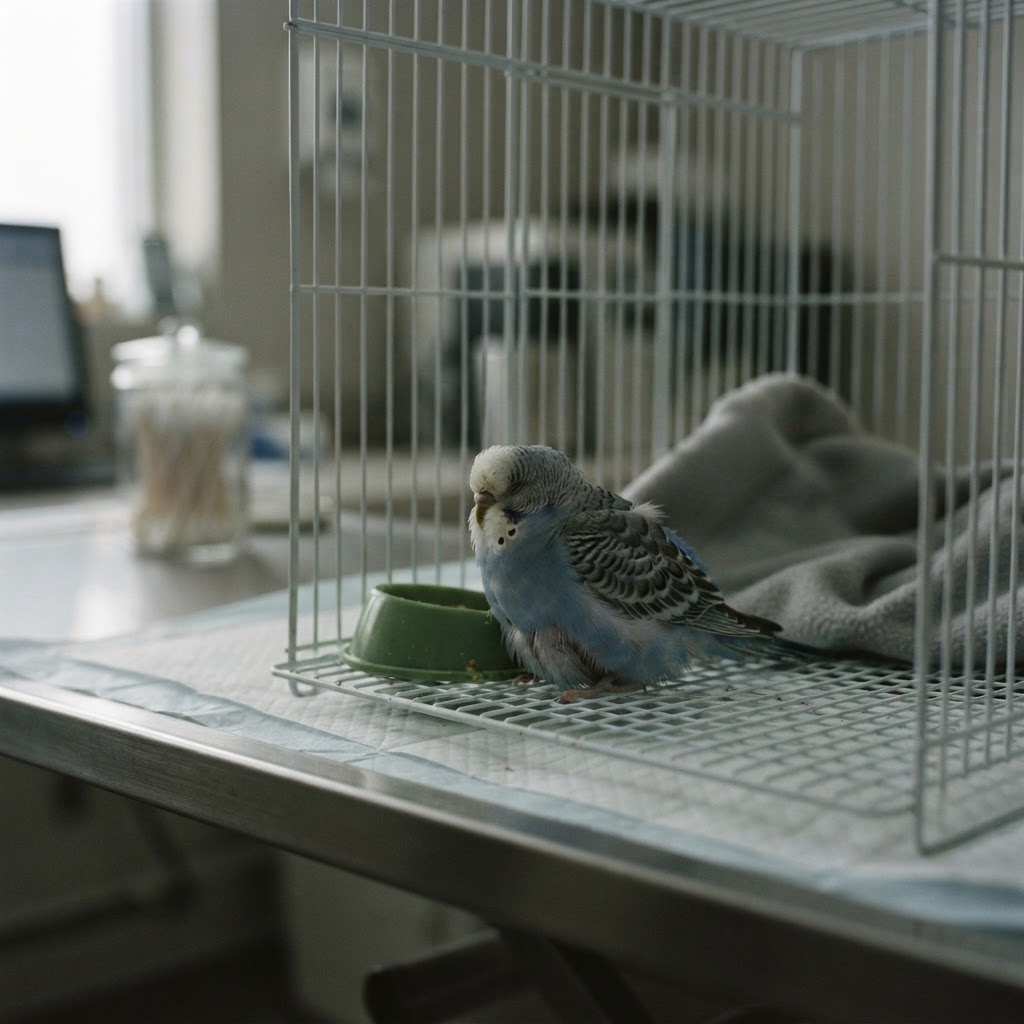
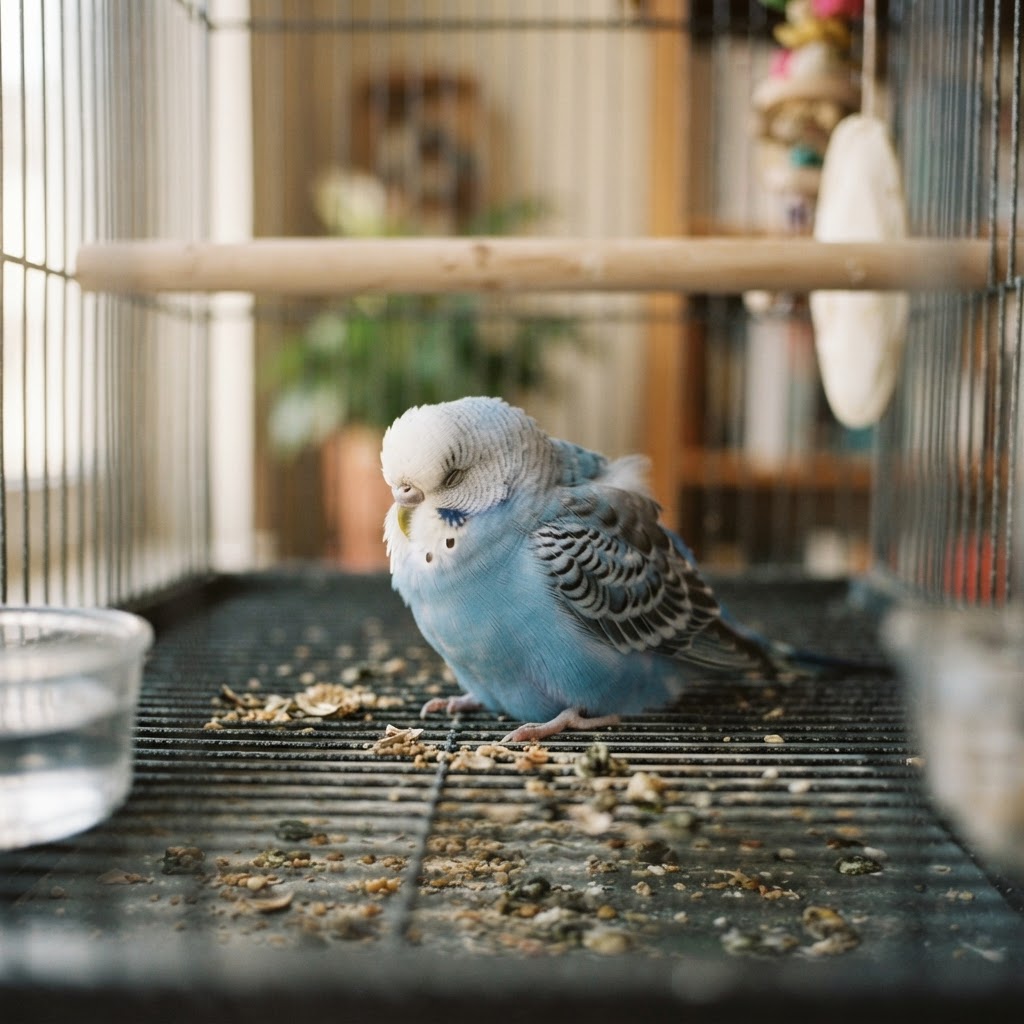
Bottom line: A broken blood feather bleeds because it's still growing and has a live blood supply, and it can bleed significantly, a bird with bleeding that won't stop needs a vet or emergency care now. Most broken blood feathers can be managed with prompt first aid, but persistent bleeding is an emergency.
| Situation | Suggested action |
|---|---|
| Minor bleed that stops quickly | Monitor closely, keep bird quiet |
| Bleeding that won't stop after 5–10 minutes | Same-day / emergency vet |
| Heavy bleeding, or a weak, pale bird | Emergency vet now |
What a blood feather is
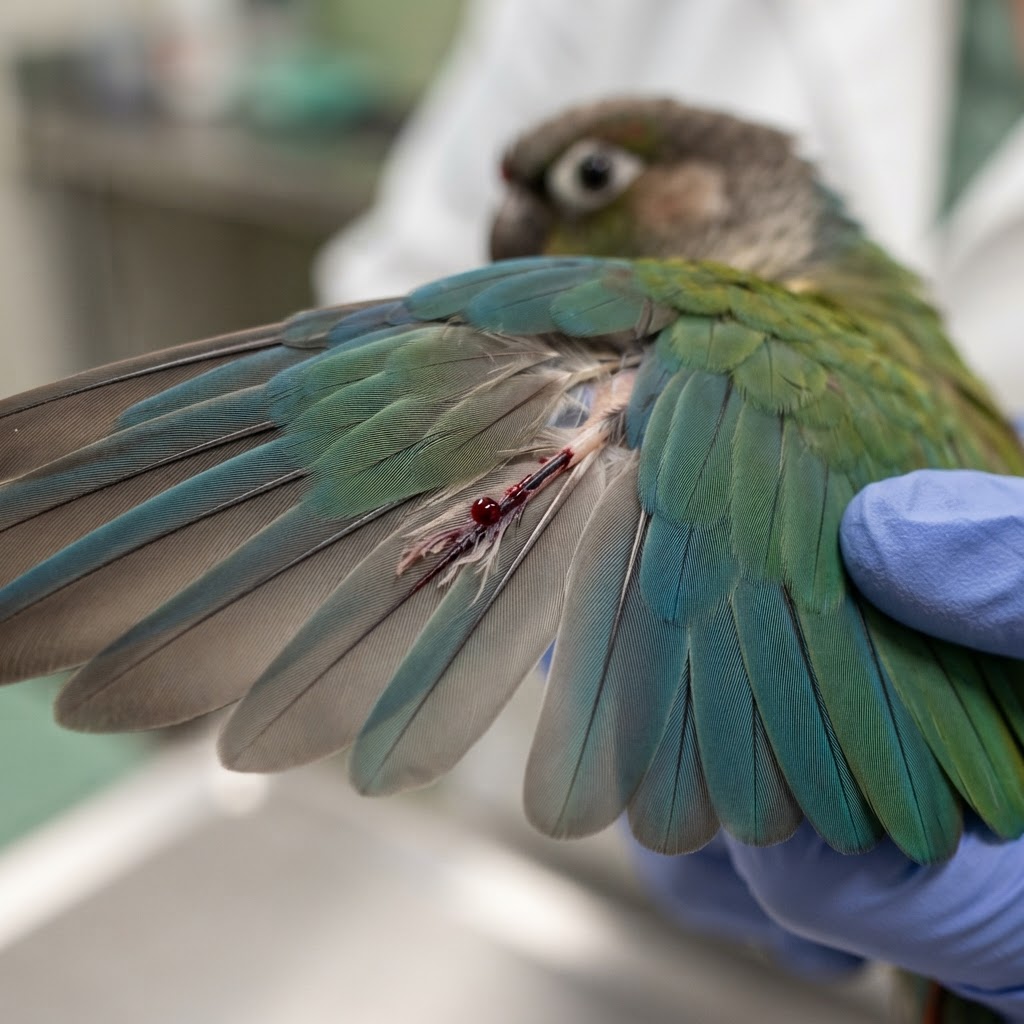
A blood feather is a new feather that's still growing, it has a soft, dark shaft full of blood vessels that feed the developing feather. While it's growing, the shaft can bleed heavily if it breaks, which can happen from a night fright, a clumsy landing, a cage-mate, or handling. Once the feather is fully grown, the blood supply retracts and the shaft becomes hollow and clear, and it no longer bleeds. The danger with a broken blood feather is blood loss, birds are small, and persistent bleeding is a genuine emergency.
What can cause it
A blood feather most often breaks during night frights (sudden panic in the dark), a bad landing or crash, rough handling, a cage-mate, or a feather being caught in cage bars or a toy. Clumsy young birds and birds going through a heavy moult have more growing blood feathers and are at higher risk.
When to worry, the red flags
A minor bleed that stops in a few minutes can be watched. Treat as urgent for:
- Bleeding that doesn't stop after 5–10 minutes of gentle pressure
- Heavy or pulsing bleeding
- A weak, fluffed, or pale bird, blood loss
- Blood on the cage, perches, or the bird's feathers
- Repeated breakage of blood feathers in the same spot
What to do right now
- Stay calm and keep the bird quiet, stress raises blood pressure and worsens bleeding.
- Apply gentle, firm pressure with a clean cloth or cotton ball at the base of the broken feather for 5–10 minutes.
- Use styptic powder or cornflour on the tip if you have it; avoid the bird's nares and eyes.
- If bleeding stops, keep the bird quiet and watch for re-bleeding; the feather may need to be pulled by a vet later.
- If bleeding won't stop, or the bird is weak or pale, go to an avian vet or emergency vet now, the feather may need to be pulled.
What NOT to do
- ❌ Don't pull the feather at home unless you've been shown how; breaking the shaft further can worsen bleeding.
- ❌ Don't use cotton wool fibres that can stick and cause more damage.
- ❌ Don't ignore persistent bleeding, blood loss can be significant in a small bird.
- ❌ Don't use human styptic products without checking they're bird-safe.
How an avian vet diagnoses and treats it
An avian vet will stop the bleeding, often by gently pulling the broken feather from the follicle (this removes the bleeding source), and may apply pressure, styptic, or a small suture. A bird that's lost blood may need fluids. Once the follicle heals, a new feather will grow in. Repeated broken blood feathers in the same area may need a check for an underlying problem.
Preventing broken blood feathers
Reduce night-fright risk with a small night-light, keep the cage free of sharp or snagging toys and perches, handle gently, and trim a bird's nails (not its wings) to reduce snagging. During a moult, handle your bird less and let it grow its feathers out.
When to wait, and when to act now
A minor bleed that stops quickly can be watched closely. Bleeding that won't stop after 5–10 minutes, or a weak, pale bird, needs an avian vet or emergency vet now, blood loss can be significant.
Run a free AI triage assessment for personalised next steps, or find an avian vet near you.
Frequently Asked Questions
Disclaimer: This article is for educational purposes only and is not a substitute for professional veterinary advice. If you're concerned about your pet's health, use our AI triage assessment or consult a licensed veterinarian.