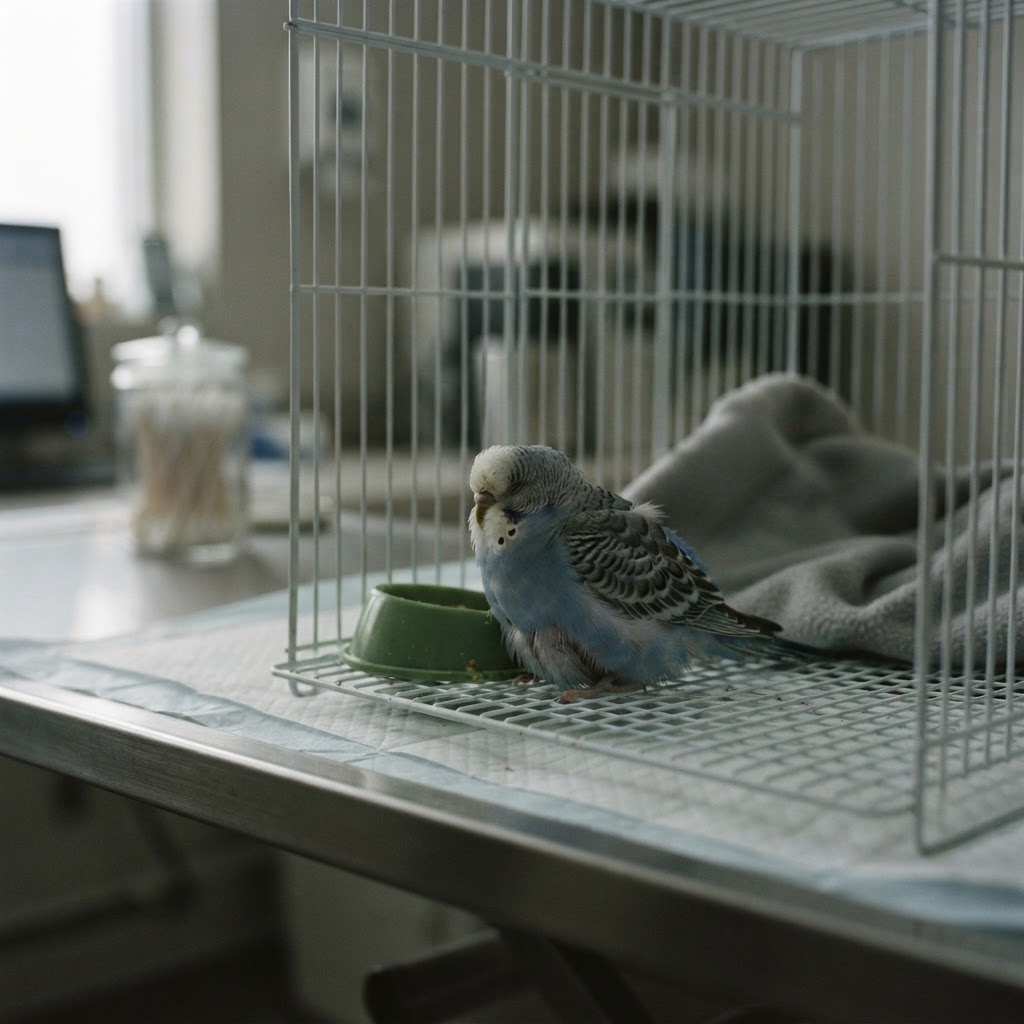
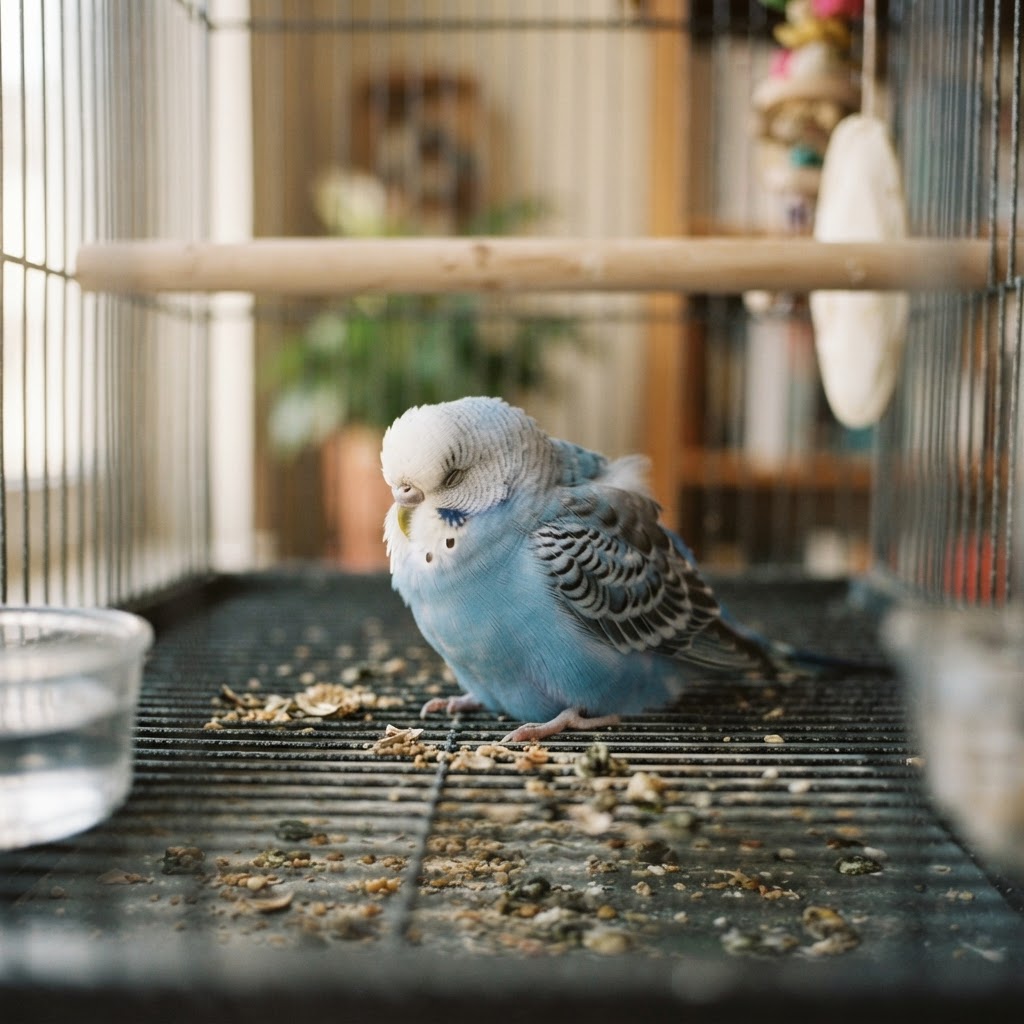
Bottom line: A bird sitting on the cage floor, fluffed and not moving, is seriously ill, birds hide illness until they're very sick, and a bird that's come down off the perch is often in the final stages of an illness. This needs an avian vet immediately.
| Situation | Suggested action |
|---|---|
| On the floor briefly then back to the perch, otherwise bright | Warm, quiet, monitor closely |
| On the floor and fluffed, or not eating | Same-day avian vet |
| Weak, breathing effort, or unable to perch | Emergency vet now |
Why a bird on the floor is an emergency
Birds are designed to perch; a healthy bird almost never comes to the cage floor to rest. A bird that's sitting on the floor, fluffed up, and reluctant to move is showing profound weakness or illness. Because birds conceal illness until they have almost no reserve left, "on the floor" is often one of the last signs before collapse, it's the bird equivalent of a dog that can't stand. This is not a "watch and see" situation; a bird on the floor needs an avian vet the same day, and often immediately.
What can cause it
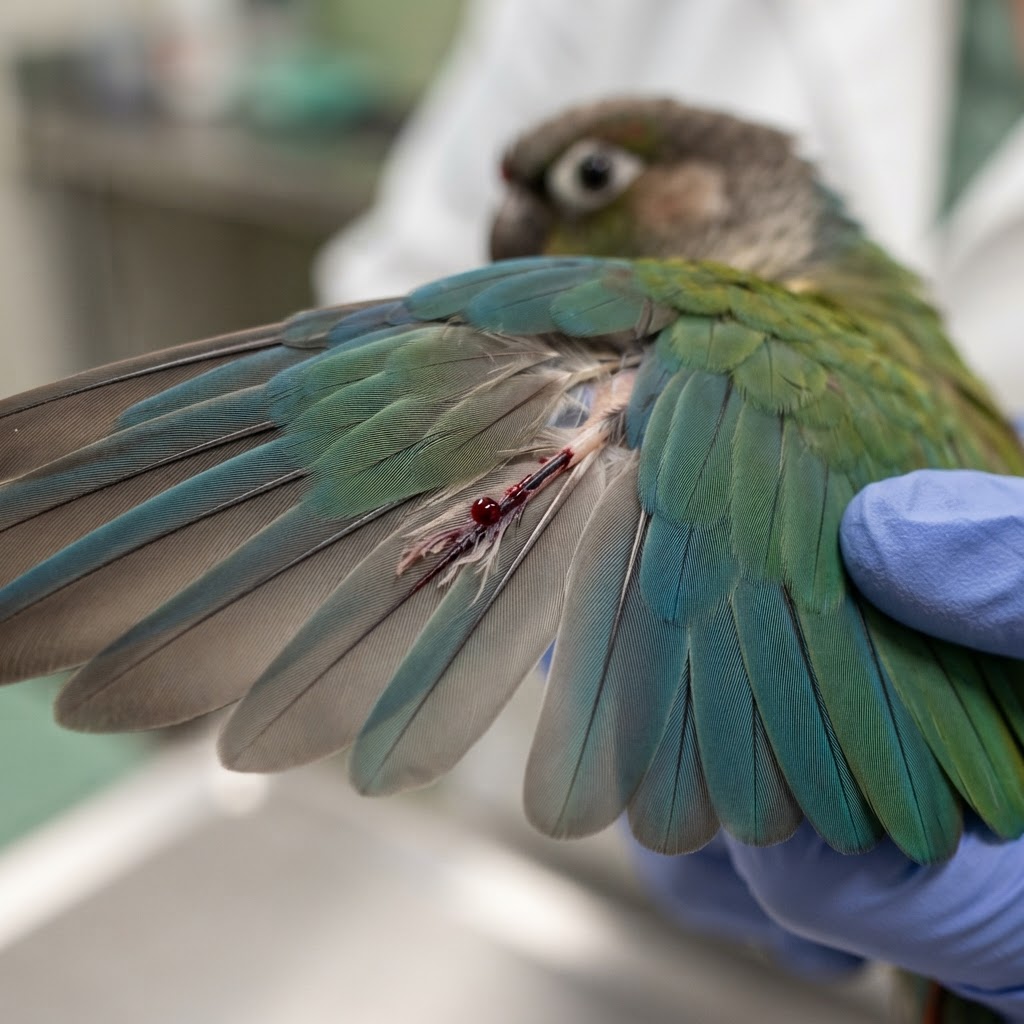
Respiratory infection is a leading cause of profound weakness in birds. Egg binding in females (straining, a swollen belly, and a fluffed, weak bird) is an emergency. Gut infection or crop problems, organ disease (liver, kidney), poisoning (Teflon/PTFE, plants, heavy metals), internal bleeding, and severe dehydration can all bring a bird down. A night fright injury or a broken blood feather with blood loss can also leave a bird weak on the floor.
When to worry, the red flags
Any bird on the cage floor that's fluffed and reluctant to move is a concern. Treat as an emergency with:
- On the floor and fluffed up, not moving
- Unable or unwilling to perch
- Not eating or drinking
- Tail bobbing, open-mouth breathing, or clicking, respiratory distress
- A swollen belly, or straining (possible egg binding in females)
- Bleeding, or a pale, weak bird
- Scant or abnormal droppings
- Discharge from the eyes or nares
What to do right now
- Warm the bird, move to a quiet, draught-free spot with gentle heat (around 28–30 °C); a weak bird can't regulate its temperature.
- Put food and water within easy reach on the floor; a sick bird won't climb to reach them.
- Keep it quiet and dim to reduce stress.
- Check for bleeding, a swollen belly, or breathing effort.
- Call an avian vet immediately, a bird on the floor is critically ill.
What NOT to do
- ❌ Don't wait, birds in this state can die within hours.
- ❌ Don't use aerosols, smoke, or non-stick cookware fumes near the bird.
- ❌ Don't give human medications.
- ❌ Don't force the bird to perch; let it rest where it's comfortable.
How an avian vet diagnoses and treats it
An avian vet will examine the bird, check the weight, breathing, and belly, and may run bloodwork, a faecal test, or X-rays. Treatment depends on the cause, warmth, fluids, oxygen, antibiotics, crop feeding, or surgery for egg binding. Birds that reach the vet at this stage often need hospitalisation, and earlier intervention gives a much better chance.
Preventing severe illness
Keep the cage warm, clean, and draught-free, feed a balanced diet, quarantine new birds, and watch daily for subtle changes in eating, droppings, and energy. Because birds hide illness, the aim is to catch changes long before a bird ends up on the floor.
When to wait, and when to act now
A bird that's briefly on the floor then back to the perch, otherwise bright, can be warmed and watched closely. A fluffed bird on the floor, not eating, or unable to perch needs an avian vet now, this is often the final stage of a hidden illness.
Run a free AI triage assessment for personalised next steps, or find an avian vet near you.
Frequently Asked Questions
Disclaimer: This article is for educational purposes only and is not a substitute for professional veterinary advice. If you're concerned about your pet's health, use our AI triage assessment or consult a licensed veterinarian.