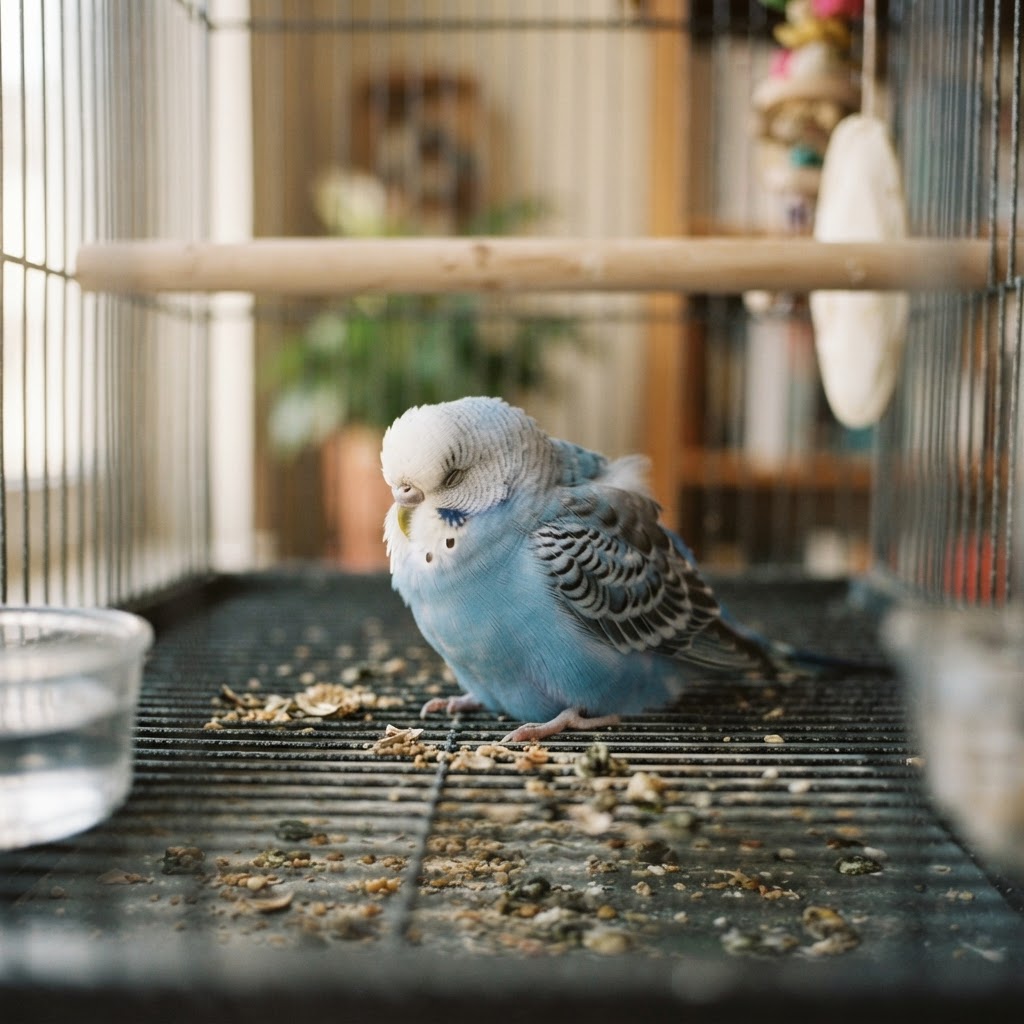
Bottom line: Egg binding, when a female bird can't pass an egg, is a life-threatening emergency. A fluffed, weak female bird straining, sitting on the cage floor, or with a swollen belly may be egg bound and needs an avian vet immediately.
| Situation | Suggested action |
|---|---|
| Female bird, bright, possibly due to lay | Warm, quiet, provide calcium, monitor |
| Straining, fluffed, or a swollen belly | Same-day / emergency avian vet |
| Weak, on the floor, or not passing an egg | Emergency vet now |
Why egg binding is an emergency
Egg binding happens when a female bird forms an egg but can't pass it, the egg gets stuck in the reproductive tract. This is common in single female birds (they can lay without a male) and is acutely dangerous: the egg can press on nerves and blood vessels, the bird can go into shock, and the egg can break inside her. A bird that's been straining for hours with no egg, sitting fluffed on the floor, weak, or with a swollen belly is likely egg bound and needs a vet immediately. Quick, correct warmth and calcium can help in early cases, but delay is often fatal.
What can cause it
Calcium deficiency is a leading cause, the bird simply can't form or push the egg properly. Low temperature or stress slows the process. First-time laying, a very large or misshapen egg, obesity, and a poor diet (seed-only) all contribute. Reproductive tract problems and age can play a role. Any single female bird, cockatiels, budgies, lovebirds, canaries, and chickens, can be affected.
When to worry, the red flags
A female bird that's bright and due to lay can be watched with warmth and calcium. Treat as an emergency for:
- Straining with no egg passed, especially for more than an hour
- A fluffed, weak, or quiet bird on the cage floor
- A swollen belly, or a palpable egg
- Not eating, or not passing droppings, the egg may be pressing on the gut
- Leg weakness or paralysis, the egg may be pressing on nerves
- Open-mouth breathing or collapse
What to do right now
- Warm and humidify, move the bird to a quiet, warm spot (around 28–30 °C) with a heat source; warmth can help the muscles relax.
- Offer liquid calcium (a calcium supplement in the water or by crop) if you have it, but don't delay the vet for this.
- Keep the bird calm; stress makes the muscles tighten.
- Don't try to remove the egg yourself, you can rupture it or injure the bird.
- Call an avian vet immediately, egg binding can kill within hours.
What NOT to do
- ❌ Don't try to pull the egg out, it can break inside her and cause fatal infection.
- ❌ Don't wait, shock and death can come quickly.
- ❌ Don't give human medications.
- ❌ Don't let her over-lay long-term without veterinary guidance.
How an avian vet diagnoses and treats it
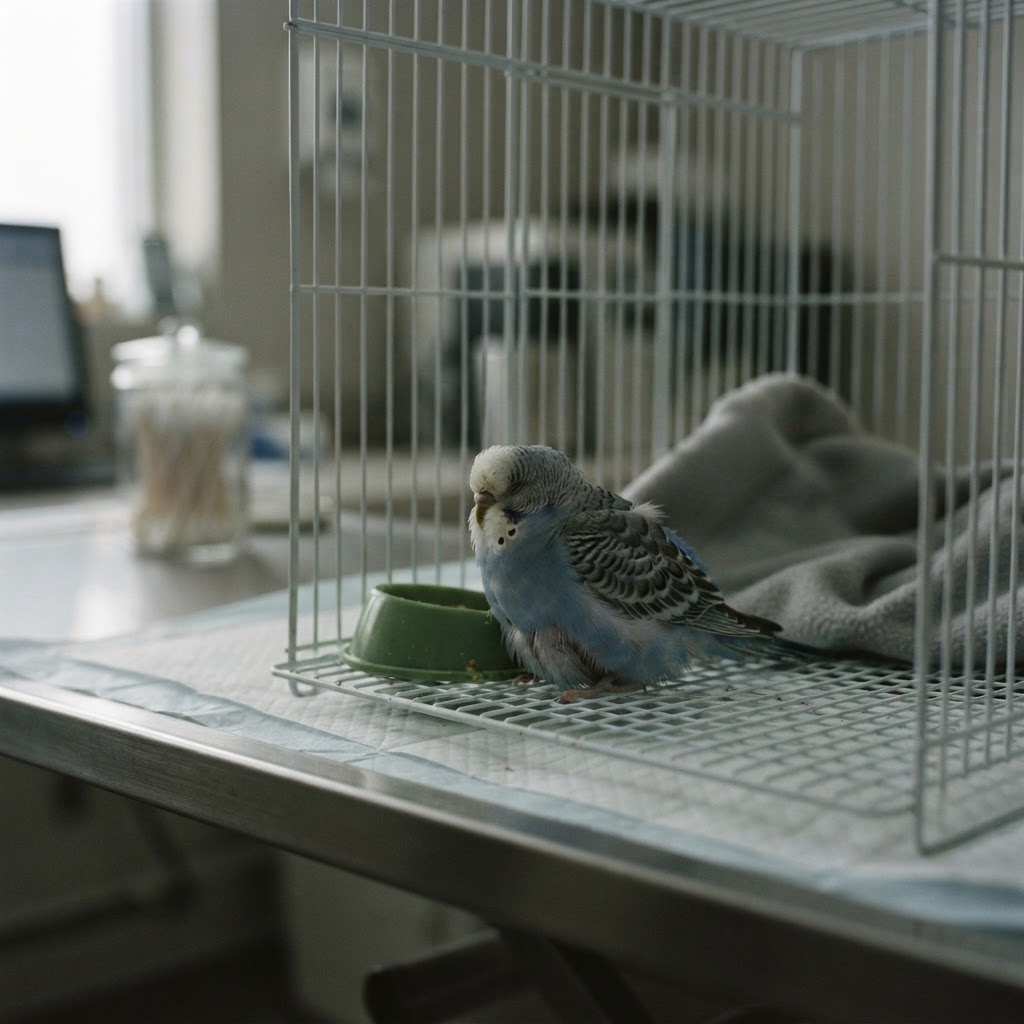
An avian vet will examine the bird, often feel the egg, and may X-ray to confirm its position and condition. Treatment is warmth, calcium, fluids, and sometimes oxytocin to help the bird pass the egg; a stuck or broken egg needs gentle removal or surgery. Birds often improve quickly once the egg is passed or removed.
Preventing egg binding
Feed a calcium-rich, balanced diet (not just seed), provide cuttlebone or a calcium supplement, keep the bird warm and stress-free, and discourage chronic laying. An avian vet can advise on managing a hen that lays repeatedly.
When to wait, and when to act now
A bright female bird about to lay can be warmed and watched briefly. Straining with no egg, a fluffed or weak bird, or a swollen belly means an avian vet now, egg binding is a life-threatening emergency.
Run a free AI triage assessment for personalised next steps, or find an avian vet near you.
Frequently Asked Questions
Disclaimer: This article is for educational purposes only and is not a substitute for professional veterinary advice. If you're concerned about your pet's health, use our AI triage assessment or consult a licensed veterinarian.