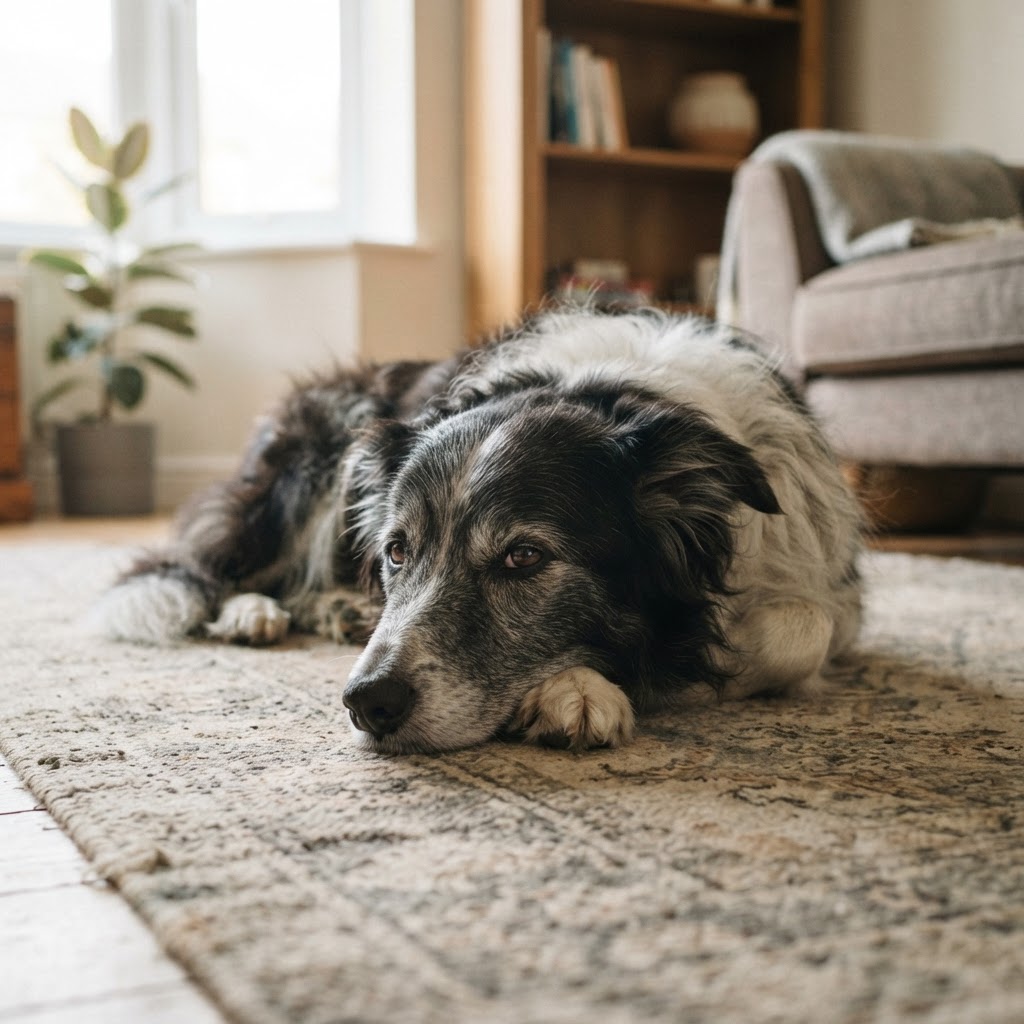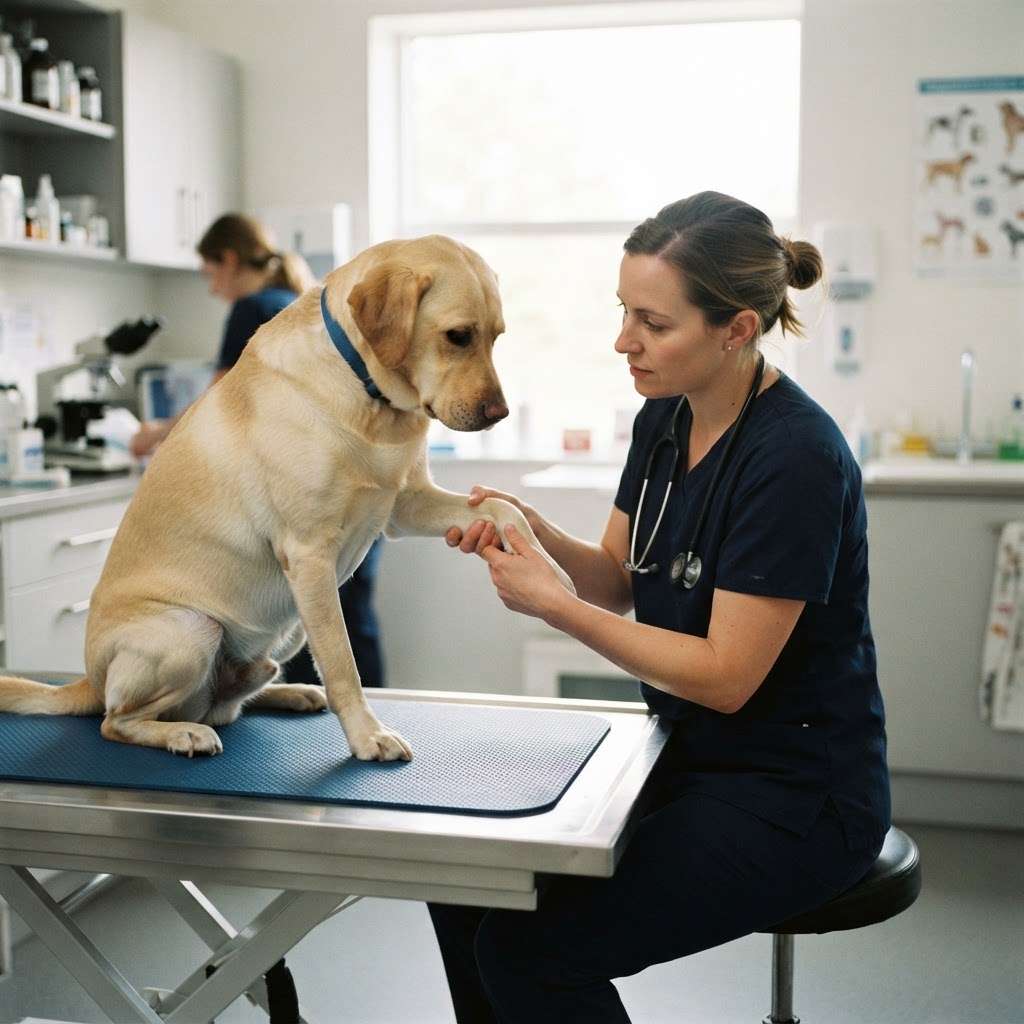
Bottom line: Most dog diarrhoea is mild and resolves within a day or two, but diarrhoea with blood, repeated vomiting, lethargy, a painful belly, or a young puppy is a reason to see a vet promptly. The biggest danger with diarrhoea isn't the run itself, it's dehydration, which can develop quickly in small or young dogs.
| Situation | Suggested action |
|---|---|
| One or two loose stools, dog otherwise bright | Bland diet, monitor 24–48 hours |
| Diarrhoea + vomiting, or lasting >48 hours | Vet visit |
| Blood in diarrhoea, or black tarry stools | Same-day vet visit |
| Puppy with diarrhoea, lethargy, or vomiting | Emergency vet now |
Why dogs get diarrhoea
Diarrhoea isn't a disease, it's a sign that the gut is irritated, inflamed, or struggling to absorb water and nutrients. The intestine normally moves food along and absorbs most of the water as it goes; when that process is disrupted, the result is loose or watery stools. Understanding why helps you judge how urgent it is.
What can cause it
Dietary causes are the most common: a sudden change of food, a dietary indiscretion (raiding the bin, eating something rich or spoiled), food intolerance, or a fatty "treat" that triggered pancreatitis. Infectious causes include viruses (parvovirus in unvaccinated dogs, especially puppies), bacteria (such as Salmonella or Campylobacter), and parasites (giardia, worms). Stress from travel, boarding, or a new environment can cause a transient upset.
More serious causes include a swallowed foreign body, inflammatory bowel disease, poisoning, or conditions affecting other organs (Addison's disease, liver or kidney disease). Some medications, including antibiotics, upset the gut flora and cause soft stools.
When to worry, the red flags
A dog with one loose stool but who is bright, drinking, and otherwise normal can be managed at home for a short while. These signs mean a vet is needed:
- Blood in the diarrhoea (red streaks or black, tarry, foul-smelling stools)
- Repeated vomiting alongside the diarrhoea, dehydration risk is high
- Lethargy, weakness, or collapse, the dog is systemically unwell
- A painful or tight abdomen, or straining with no result
- A puppy, especially unvaccinated, parvovirus can be fatal and acts fast
- Diarrhoea lasting more than 48 hours, even if the dog seems okay
- Known access to a toxin, or a possible swallowed object
- Excessive thirst, weight loss, or chronic intermittent diarrhoea, points to ongoing disease
What to do right now
- Withhold food for 12–24 hours (but always allow water) to let the gut rest, only for adult dogs, never starve a puppy.
- Offer small amounts of water frequently to prevent dehydration. If vomiting too, offer ice cubes to lick.
- Reintroduce a bland diet after the rest: plain boiled chicken and white rice, or a prescription intestinal diet, in small frequent meals over a few days, then transition back to normal food.
- Keep a record, how often, consistency, colour, and any blood, to tell the vet.
- Call your vet if any red flag appears, if it's a puppy, or if it hasn't improved within 48 hours.
What NOT to do
- ❌ Don't starve a puppy, young dogs can develop low blood sugar quickly.
- ❌ Don't give human anti-diarrhoea drugs (like loperamide) without vet advice; some are unsafe and some causes (like certain infections) shouldn't be masked.
- ❌ Don't feed rich, fatty, or sugary "recovery" foods, they can worsen the upset or trigger pancreatitis.
- ❌ Don't delay with a puppy, with blood, or with vomiting alongside, dehydration can become dangerous within hours.
How a vet diagnoses and treats it
The vet will examine your dog, assess hydration, and may run a faecal test for parasites or infection, bloodwork if systemic illness is suspected, and sometimes imaging if a blockage is possible. Treatment depends on the cause and may include fluids, intestinal protectants, probiotics, a prescription diet, antibiotics or anti-parasitics, and, rarely, surgery for a blockage. Most routine cases resolve quickly with supportive care.
Preventing the next bout
Change foods gradually over a week, keep bins and rich foods out of reach, keep vaccinations and worming up to date, and don't allow scavenging on walks. For dogs with recurrent upsets, a vet can investigate for food intolerance or inflammatory bowel disease.
When to wait, and when to act now
A bright adult dog with one or two loose stools and no other signs can be managed at home for 24–48 hours with a bland diet. Blood, vomiting, lethargy, a painful belly, or a puppy means a vet, and a collapsed, vomiting, or parvo-suspect puppy is an emergency right now.
Run a free AI triage assessment for personalised next steps, or find an emergency vet near you.
Frequently Asked Questions
Disclaimer: This article is for educational purposes only and is not a substitute for professional veterinary advice. If you're concerned about your pet's health, use our AI triage assessment or consult a licensed veterinarian.