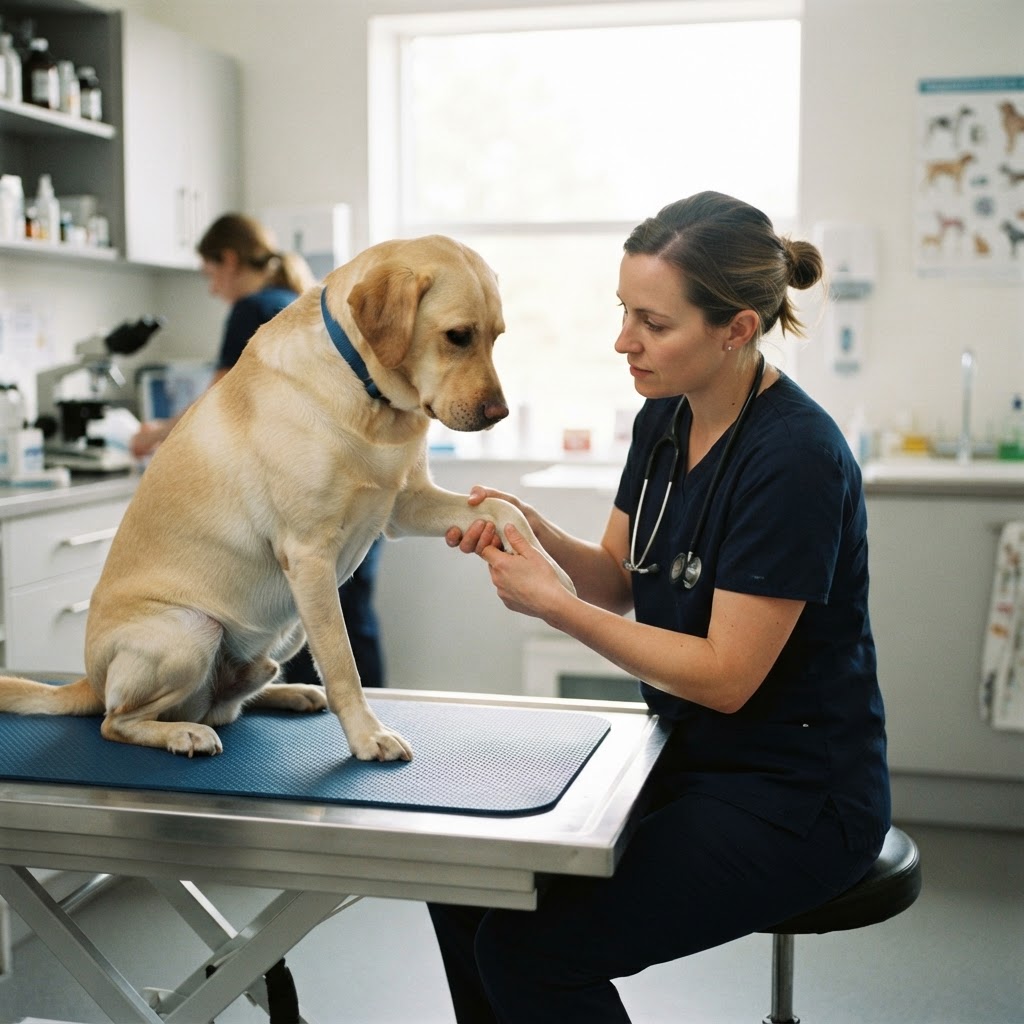
Bottom line: A mild limp after exercise often settles with rest, but sudden severe lameness, a limb that dangles or won't bear weight, swelling, a fever, or limping after a fall or trauma needs a vet promptly. Dogs hide pain well, so even a "small" limp can mean something significant is going on.
| Situation | Suggested action |
|---|---|
| Mild limp after a long walk, dog otherwise fine | Rest for 24–48 hours |
| Won't bear weight, or swelling/heat in a joint | Vet visit within a day |
| Sudden yelp, possible trauma, or a dangling limb | Same-day / emergency vet |
| Limp + fever, lethargy, or refusing to eat | Emergency vet now |
Why a dog limps
Lameness simply means a dog is favouring a limb, they're avoiding putting their full weight on it. The cause can sit anywhere from the paw up to the shoulder or hip, and the seriousness ranges from a trivial thorn in the pad to a fracture or a serious joint infection. A careful look and a bit of history often point you in the right direction.
What can cause it
Paw and leg problems are extremely common, a thorn, grass seed, cut pad, broken nail, or a stone bruise. Sprains and strains of muscles or ligaments happen with slips, twists, and over-exuberant play; the cruciate ligament in the knee is a frequent culprit in active dogs. Bone and joint disease includes fractures, elbow or hip dysplasia, arthritis in older dogs, and panosteitis in young growing large breeds.
Serious and painful causes include a luxating patella (kneecap slipping), a ruptured cruciate ligament, a joint infection (often with fever), immune-mediated joint disease, and bone tumours. Tick paralysis and snake bites can cause sudden weakness that looks like lameness. Puppies with sudden limping and a fever may have a septic joint, which is an emergency.
When to worry, the red flags
A mild limp in an otherwise bright dog can be rested and watched for 24–48 hours. See a vet if you notice any of these:
- Refusal to bear any weight on the leg, or holding it up entirely
- A limb that looks obviously out of place, dangling, or at an odd angle, possible fracture
- Swelling, heat, or severe pain in a joint or long bone
- A wound, open fracture, or a foreign body such as a grass seed between the toes
- Fever, lethargy, or refusing to eat alongside the limp, infection or systemic illness
- Sudden onset after trauma, a fall, a knock, being hit by a car
- A puppy with a swollen, painful limb, septic joints and fractures need urgent care
- Progressive worsening despite rest
What to do right now
- Rest your dog immediately, no walks, no stairs, no jumping; use a lead for toilet trips.
- Examine the paw gently for thorns, cuts, cracked nails, or grass seeds, and check between the toes and pads.
- Look for swelling or heat and compare the legs.
- Do not give human painkillers, ibuprofen, paracetamol, and aspirin can be toxic and can interfere with vet treatment.
- Call your vet for any red flag, or if there's no improvement after 24–48 hours of strict rest.
What NOT to do
- ❌ Don't give human pain medication, many are toxic to dogs and can mask signs your vet needs to see.
- ❌ Don't force exercise to "walk it off", you can turn a minor sprain into a serious injury.
- ❌ Don't try to splint or bandage a suspected fracture without instruction; a bad bandage does more harm than good.
- ❌ Don't delay with severe lameness, a dangling limb, a wound, or a feverish puppy.
How a vet diagnoses and treats it
Your vet will watch your dog walk, palpate each joint, and localise the pain. X-rays are often needed for bones and joints, and sedation may be required for a thorough exam. Treatment ranges from rest and anti-inflammatories for a sprain, to paw repair for a wound, to surgery for a cruciate rupture or fracture. Infected joints need urgent drainage and antibiotics; bone tumours need prompt diagnosis and staging.
Preventing lameness
Keep nails trimmed to avoid altered gait, maintain a lean body weight to protect joints, warm up before intense exercise, and avoid sudden stops and twists on hard or slippery ground. For growing large breeds, controlled exercise and good nutrition reduce developmental joint problems.
When to wait, and when to act now
A mild limp in a bright dog can be rested and watched for a day or two. Severe lameness, a limb that won't bear weight or looks deformed, a painful swollen joint, a wound, or a feverish puppy needs a vet, and trauma or a dangling limb is an emergency now.
Run a free AI triage assessment for personalised next steps, or find an emergency vet near you.
Frequently Asked Questions
Disclaimer: This article is for educational purposes only and is not a substitute for professional veterinary advice. If you're concerned about your pet's health, use our AI triage assessment or consult a licensed veterinarian.