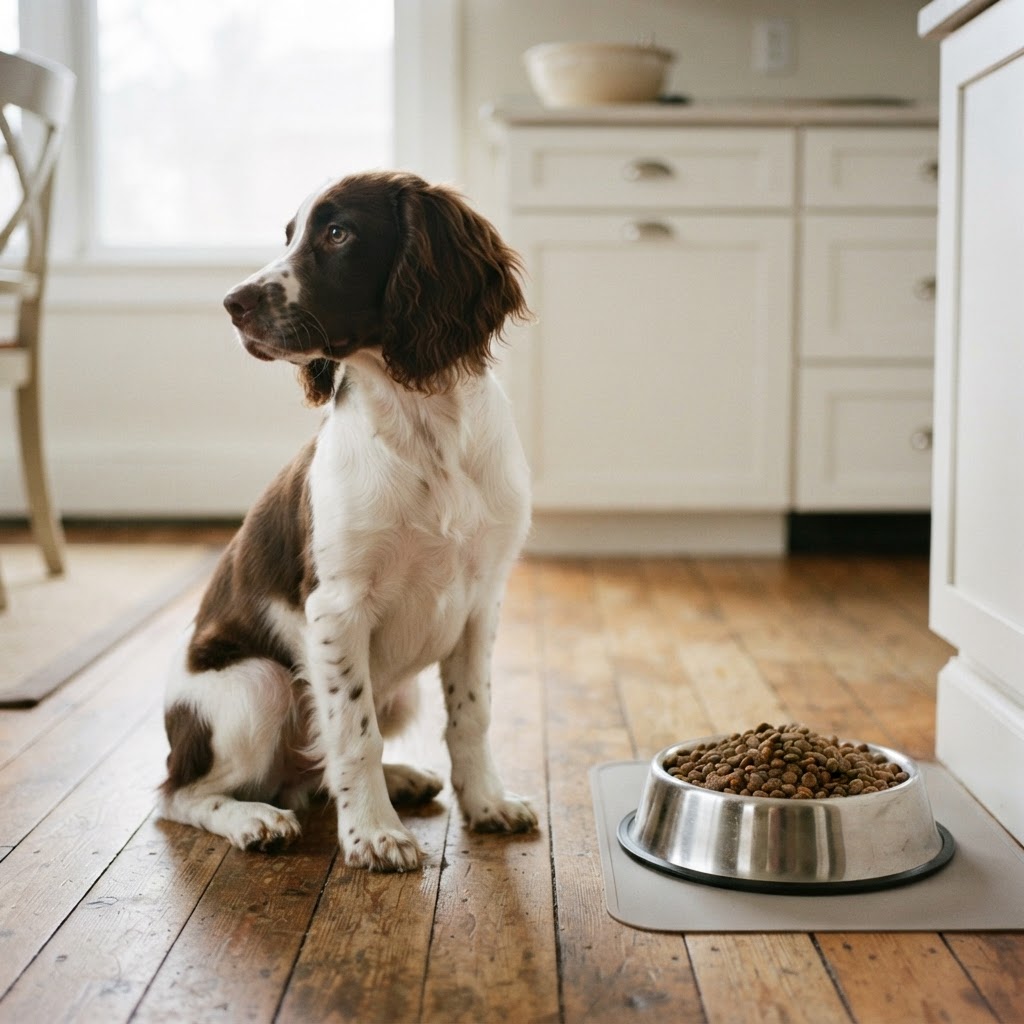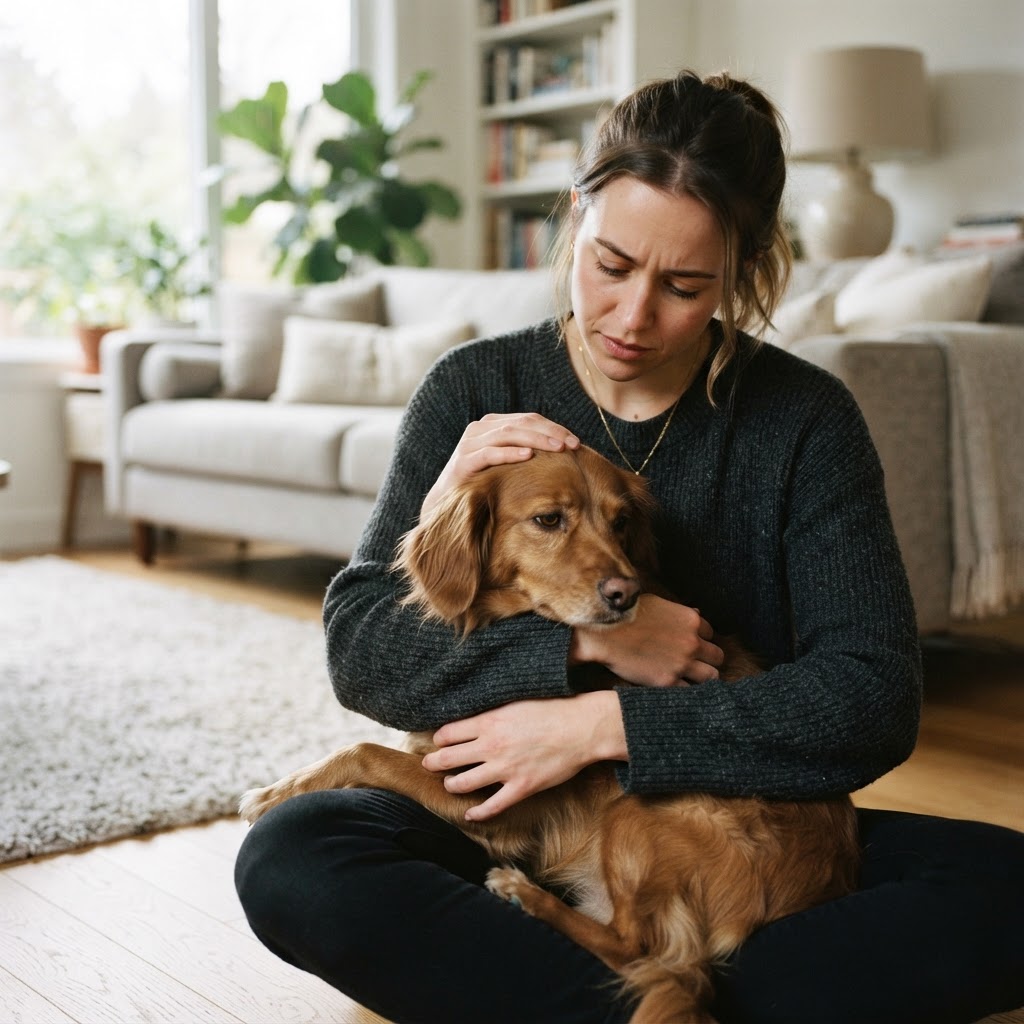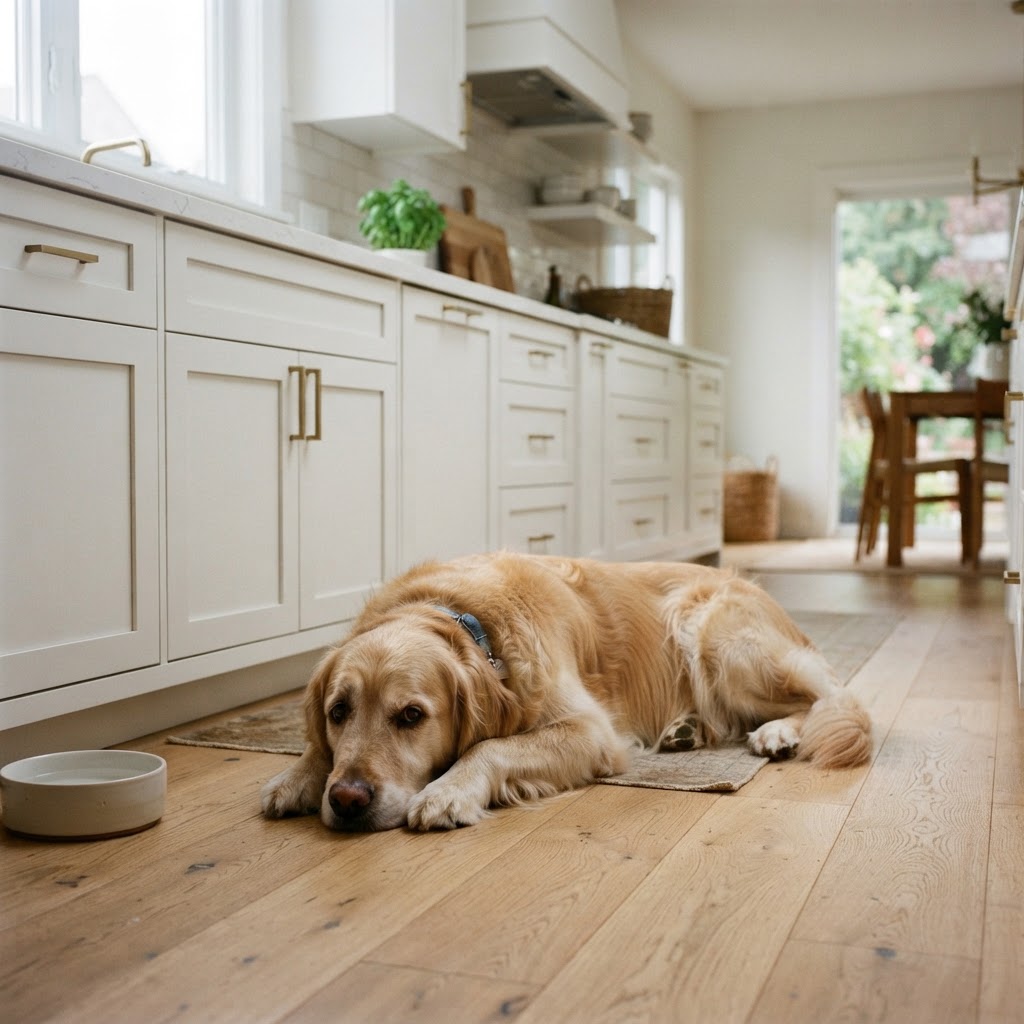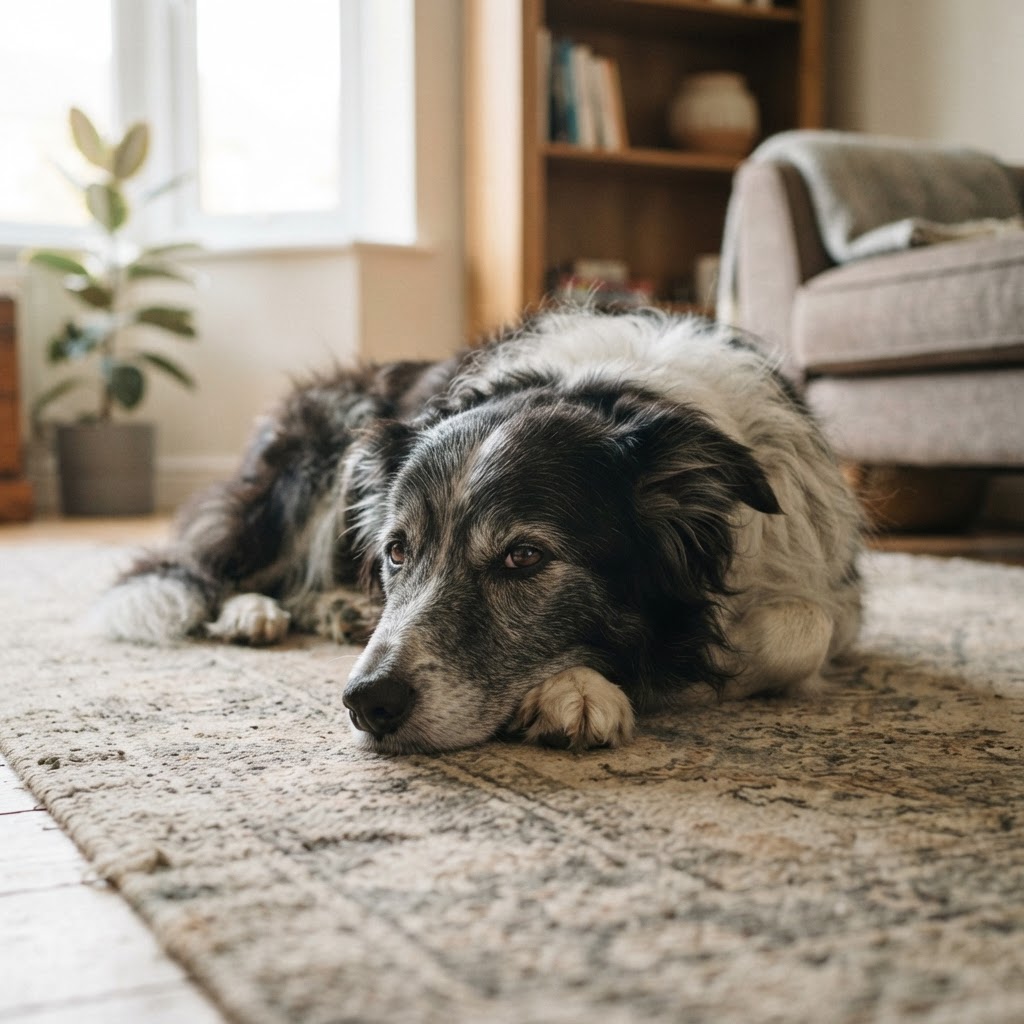
Bottom line: A tired dog after a big walk is normal, but a dog who is unusually quiet, weak, unresponsive, or hiding, especially with other signs like vomiting, pale gums, a swollen belly, or collapse, can be seriously unwell and needs a vet. Lethargy is one of the vaguest but most important warning signs in dogs.
| Situation | Suggested action |
|---|---|
| Tired after exercise, bright and eating normally | Rest, monitor |
| Quiet for >24 hours, or refusing food/water | Vet visit within a day |
| Lethargy + vomiting, diarrhoea, or pale gums | Same-day vet visit |
| Lethargy + collapse, bloated belly, or blue gums | Emergency vet now |
What "lethargy" actually means
Lethargy means a drop in energy, alertness, or responsiveness beyond what's normal for your dog. It's a symptom, not a diagnosis, and because dogs can't tell us where it hurts, a quiet, withdrawn dog is often the only clue that something is wrong. The key is to compare against your dog's normal: an older, slow dog resting is different from a usually bouncy young dog who suddenly won't get up.
What can cause it
Mild and common causes include a tiring day, hot weather, mild tummy upset, the day after vaccination, or a stressful event. Pain is a huge cause of lethargy, arthritis in older dogs, an injury, or abdominal pain from gastroenteritis or pancreatitis can all make a dog lie still and quiet.
Serious causes include infections (including tick-borne disease and parvovirus), organ disease (kidney, liver, heart), anaemia from bleeding or a ruptured spleen, toxin or poisoning, low blood sugar (especially in small or young dogs), and bloat/GDV (a twisted, gas-filled stomach that is a life-threatening emergency). Heart failure often shows as exercise intolerance and tiring easily before a cough develops. In unspayed females, pyometra (a womb infection) presents as lethargy, off food, and increased drinking, and is an emergency.
When to worry, the red flags
A dog who's simply resting after a busy day, but is bright, eating, and drinking, can be watched. See a vet for:
- Lethargy for more than 24 hours, or that's getting worse
- Refusing food or water, or not drinking at all
- Vomiting or diarrhoea alongside the quietness
- Pale, white, or yellow gums, anaemia, shock, or liver disease
- A swollen, tight, or painful abdomen, possible bloat/GDV (emergency)
- Weakness, collapse, or fainting
- Excessive drinking and urinating, or a noticeable change in thirst
- Known access to a toxin, or a possible swallowed object
- A dog who can't stand, or who seems weak in the back legs
What to do right now
- Offer water and a comfortable, quiet place; don't force activity.
- Check the gums, pink and quick to refill is normal; pale, white, or yellow means a vet today.
- Check the belly, soft is normal; tight, drum-like, or painful is an emergency.
- Recall the last 24–48 hours, any new food, bin-raiding, toxins, trauma, or a heat spike?
- Take a photo or video of your dog's behaviour if you can; it helps the vet judge how urgent it is.
- Call your vet if lethargy lasts more than a day or comes with any red flag; go straight to an emergency vet for collapse, pale gums, or a swollen belly.
What NOT to do
- ❌ Don't give human medications, many are toxic and can mask signs your vet needs.
- ❌ Don't force food or water if your dog is vomiting or collapsed.
- ❌ Don't assume "just old age", older dogs slow down, but new lethargy still needs a cause found.
- ❌ Don't delay with collapse, pale gums, or a bloated belly, these kill quickly.
How a vet diagnoses and treats it
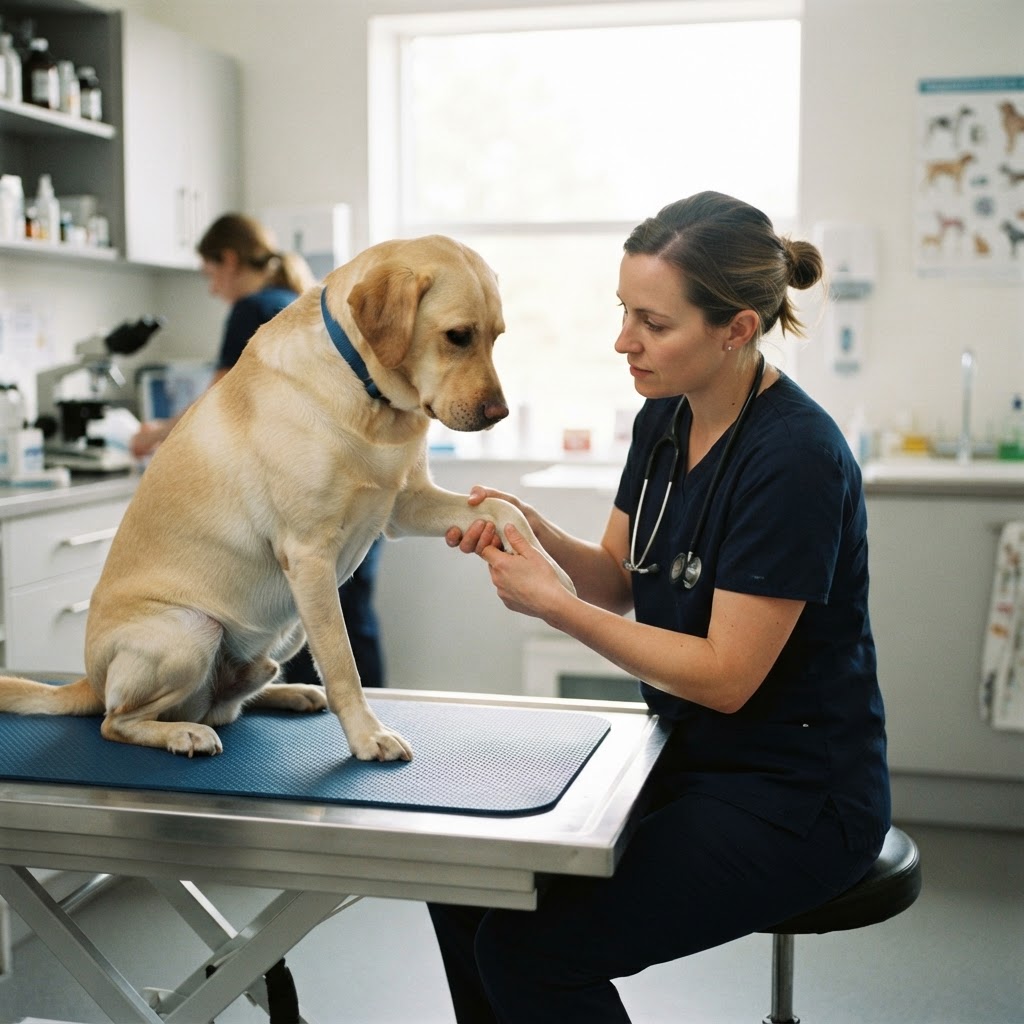
Your vet will examine your dog, assess hydration and gum colour, listen to the heart and lungs, and palpate the abdomen. Bloodwork checks the organs and red-blood-cell count; X-rays or ultrasound look for a blockage, masses, or fluid. Treatment depends on the cause, fluids, pain relief, antibiotics, surgery for bloat or pyometra, or specific medication for heart or organ disease. Many lethargic dogs improve quickly once the cause is treated.
Preventing problems that cause lethargy
Keep vaccinations, worming, and tick prevention up to date, dog-proof against toxins and swallowable objects, maintain a lean weight, and don't skip annual check-ups, early organ or heart disease is much easier to manage when caught before it causes collapse.
When to wait, and when to act now
A tired-but-bright dog after a busy day can rest and be watched. Lethargy for more than a day, refusing food or water, or any red flag needs a vet, and collapse, pale gums, a swollen belly, or blue gums mean an emergency vet right now.
Run a free AI triage assessment for personalised next steps, or find an emergency vet near you.
Frequently Asked Questions
Disclaimer: This article is for educational purposes only and is not a substitute for professional veterinary advice. If you're concerned about your pet's health, use our AI triage assessment or consult a licensed veterinarian.