Bottom line: Ear infections cause severe pain and can lead to hearing loss or permanent damage if not treated. Look for redness, odor, or frequent head shaking and see a vet to get the correct medication.
| Situation | Suggested action |
|---|---|
| Head tilt or loss of balance | Urgent vet visit |
| Severe swelling/discharge/odor | Schedule vet visit |
| Mild head shaking | Monitor for changes |
| Healthy ears | Routine cleaning |
What Is an Ear Infection?
An ear infection (otitis) is inflammation of the ear canal, usually caused by an overgrowth of bacteria, yeast, or both. Infections can affect:
- The outer ear canal (otitis externa) - most common
- The middle ear (otitis media) - can result from untreated outer ear infections
- The inner ear (otitis interna) - serious, can cause balance problems and head tilt
Most ear infections start in the outer ear canal and, if left untreated, can progress deeper into the ear.
Signs of an Ear Infection
Dogs with ear infections may show one or more of these signs:
Visible Signs
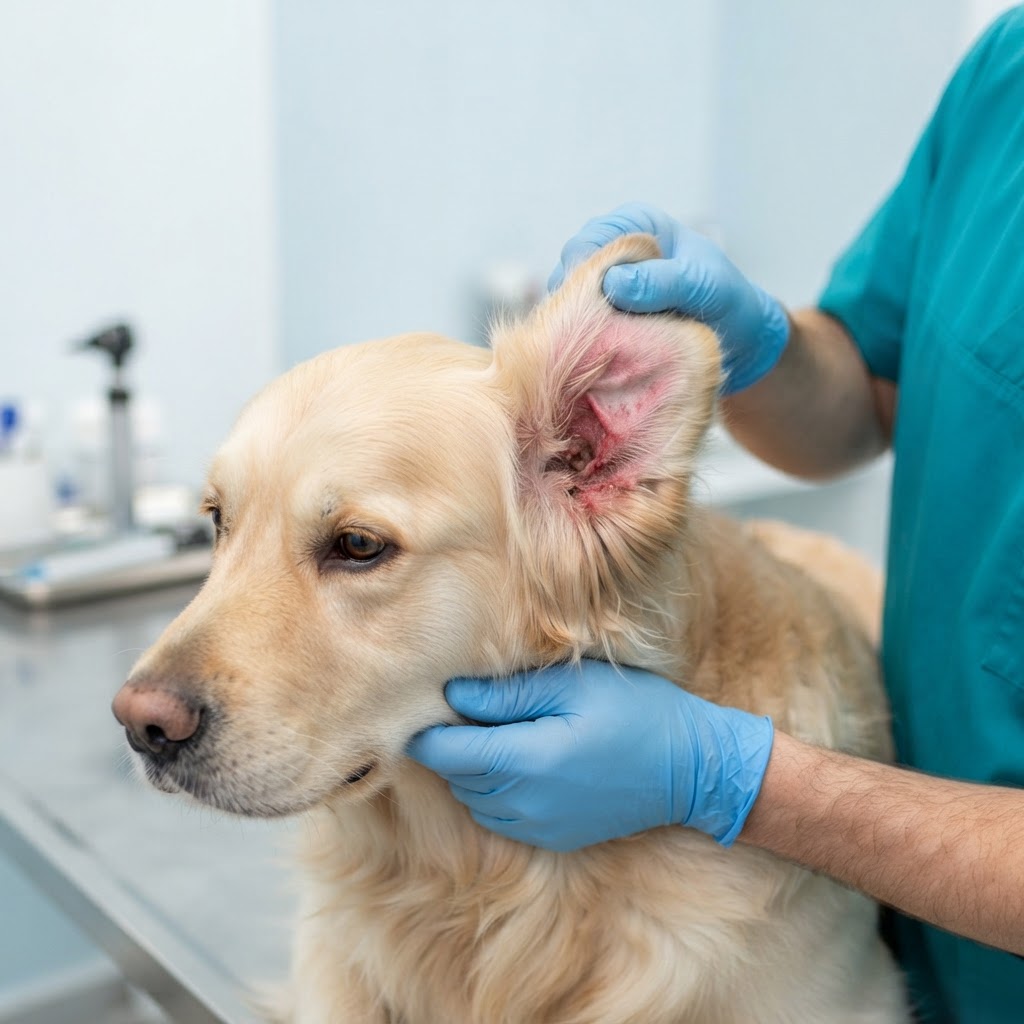
- Red, inflamed ear canal
- Discharge from the ear (yellow, brown, or black; waxy, pus-like, or crusty)
- Unpleasant odour coming from the ear
- Swelling of the ear flap or canal
Behavioural Signs
- Head shaking
- Scratching or pawing at the affected ear
- Rubbing the ear against furniture or the floor
- Head tilt to one side
- Whimpering or yelping when the ear is touched
- Reluctance to let you touch the ear or head
Signs of a More Serious Infection
- Loss of balance or coordination
- Walking in circles
- Eye movements that flicker from side to side (nystagmus)
- Hearing loss
- Facial nerve paralysis (drooping on one side of the face)
If your dog shows balance problems, circling, or eye flickering, the infection may have reached the middle or inner ear. This needs urgent veterinary attention.
What Causes Ear Infections in Dogs?
1. Moisture in the Ear Canal
The most common trigger for ear infections is moisture. Water that gets trapped in the ear canal creates a warm, dark, moist environment - perfect for bacteria and yeast to multiply. This is why ear infections are common in:
- Dogs who swim frequently
- Dogs bathed regularly without proper ear drying
- Dogs in humid climates
- Dogs with floppy ears (which trap moisture)
2. Allergies
Allergies are the leading underlying cause of chronic ear infections in dogs. Both food allergies and environmental allergies (atopy) can cause inflammation in the ear canal, making it more susceptible to infection. If your dog gets recurrent ear infections, allergies should be investigated.
3. Anatomy
Some breeds are simply built for ear infections. Dogs with heavy, floppy ears (like Cocker Spaniels, Basset Hounds, and Golden Retrievers) have poor air circulation in the ear canal. Breeds with narrow ear canals (like Shar-Peis) and dogs with hairy ear canals (like Poodles and Schnauzers) are also at higher risk.
4. Foreign Bodies
Grass seeds (awns) are a common cause of ear infections, particularly in summer. These sharp, barbed seeds can get lodged in the ear canal, causing intense irritation and secondary infection.
5. Parasites
Ear mites (Otodectes cynotis) are more common in puppies and can cause intense itching and a dark, crusty discharge. While ear mites are a less common cause in adult dogs, they should be considered, especially in multi-pet households.
6. Hormonal Imbalances
Conditions like hypothyroidism and Cushing's disease can affect the skin and ear canal, making infections more likely.
7. Immune System Issues
Dogs with weakened immune systems are more susceptible to all types of infections, including ear infections.
8. Tumours or Polyps
In older dogs, chronic ear infections that do not respond to treatment may be caused by growths in the ear canal.
How Ear Infections Are Diagnosed
Your vet will:
- Examine the ear with an otoscope to look at the ear canal and eardrum
- Take a sample of the discharge for microscopic examination (cytology) to identify whether bacteria, yeast, or both are present
- Check for underlying causes such as allergies, foreign bodies, or anatomical issues
- In some cases, recommend bacterial culture and sensitivity testing for infections that do not respond to standard treatment
How Ear Infections Are Treated
Treatment depends on the type and severity of the infection, but typically includes:
Cleaning
The vet will thoroughly clean the ear canal to remove debris, discharge, and excess wax. This allows medication to reach the infected tissue. You may need to continue cleaning at home during treatment.
Medication
- Topical ear drops: Most common treatment, usually containing a combination of antibiotic, antifungal, and anti-inflammatory medication
- Oral medications: For severe or deep infections, oral antibiotics or antifungals may be prescribed
- Anti-inflammatory medication: To reduce pain and swelling
Treating Underlying Causes
If an underlying cause is identified (allergies, thyroid disease, foreign body), it must be addressed to prevent recurrence. This may involve:
- Allergy testing and management
- Dietary trials for food allergies
- Removal of foreign bodies or polyps
- Treatment for hormonal conditions
Follow-Up
Your vet will likely recommend a follow-up visit to ensure the infection has resolved. Stopping treatment too early is a common reason infections return.
How to Prevent Ear Infections
Keep Ears Dry
- After swimming or bathing, dry your dog's ears thoroughly
- Use a dog-specific ear drying solution after water exposure
- Gently wipe the inside of the ear flap with a dry cotton pad
Clean Ears Regularly
- Clean your dog's ears weekly with a dog-specific ear cleaner
- Do not over-clean - this can strip away protective wax and cause irritation
- Never use cotton buds deep in the ear canal
Manage Allergies
If your dog has allergies, work with your vet to manage them effectively through diet, medication, or immunotherapy.
Check Ears Regularly
Get in the habit of checking your dog's ears weekly for redness, odour, discharge, or debris. Early detection means easier treatment.
Grooming
- Keep hair trimmed around the ear opening (for breeds with hairy ears)
- Pluck ear canal hair only if your vet recommends it (over-plucking can cause inflammation)
When to See the Vet
Do not wait if your dog shows any signs of an ear infection. Ear infections are painful and will not resolve on their own. The sooner treatment begins, the easier and more effective it will be.
If your dog has recurrent ear infections (more than 2-3 per year), talk to your vet about investigating underlying causes. Recurrent infections can lead to permanent changes in the ear canal that make future infections even more likely.
If you are unsure how urgent the situation is, our AI triage tool can help assess your dog's symptoms. You can also find a vet near you using your postcode.
The Bottom Line
Ear infections are one of the most common and treatable conditions in dogs, but they require veterinary attention. With proper treatment and preventive care, most dogs recover fully and can avoid the cycle of recurring infections.
Frequently Asked Questions
Disclaimer: This article is for educational purposes only and is not a substitute for professional veterinary advice. If you're concerned about your pet's health, use our AI triage assessment or consult a licensed veterinarian.