Bottom line: Leopard geckos can go off food for a while, especially females with ovulation or during a cool-down, but a gecko that stops eating and loses weight or looks weak needs a reptile vet, they store fat in the tail, and a thin tail is a red flag.
| Situation | Suggested action |
|---|---|
| Skipping meals briefly, bright with a fat tail | Check temps, offer favourites, monitor |
| Not eating 2+ weeks, or a thinning tail | Vet visit within a few days |
| Not eating + swollen belly, stuck shed, or weakness | Same-day vet |
Why a leopard gecko stops eating
Leopard geckos store fat in their tails, so they can comfortably fast for short stretches, a healthy adult may skip meals for a week or more during ovulation or a seasonal cool-down and stay perfectly fine. The concern is a gecko that stops eating and also loses condition. The tail is the easiest gauge: a plump tail means good reserves, while a thin, wrinkly tail means the gecko is running down. Telling the difference between a normal fasting window and a gecko in trouble is the whole skill here.
What can cause it
Normal pauses include ovulation in females and a seasonal cool-down. Husbandry problems, a warm side that's too cool, a lack of a humid hide, or loose substrate causing impaction, commonly reduce appetite. Stuck shed around toes or eyes, or an eye or mouth problem, makes eating difficult. Medical causes include impaction, parasites, a gut infection, and stress or over-handling.
When to worry, the red flags
An adult skipping meals for a couple of weeks during ovulation, while staying plump and bright, can be watched. See a reptile vet for:
- Not eating for more than 2 weeks (or several days in a young gecko)
- A thin, wrinkly tail (lost fat stores)
- Weight loss, sunken eyes, or a weak grip
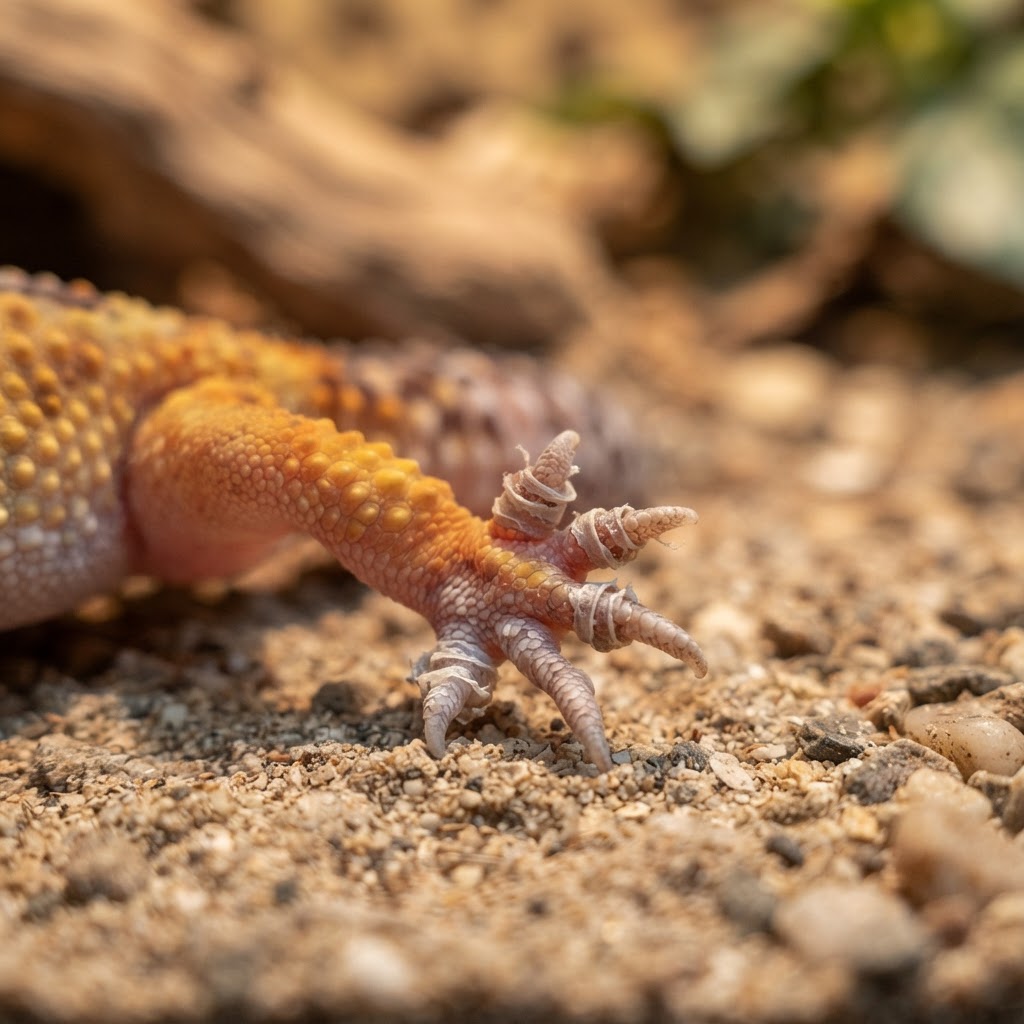
- Stuck shed around toes or eyes
- A swollen belly (possible impaction or eggs)
- Lethargy or spending all time in the cool hide
What to do right now
- Check the warm-side temperature (around 30–32 °C) and a cool hide.
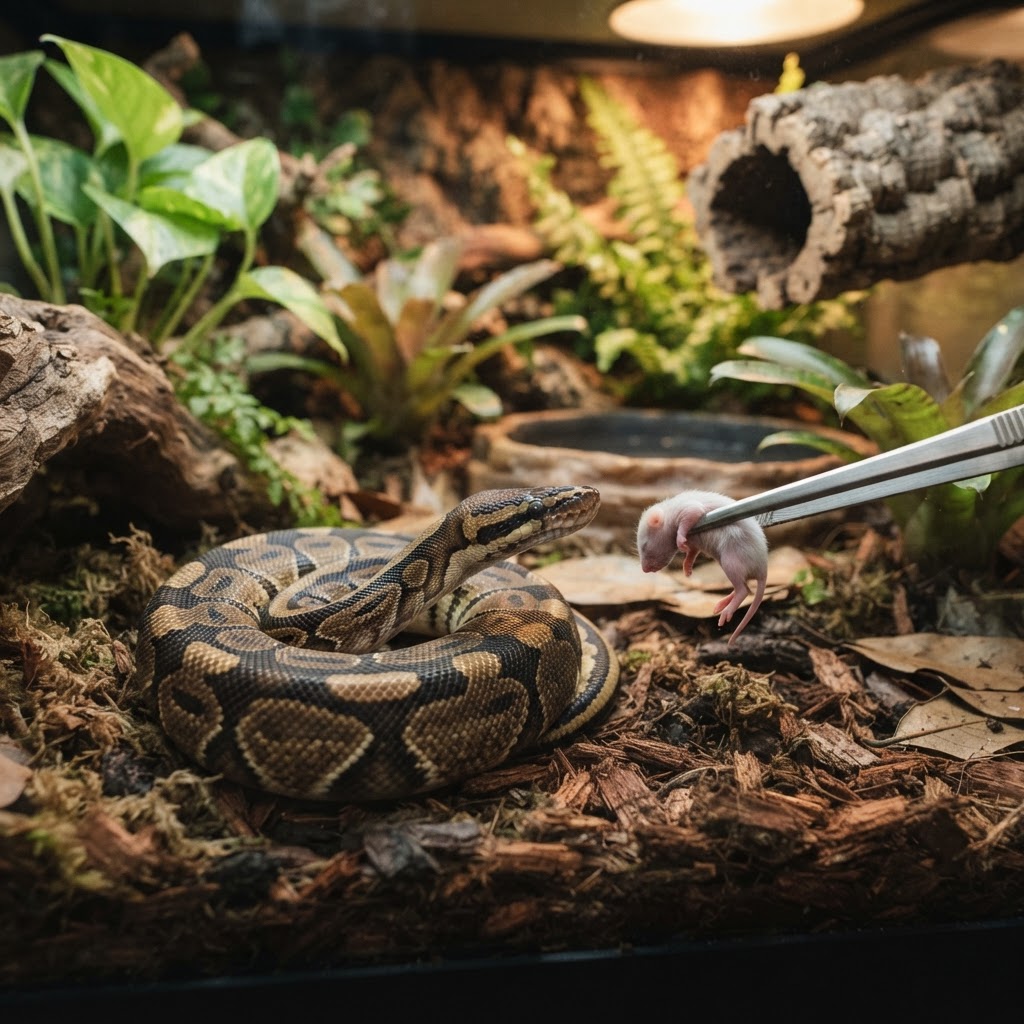
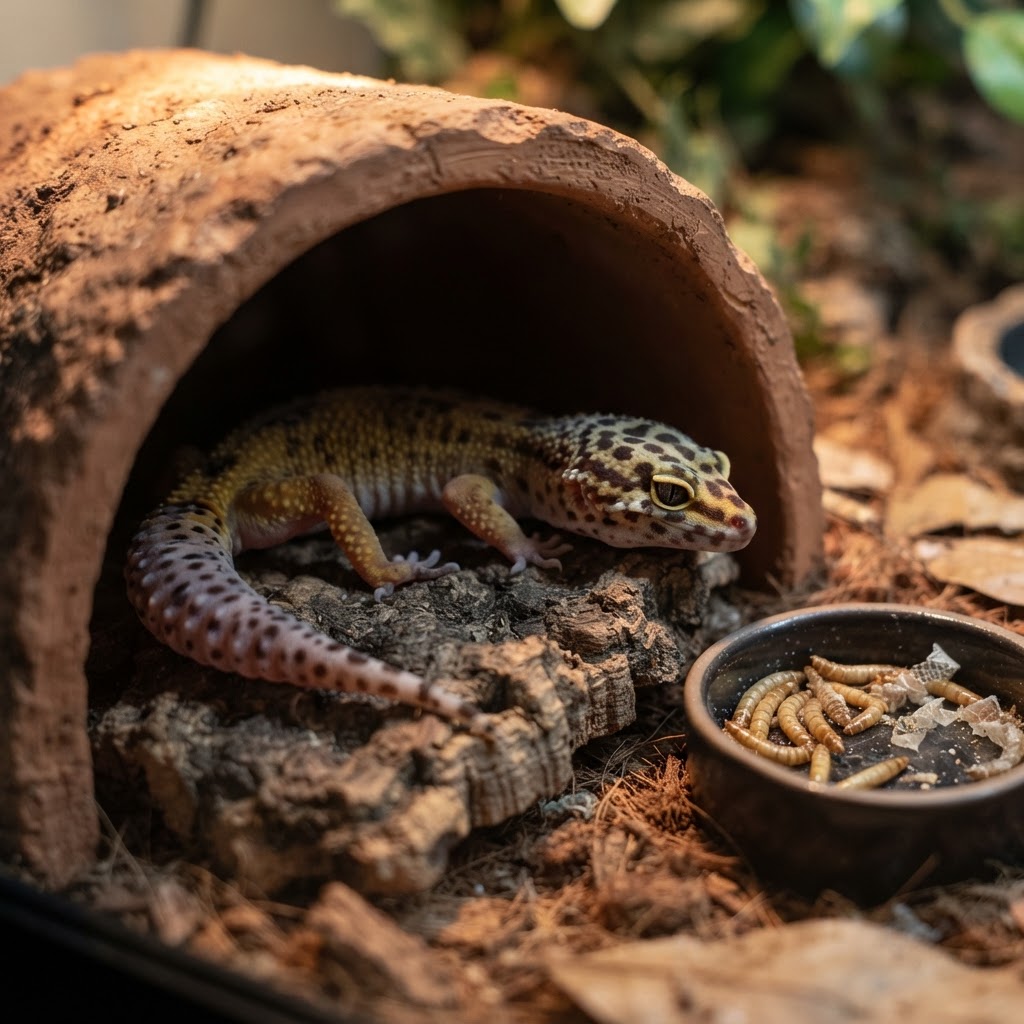
- Offer a favourite feeder (mealworm, cricket, waxworm) by tong or in a shallow dish.
- Check for stuck shed on toes and eyes; provide a humid hide.
- Confirm the substrate isn't causing impaction (avoid loose sand).
- Book a reptile vet if weight loss continues or the tail thins.
What NOT to do
- ❌ Don't use loose sand; impaction risk.
- ❌ Don't force-feed without vet guidance.
- ❌ Don't ignore a thinning tail, it means falling reserves.
- ❌ Don't handle a fasting gecko more; leave it alone.
How a reptile vet diagnoses and treats it
The vet reviews temperatures and diet, examines the gecko and eyes, checks a faecal sample for parasites, and may X-ray if impaction or eggs are suspected. Treatment targets the cause, deworming, eye or mouth medication, assisted feeding, or adjusting the setup.
Preventing appetite problems
Provide a verified warm gradient and a humid hide for shedding, use solid substrate, and dust feeders with calcium and a multivitamin. Have faecal checks done, especially in newly purchased geckos.
When to wait, and when to act now
Adults can skip food for a couple of weeks during ovulation or cool spells and still look healthy. A thinning tail, sunken eyes, or a swollen belly means see a reptile vet, sooner for a young gecko or a firm belly.
Run a free AI triage assessment for personalised next steps, or find a reptile vet near you.
Frequently Asked Questions
Disclaimer: This article is for educational purposes only and is not a substitute for professional veterinary advice. If you're concerned about your pet's health, use our AI triage assessment or consult a licensed veterinarian.