Bottom line: A respiratory infection in a bearded dragon, wheezing, bubbles, or open-mouth breathing, is usually caused by low temperatures or high humidity. It can turn serious fast, so warm the enclosure correctly and see a reptile vet, as antibiotics are often needed.
| Situation | Suggested action |
|---|---|
| Occasional gaping to cool down, dragon otherwise bright | Check temps, monitor |
| Wheezing, bubbles, or open-mouth breathing | Same-day vet |
| Breathing difficulty + lethargy, not eating, or weight loss | Emergency vet now |
Why respiratory infections develop
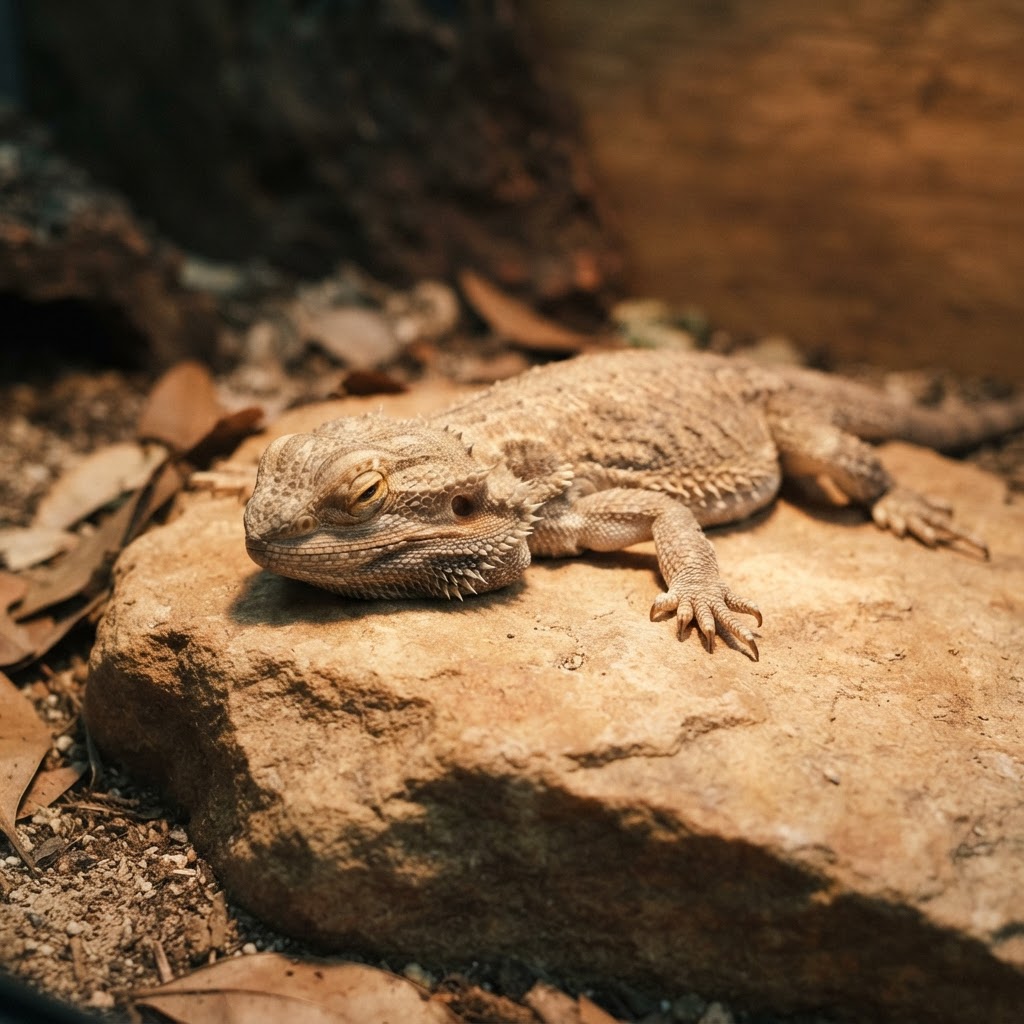
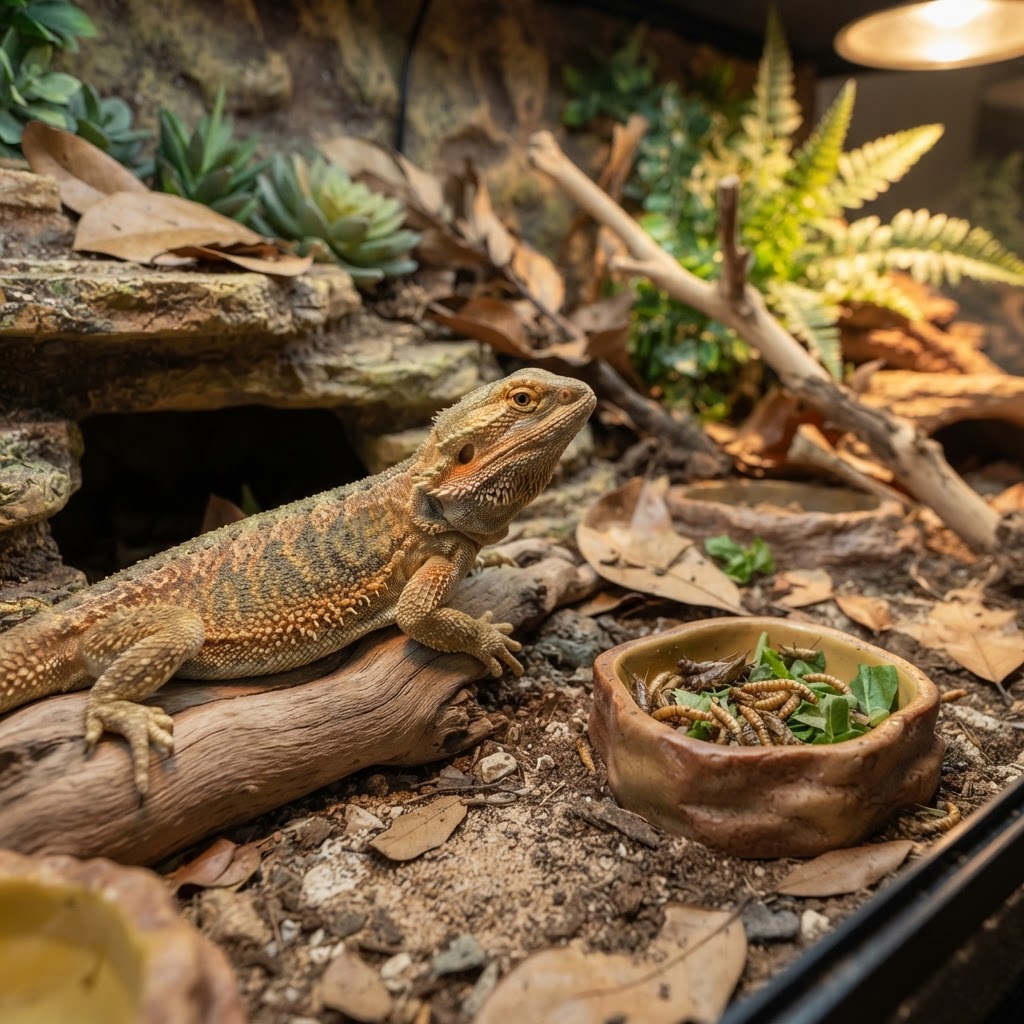
Bearded dragons are desert animals that need a hot, dry, well-ventilated environment. When the enclosure is too cool, too humid, or poorly ventilated, the immune system weakens and bacteria or viruses take hold in the airways. The result is a respiratory infection that can progress to pneumonia quickly. The first signs are subtle, a little extra throat puffing, a click, or mucus, and they're easy to miss until the dragon is breathing hard and lethargic. Early, correct warmth and vet care make a big difference.
What can cause it
An enclosure that's too cool or a broken basking bulb is the classic cause. High humidity and poor ventilation do the same. Stress and a weakened immune system let infection in, and the cause can be bacterial, viral (such as adenovirus), or parasitic. Dust, aerosols, or ammonia from a dirty cage also irritate the airways.
When to worry, the red flags
Occasional gaping to cool down can be normal. See a reptile vet for:
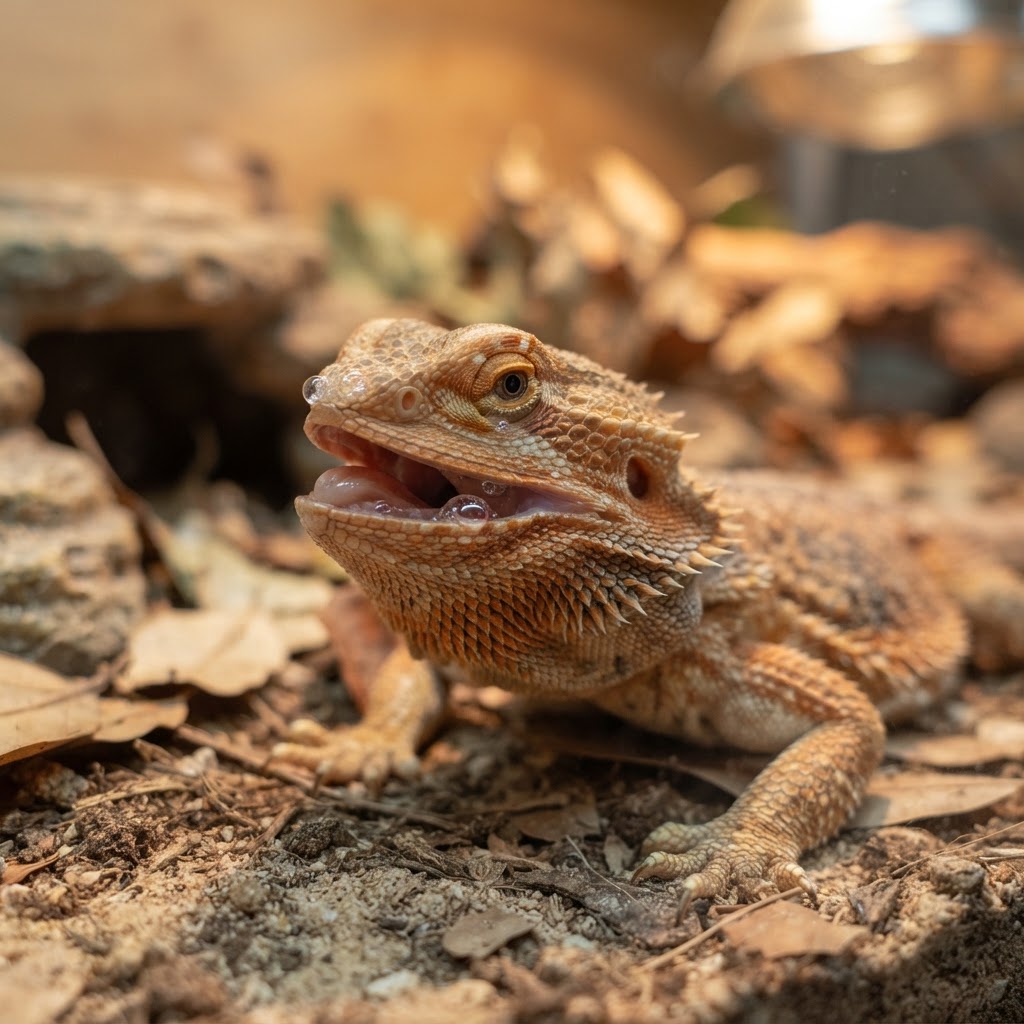
- Wheezing, clicking, or open-mouth breathing
- Bubbles or mucus from the nose or mouth
- Lethargy, not eating, or spending all day on the cool side
- A puffed-up throat or "gaping" at rest
- Weight loss or a dark beard
- Swollen or closed eyes
What to do right now
- Check the basking temperature (38–42 °C) and fix the gradient; make sure the enclosure isn't too cool.
- Make sure humidity isn't too high and the enclosure is clean and well-ventilated.
- Reduce stress and stop handling.
- Book a reptile vet, respiratory infections usually need antibiotics and can progress to pneumonia.
What NOT to do
- ❌ Don't keep the enclosure cool, warmth supports the immune system.
- ❌ Don't use leftover antibiotics without a diagnosis.
- ❌ Don't ignore breathing signs, pneumonia can develop quickly.
- ❌ Don't use aerosols or smoke around the enclosure.
How a reptile vet diagnoses and treats it
The vet examines the airways and may take X-rays to check for pneumonia, plus swabs or bloodwork. Treatment is usually antibiotics, sometimes nebulisation, plus correcting the environment. Severe cases need hospitalisation and supportive care.
Preventing respiratory infections
Keep the basking gradient correct with verified thermometers, keep humidity low for this desert species and the cage clean, avoid dust, aerosols, and fumes around the enclosure, and quarantine new reptiles to prevent infection spread.
When to wait, and when to act now
Occasional gaping to cool down can be normal. Wheezing, bubbles, open-mouth breathing, or lethargy is not, see a reptile vet; pneumonia can develop quickly.
Run a free AI triage assessment for personalised next steps, or find a reptile vet near you.
Frequently Asked Questions
Disclaimer: This article is for educational purposes only and is not a substitute for professional veterinary advice. If you're concerned about your pet's health, use our AI triage assessment or consult a licensed veterinarian.