Bottom line: Shell rot, soft, discoloured, or smelly patches on a turtle or tortoise shell, is usually from poor water quality or injury and needs a reptile vet. Left alone, it can reach the bone and become serious.
| Situation | Suggested action |
|---|---|
| Minor algae on a firm, healthy shell | Improve water/basking, monitor |
| Soft, discoloured, or smelly patches | Vet visit within a few days |
| Shell rot + lethargy, not eating, or exposed bone | Same-day vet |
Why shell rot develops
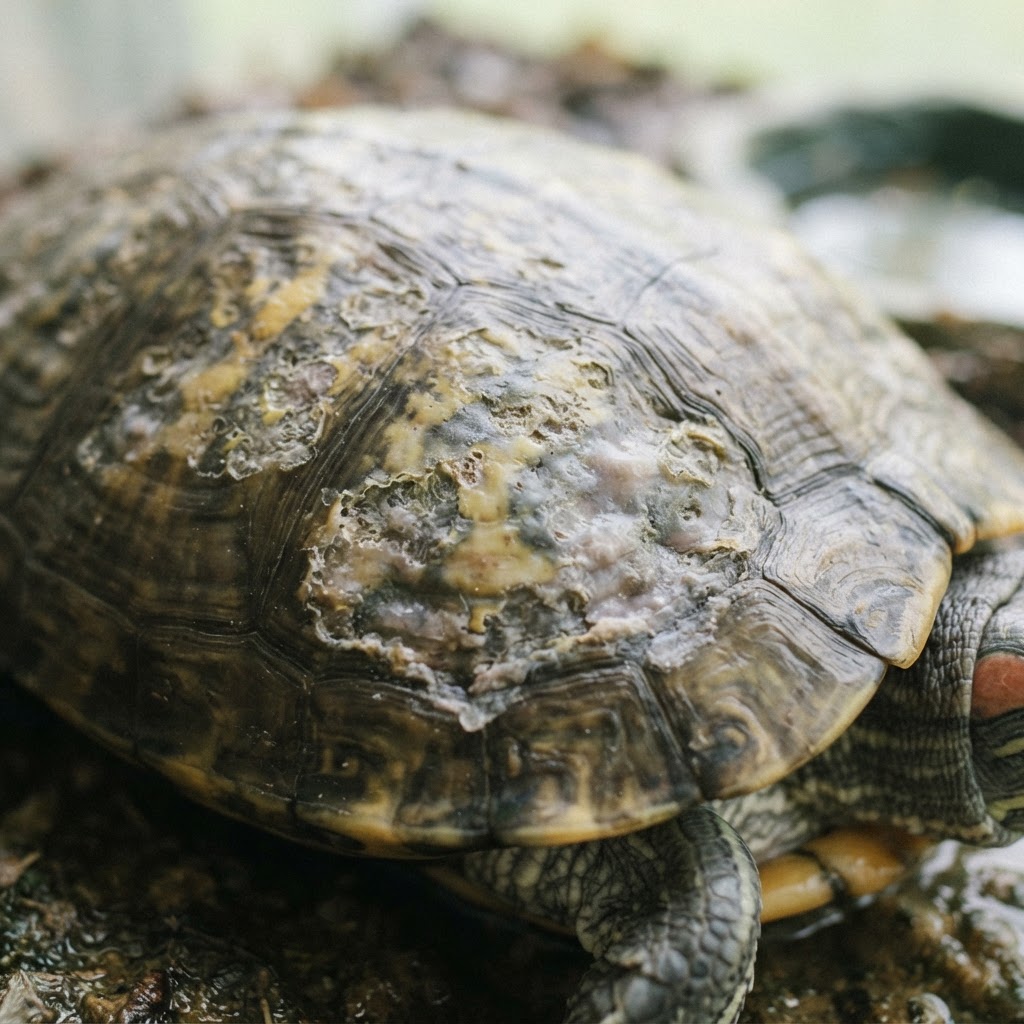
A healthy shell is hard, smooth, and even in colour. Shell rot sets in when the shell is damaged or kept wet and dirty, allowing bacteria or fungi to invade the softer layers beneath the outer scutes. In aquatic turtles the usual culprit is poor water quality; in tortoises it's often an injury or a damp, dirty environment. The patches start as small, discoloured spots and, if ignored, soften, pit, and smell, and the infection can eventually reach the bone underneath, which is serious and painful.
What can cause it
Poor water quality (high ammonia, nitrite, or a dirty filter) is the leading cause in aquatic turtles. Shell injury, a crack, scratch, or bite, lets infection in. Lack of UVB or basking weakens the shell, and a fungal, bacterial, or algal infection takes hold. Insufficient dry basking time for aquatic turtles keeps the shell too wet and prone to rot.
When to worry, the red flags
Minor algae on an otherwise firm, healthy shell may be cosmetic. See a reptile vet for:
- Soft, discoloured (white/green/black), or pitted patches on the shell
- A foul smell or discharge from the shell
- The shell peeling in large flakes or feeling mushy
- Lethargy, not eating, or swollen eyes
- Redness around the shell edges or exposed bone
What to do right now
- Test and improve water quality (ammonia, nitrite, nitrate, pH) and temperature for aquatic turtles.
- Keep the shell dry and clean; remove any visible debris gently.
- Provide a clean basking area with proper UVB and dry-dock if advised.
- Book a reptile vet, shell rot usually needs cleaning and topical or oral treatment.
What NOT to do
- ❌ Don't scrub the shell hard or peel shell off.
- ❌ Don't apply random home remedies (iodine, paint) without vet guidance.
- ❌ Don't delay, deep shell rot can reach bone.
- ❌ Don't keep a turtle without a dry basking area.
How a reptile vet diagnoses and treats it
The vet cleans infected areas, removes dead shell, and uses topical antiseptics plus oral antibiotics or antifungals for deep infection. Severe cases need X-rays to check the bone underneath. Improving water and basking conditions is essential to prevent recurrence.
Preventing shell rot
Keep water pristine with strong filtration and regular changes, provide a dry, warm basking area with UVB for aquatic turtles, avoid sharp décor that can scratch the shell, and quarantine new turtles.
When to wait, and when to act now
Minor algae on a firm, healthy shell may be cosmetic. Soft, smelly, pitted, or discoloured patches, or a lethargic turtle, need a reptile vet, deep rot can reach bone.
Run a free AI triage assessment for personalised next steps, or find a reptile vet near you.
Frequently Asked Questions
Disclaimer: This article is for educational purposes only and is not a substitute for professional veterinary advice. If you're concerned about your pet's health, use our AI triage assessment or consult a licensed veterinarian.