Bottom line: Snakes can fast for weeks, especially before a shed or breeding season, but a snake that stops eating and loses weight or shows other signs needs a reptile vet. Most feeding refusals are husbandry, not disease.
| Situation | Suggested action |
|---|---|
| Skipping meals before a shed, snake otherwise bright | Check temps/humidity, monitor |
| Not eating 4–6+ weeks, or weight loss | Vet visit |
| Not eating + wheezing, regurgitation, or mouth rot | Same-day vet |
Why a snake stops eating
Snakes have slow metabolisms and can naturally go long stretches without food, a healthy adult may fast for weeks before a shed or during breeding season without issue. That tolerance is also what makes it easy to miss a real problem. The skill is in separating a normal fasting window (snake bright, good body weight, no other signs) from one that means trouble (weight loss, breathing changes, regurgitation, or mouth rot). Most refusals trace back to the environment.
What can cause it
Husbandry problems top the list: wrong temperature or humidity, prey that's too large or the wrong type (live prey refusing a frozen-thawed mouse, or vice versa), and stress from over-handling or a new environment. Normal fasting happens before a shed (cloudy eyes/blue skin) and in mature snakes during breeding season. Medical causes include parasites, a respiratory infection, or mouth rot (infectious stomatitis, cheesy discharge in the mouth).
When to worry, the red flags
An adult skipping meals for a few weeks before a shed can be normal. See a reptile vet for:
- Not eating for more than 4–6 weeks in an otherwise healthy adult (less for young snakes)
- Weight loss, the backbone or body looks thin or less rounded
- Wheezing, open-mouth breathing, or bubbles from the nose
- Lethargy, hiding constantly, or regurgitation after eating
- Stuck shed or mouth rot (cheesy discharge in the mouth)
- A swollen mid-body (possible impaction or mass)
What to do right now
- Check temperatures and humidity match your species' needs.
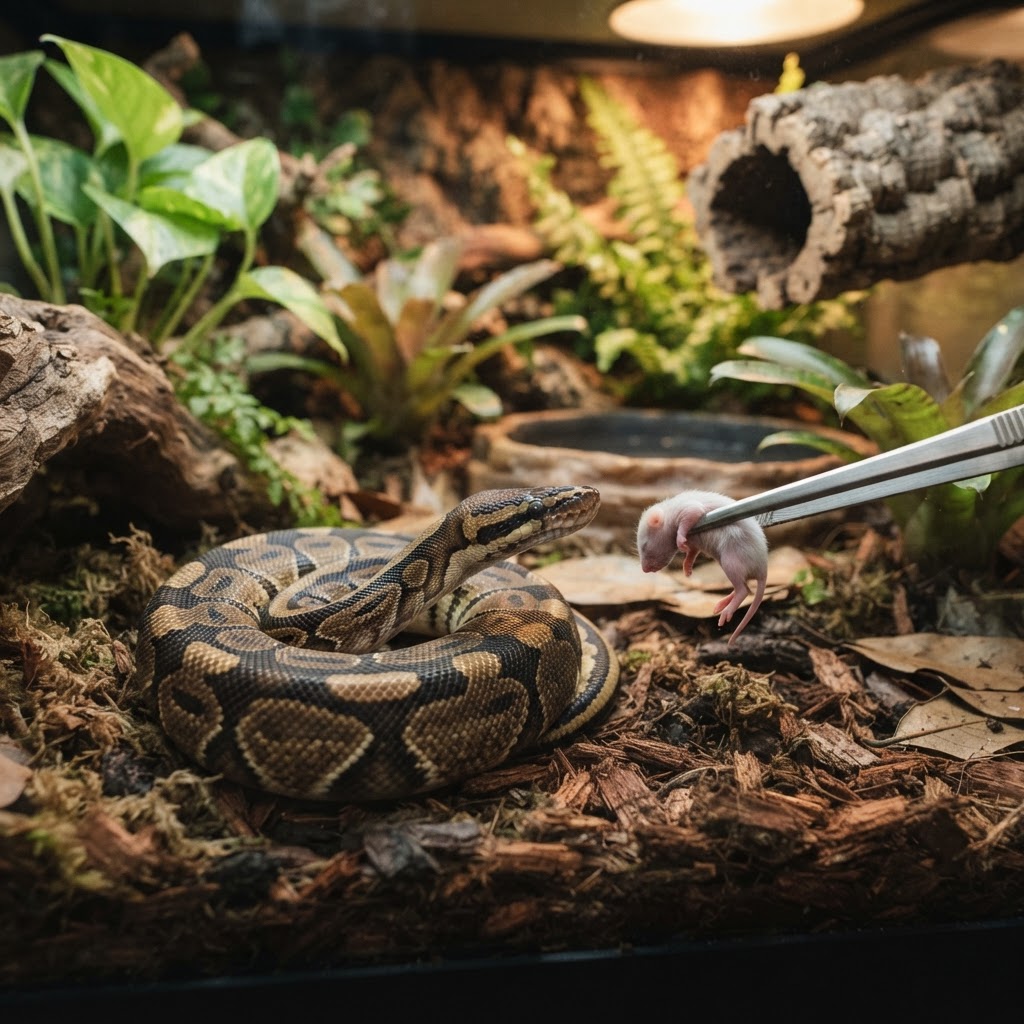
- Offer a smaller prey item or a different prey type (scented or freshly thawed).
- Check the snake isn't in shed (cloudy eyes/blue skin).
- Reduce stress, fewer handling sessions, a quiet environment, a tight-fitting hide.
- Book a reptile vet if weight loss appears or other signs develop.
What NOT to do
- ❌ Don't force-feed, it causes stress and regurgitation.
- ❌ Don't handle a fasting snake more; leave it alone.
- ❌ Don't ignore weight loss or breathing signs.
- ❌ Don't leave a snake with mouth rot, it can stop eating and become systemic.
How a reptile vet diagnoses and treats it
The vet reviews husbandry, examines the snake and mouth, and may run a faecal test for parasites. Treatment targets the cause, deworming, antibiotics for infection, or simply correcting temperature, humidity, and prey presentation. Regurgitation or weight loss triggers a more thorough workup.
Preventing feeding refusals
Verify temperatures and humidity with gauges, use appropriately sized prey (frozen-thawed where possible), give a quiet, secure hide and limit handling around feeding and sheds, and quarantine and screen new snakes for parasites.
When to wait, and when to act now
An adult skipping meals for a few weeks before a shed can be normal. Weight loss, breathing signs, regurgitation, or mouth rot means see a reptile vet.
Run a free AI triage assessment for personalised next steps, or find a reptile vet near you.
Frequently Asked Questions
Disclaimer: This article is for educational purposes only and is not a substitute for professional veterinary advice. If you're concerned about your pet's health, use our AI triage assessment or consult a licensed veterinarian.