Bottom line: A change in your bird's droppings, colour, consistency, or frequency, is often the earliest sign of illness, because birds hide disease until it's advanced. Lasting or marked changes, especially with a fluffed or quiet bird, need an avian vet the same day.
| Situation | Suggested action |
|---|---|
| One odd dropping, bird otherwise bright | Check diet/stress, monitor |
| Change lasting >24 hours, or with fluffing/quiet | Same-day avian vet |
| Undigested seed, blood, or a not-eating bird | Emergency vet now |
Why droppings are so revealing
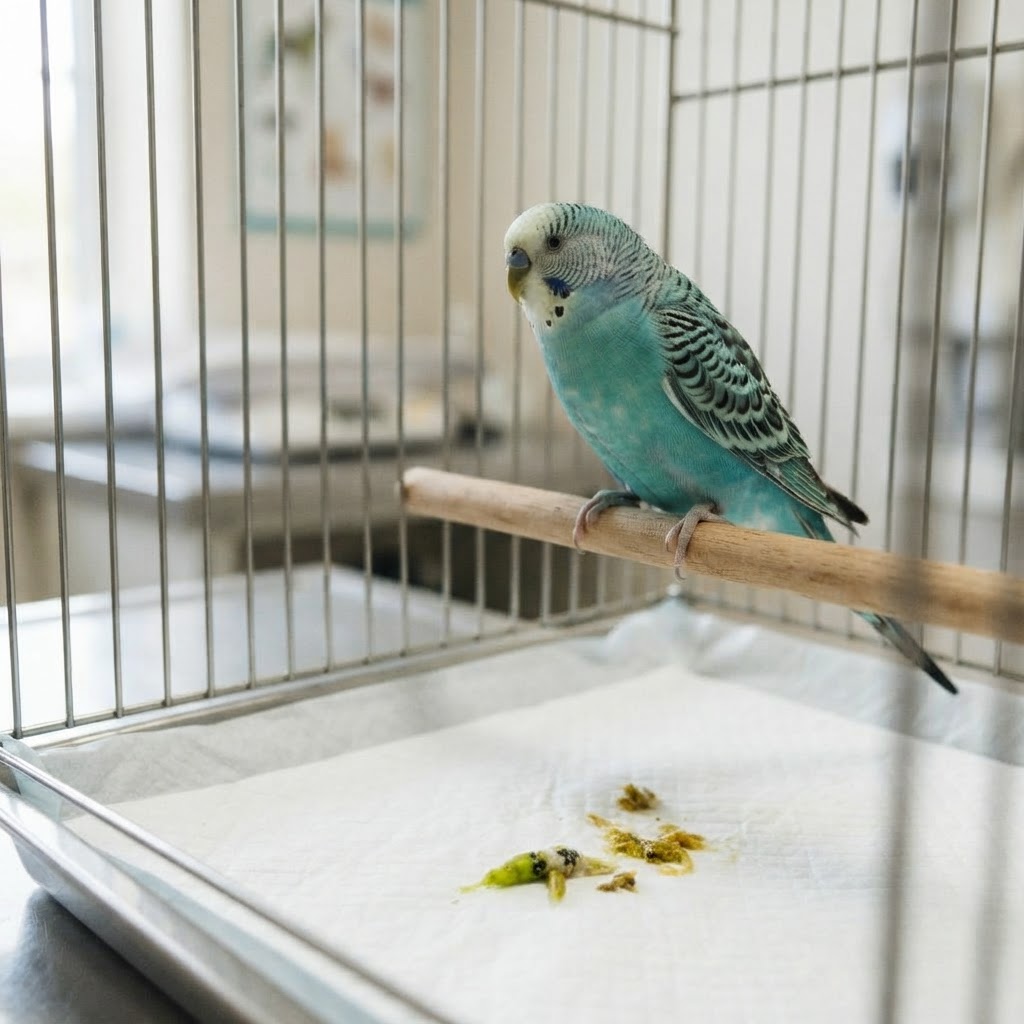
A bird's droppings are one of the few outward signs of what's going on inside, because birds hide illness so well. A normal dropping has three parts: a dark green/brown faecal portion, a white urates portion (the bird equivalent of urine), and a clear watery urine portion. Changes in any part, colour, volume, consistency, or frequency, can point to the gut, kidneys, liver, or reproductive tract, and they often show up before the bird looks sick. That makes the cage liner one of your best early warning tools.
What can cause changes
Diet and stress cause many short-lived changes, a new food, a lot of fruit, or a stressful day can alter colour and water content. Gut infections, parasites (like giardia or worms), crop problems, and liver disease change the faecal or urate colour. Kidney disease or heavy metal poisoning changes the urates or urine. Egg binding in females can cause scant or absent droppings. Pancreatic or digestive disease can cause undigested seed in the droppings (a serious sign).
When to worry, the red flags
A single odd dropping in a bright bird can be watched. See an avian vet for:
- A change lasting more than 24 hours, or that keeps coming back
- Bright green, yellow, or black droppings, liver or gut disease
- Undigested whole seed in the droppings, serious gut problem
- Blood in the droppings, or red streaks
- Very watery droppings that persist, or pasted vent
- Scant or no droppings, possible blockage or egg binding
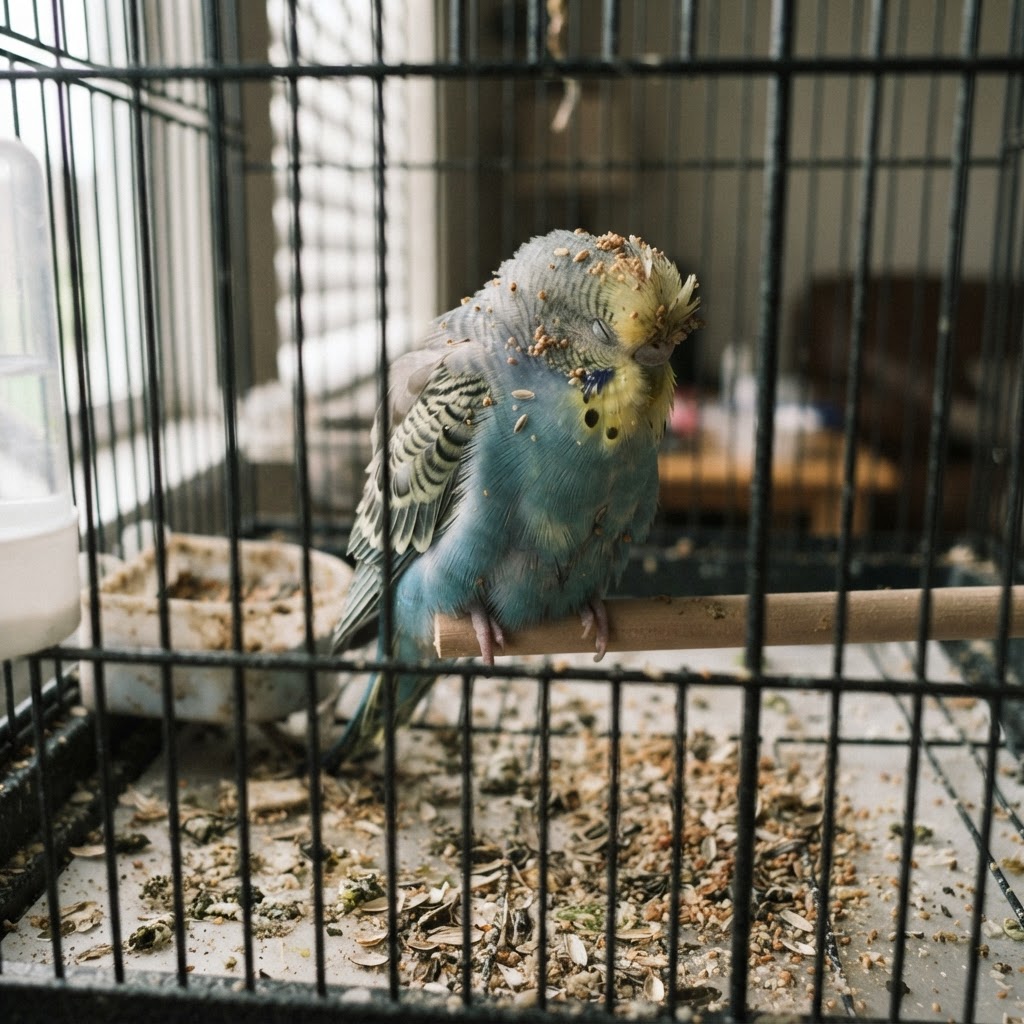
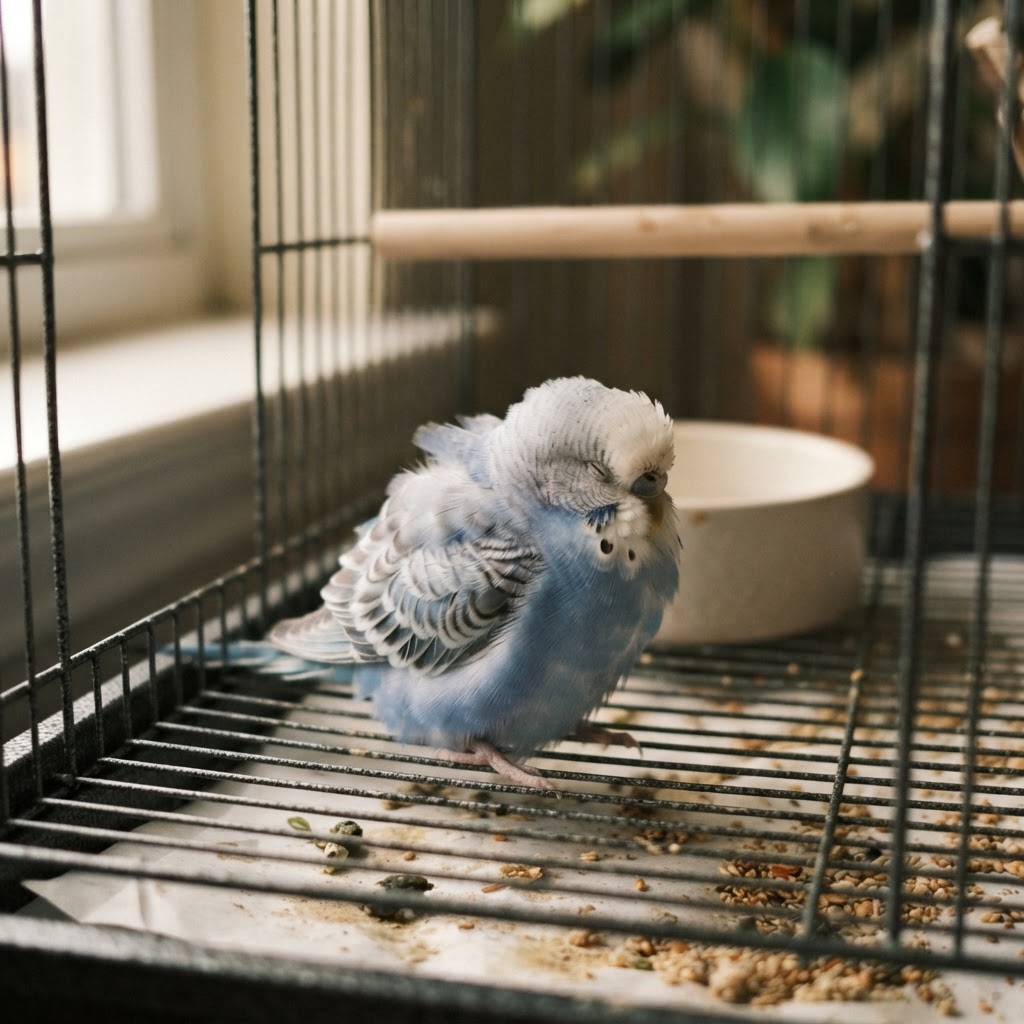
- A fluffed, quiet, or not-eating bird alongside the change
What to do right now
- Look at the cage liner, use plain paper so you can judge colour and consistency.
- Think about recent changes, new food, stress, or a new bird.
- Check the vent for pasted or matted droppings and clean gently if needed.
- Keep the bird warm and quiet.
- Call an avian vet the same day for any lasting or marked change, and immediately with undigested seed, blood, or a fluffed bird.
What NOT to do
- ❌ Don't assume a change is "just diet" if it lasts more than a day.
- ❌ Don't give human medications.
- ❌ Don't ignore undigested seed or blood, both are serious.
- ❌ Don't wait with a fluffed or not-eating bird.
How an avian vet diagnoses and treats it
An avian vet will examine the bird, look at a fresh dropping under the microscope, and may run a faecal test, bloodwork, or X-rays. Treatment depends on the cause, antibiotics or antiparasitics for infection, fluids and crop feeding, or treatment for liver or kidney disease. Most birds improve well once the underlying cause is found.
Preventing dropping problems
Feed a balanced, fresh diet (not just seed), keep the cage clean with plain paper liners so you can monitor droppings, quarantine new birds, and watch droppings daily. Knowing your bird's normal makes a change obvious, and early.
When to wait, and when to act now
One odd dropping in a bright bird can be watched briefly. A change lasting more than 24 hours, undigested seed, blood, or a fluffed and quiet bird needs an avian vet now, birds go downhill fast.
Run a free AI triage assessment for personalised next steps, or find an avian vet near you.
Frequently Asked Questions
Disclaimer: This article is for educational purposes only and is not a substitute for professional veterinary advice. If you're concerned about your pet's health, use our AI triage assessment or consult a licensed veterinarian.