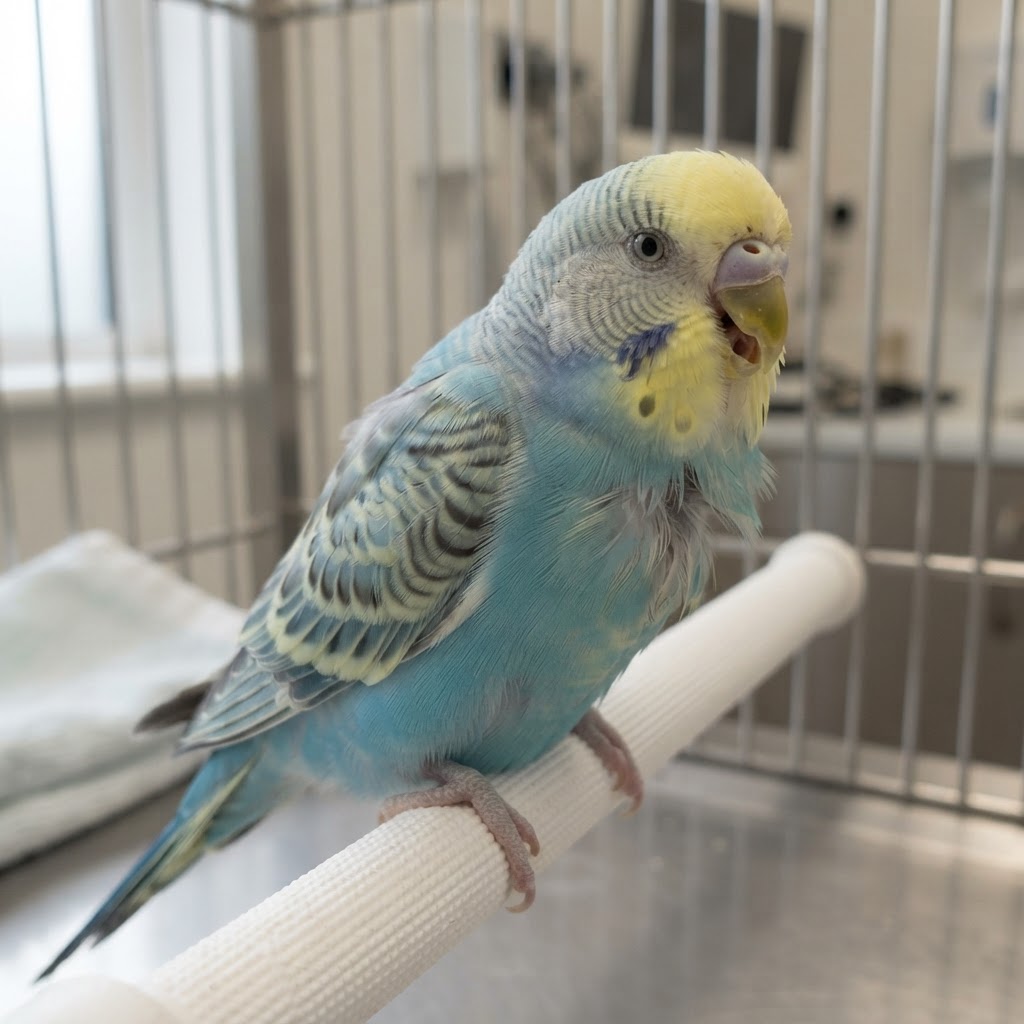
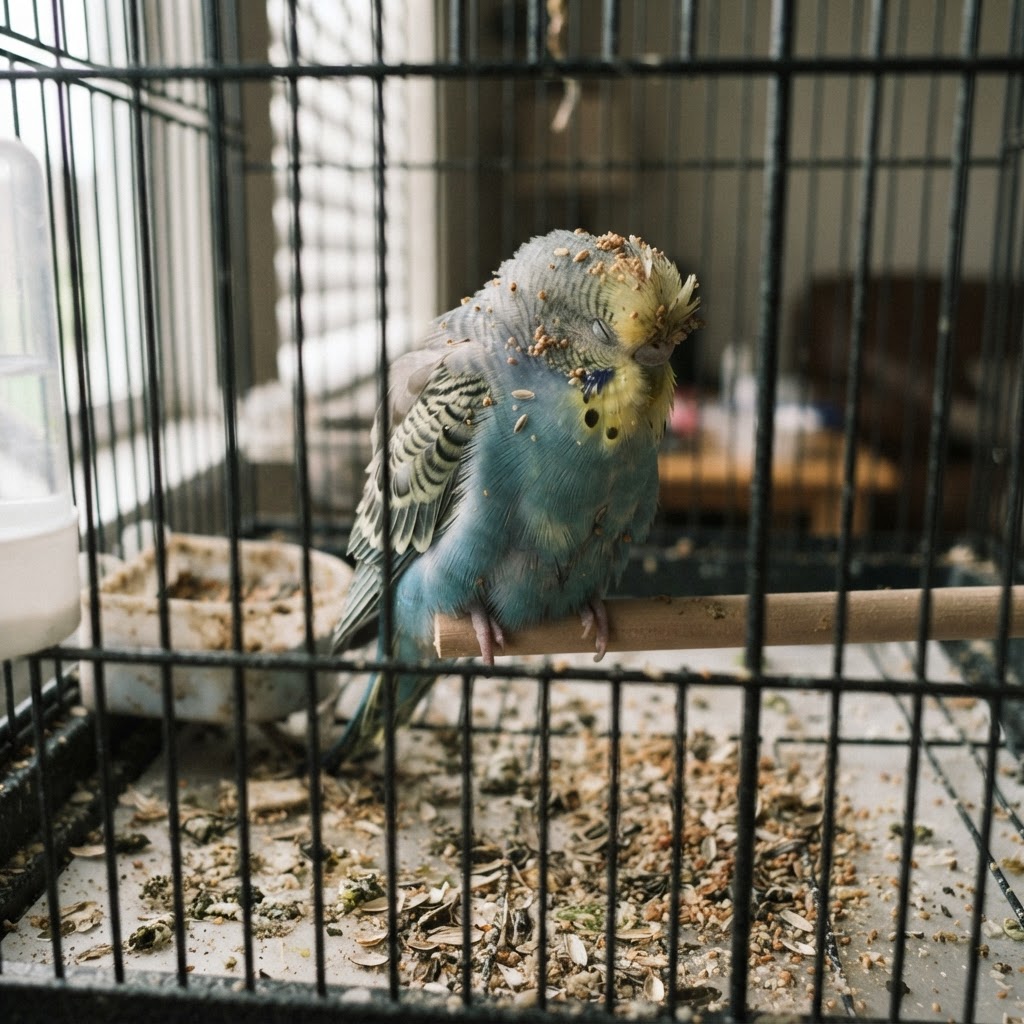
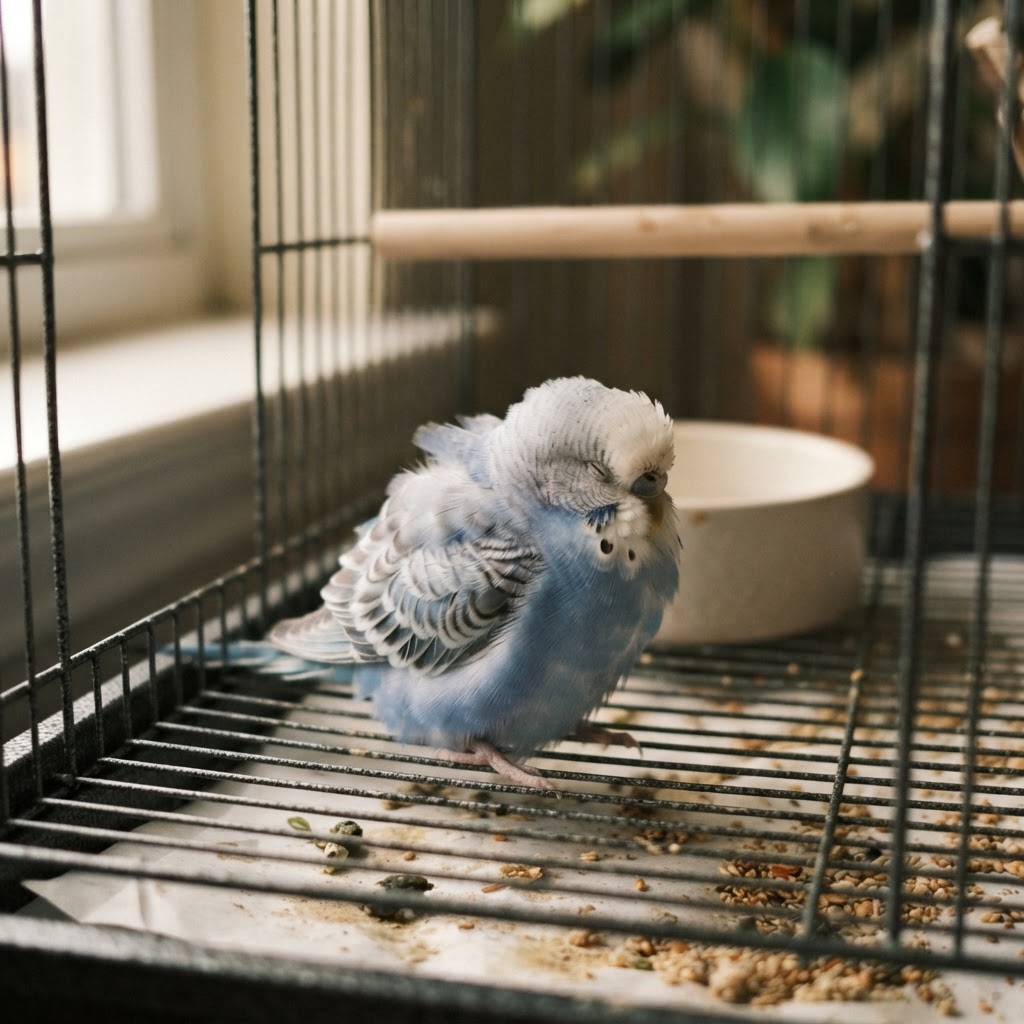
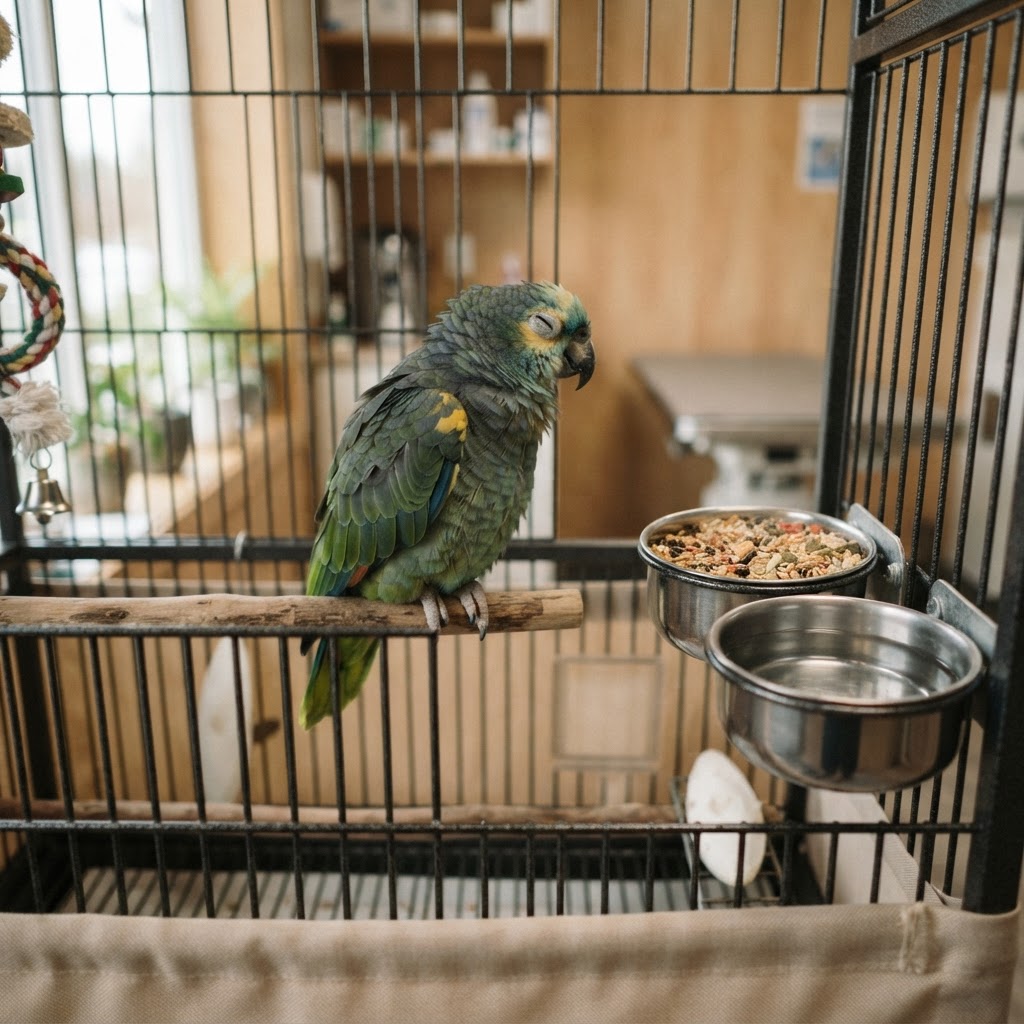
Bottom line: Birds have fast metabolisms and can't go long without food, so a bird that stops eating, especially one that's fluffed, quiet, or on the cage floor, can decline quickly and needs an avian vet the same day. A bright bird that's just being fussy is different from a bird that won't touch even favourites.
| Situation | Suggested action |
|---|---|
| Skipping favourite foods but eating others, bright | Offer variety, monitor 12 hours |
| Not eating for 12–24 hours, or fluffed/quiet | Same-day avian vet |
| Not eating + on the floor, breathing effort, or weak | Emergency vet now |
Why a bird stops eating
Birds have high metabolisms and eat little and often; a healthy bird rarely skips meals. A bird that stops eating is usually either unwell, in pain, or can't access food comfortably. Because birds hide illness, loss of appetite is often the first, and sometimes only, outward sign that something is wrong. The key is to tell a "fussy" bird holding out for a favourite from a bird refusing everything, and to act on the latter fast, because a fasting bird can weaken over hours.
What can cause it
Illness of almost any kind, respiratory infection, gut infection, organ disease, or egg binding in females, reduces appetite. Pain from a crop problem, a sore beak, or an injury makes eating difficult. Stress, a new environment, a new cage-mate, or a change of food can put a bird off temporarily. Crop problems (crop impaction, sour crop, or infection) stop food moving through. Teflon (PTFE) toxicity and other poisons cause sudden illness and not eating.
When to worry, the red flags
A bright bird picking around can be watched briefly. See an avian vet for:
- Not eating for more than 12–24 hours
- Fluffed up, quiet, or on the cage floor
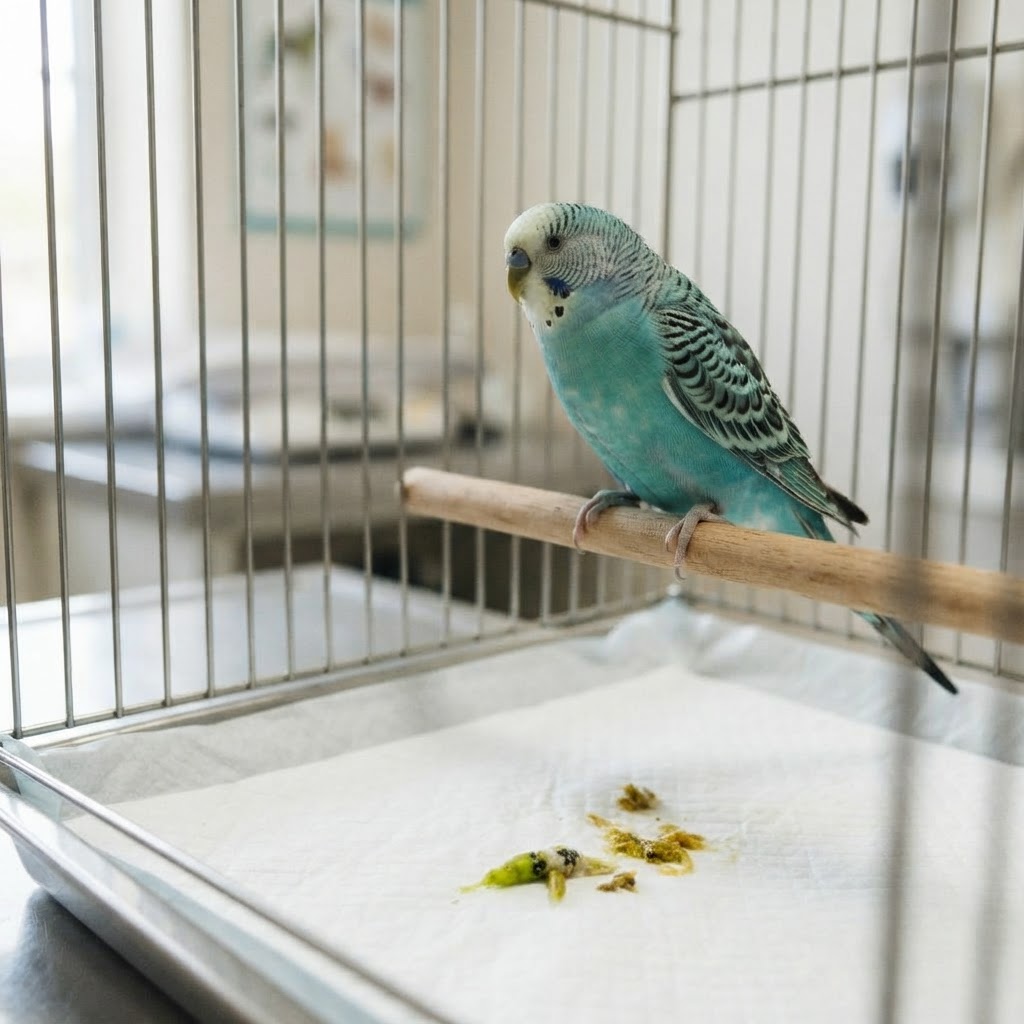
- Not drinking, or scant, abnormal droppings
- A swollen crop (the pouch at the base of the neck) or crop not emptying
- Tail bobbing, open-mouth breathing, or clicking, respiratory distress
- A swollen belly, or straining (possible egg binding in females)
- Weakness, unable to grip a perch, or a sharp breastbone (weight loss)
- Discharge from the eyes or nares
What to do right now
- Offer a favourite, easy-to-eat food within easy reach; a sick bird may not move to the bowl.
- Warm and quieten the bird, a heat source and a dim, draught-free spot reduce stress.
- Check the droppings, scant or abnormal droppings confirm a bird that's not eating or unwell.
- Look for a swollen crop, breathing effort, or a swollen belly.
- Call an avian vet the same day, a fasting bird can weaken quickly.
What NOT to do
- ❌ Don't wait "to see if it eats tomorrow", birds decline over hours.
- ❌ Don't give human medications.
- ❌ Don't force-feed without vet guidance; a blocked or infected crop can rupture.
- ❌ Don't use aerosols or non-stick cookware fumes near the bird.
How an avian vet diagnoses and treats it
An avian vet will examine the bird, check the crop, weight, and breathing, and may run bloodwork, a faecal test, or X-rays. Treatment depends on the cause, crop flushing or medication for crop problems, antibiotics, fluids, crop feeding, or surgery for egg binding. Most birds improve well with prompt supportive care.
Preventing appetite problems
Feed a balanced diet (not just seed), keep the cage clean and warm, quarantine new birds, and watch daily for changes in eating, droppings, and demeanour. Early action is everything in birds.
When to wait, and when to act now
A bright bird picking around can be watched briefly. Not eating for more than 12–24 hours, or with fluffing, breathing effort, or weakness, means an avian vet now, birds go downhill fast.
Run a free AI triage assessment for personalised next steps, or find an avian vet near you.
Frequently Asked Questions
Disclaimer: This article is for educational purposes only and is not a substitute for professional veterinary advice. If you're concerned about your pet's health, use our AI triage assessment or consult a licensed veterinarian.