Bottom line: Regurgitation, gently bringing up food for a mate or young, can be normal in birds, but true vomiting (flicking food, head movements, and seed stuck to the beak and cage) is abnormal and often serious. A bird that's vomiting and fluffed or not eating needs an avian vet the same day.
| Situation | Suggested action |
|---|---|
| Regurgitating to a mirror/favourite toy, bird otherwise bright | Monitor; often normal bonding |
| Repeated vomiting, or fluffed and not eating | Same-day avian vet |
| Vomiting + weakness, breathing effort, or on the floor | Emergency vet now |
Regurgitation vs vomiting, why it matters
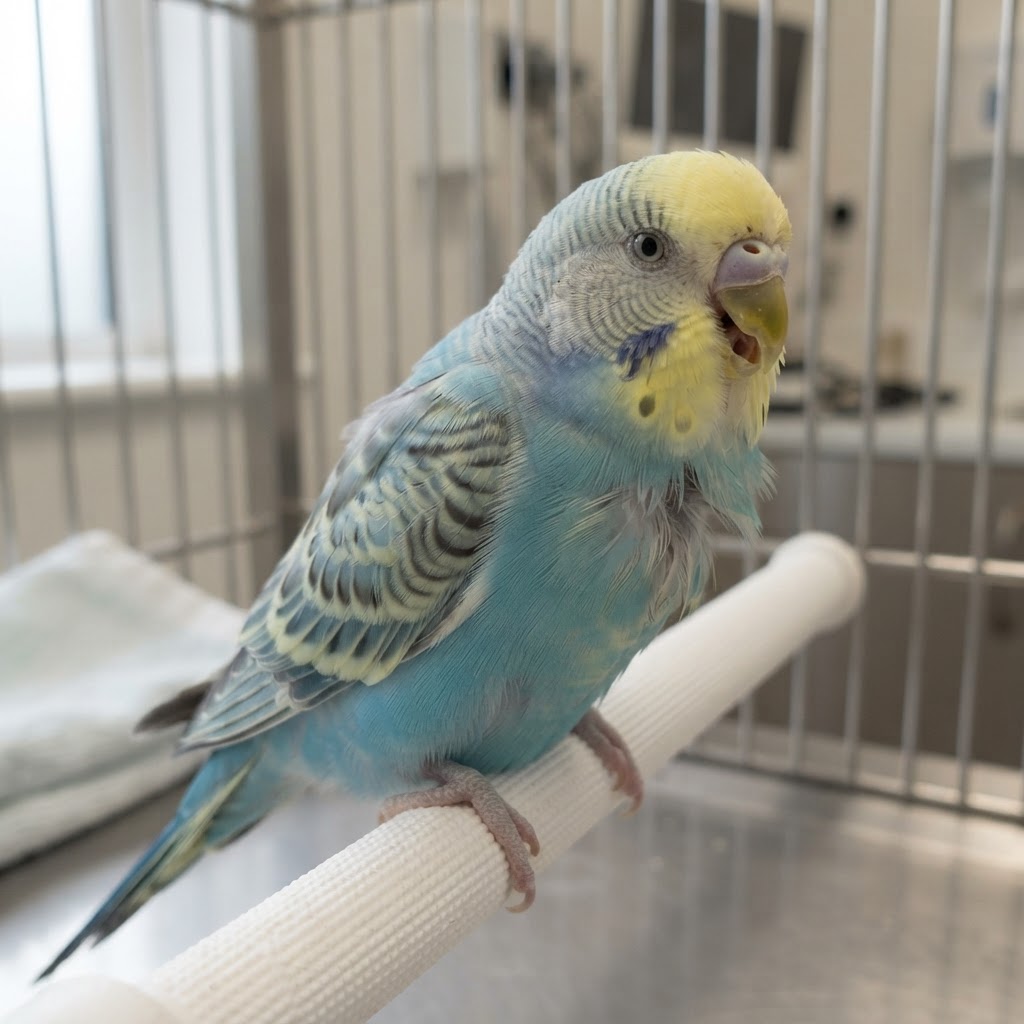
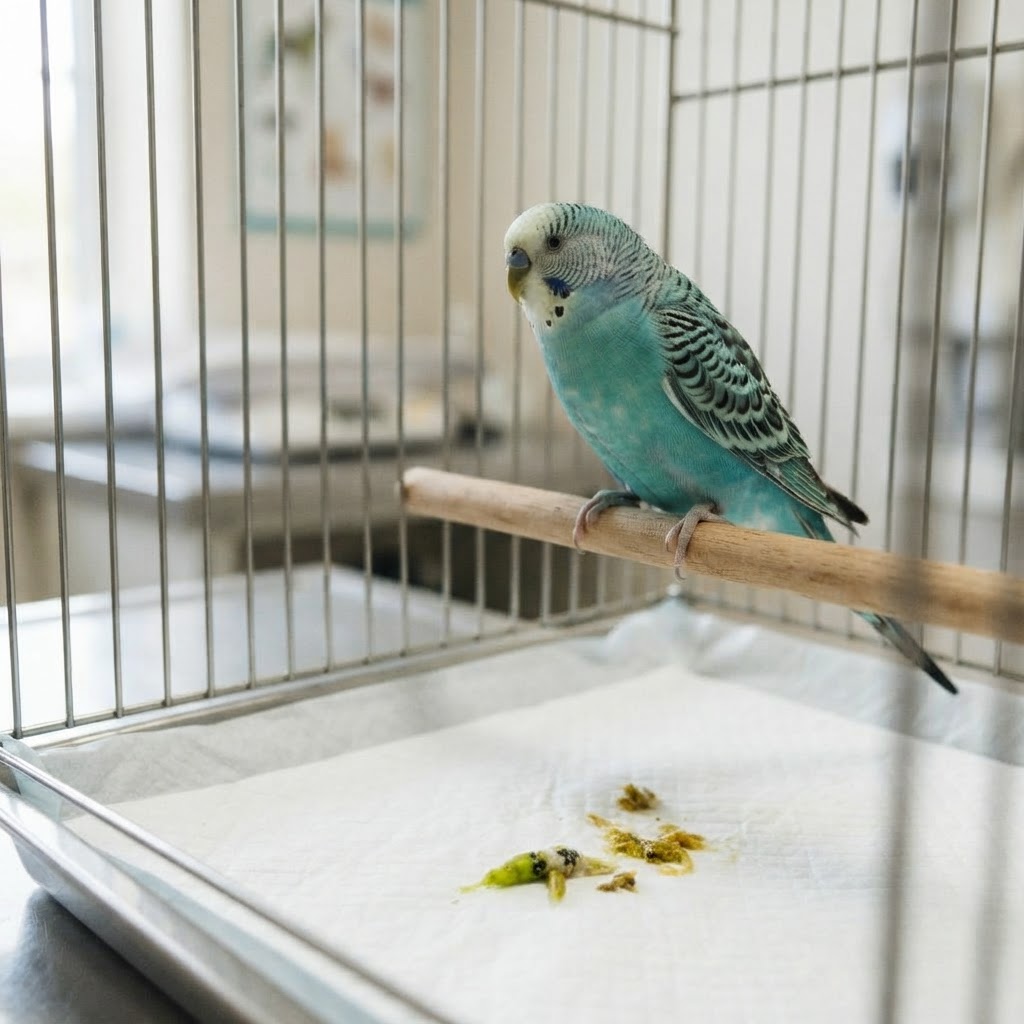
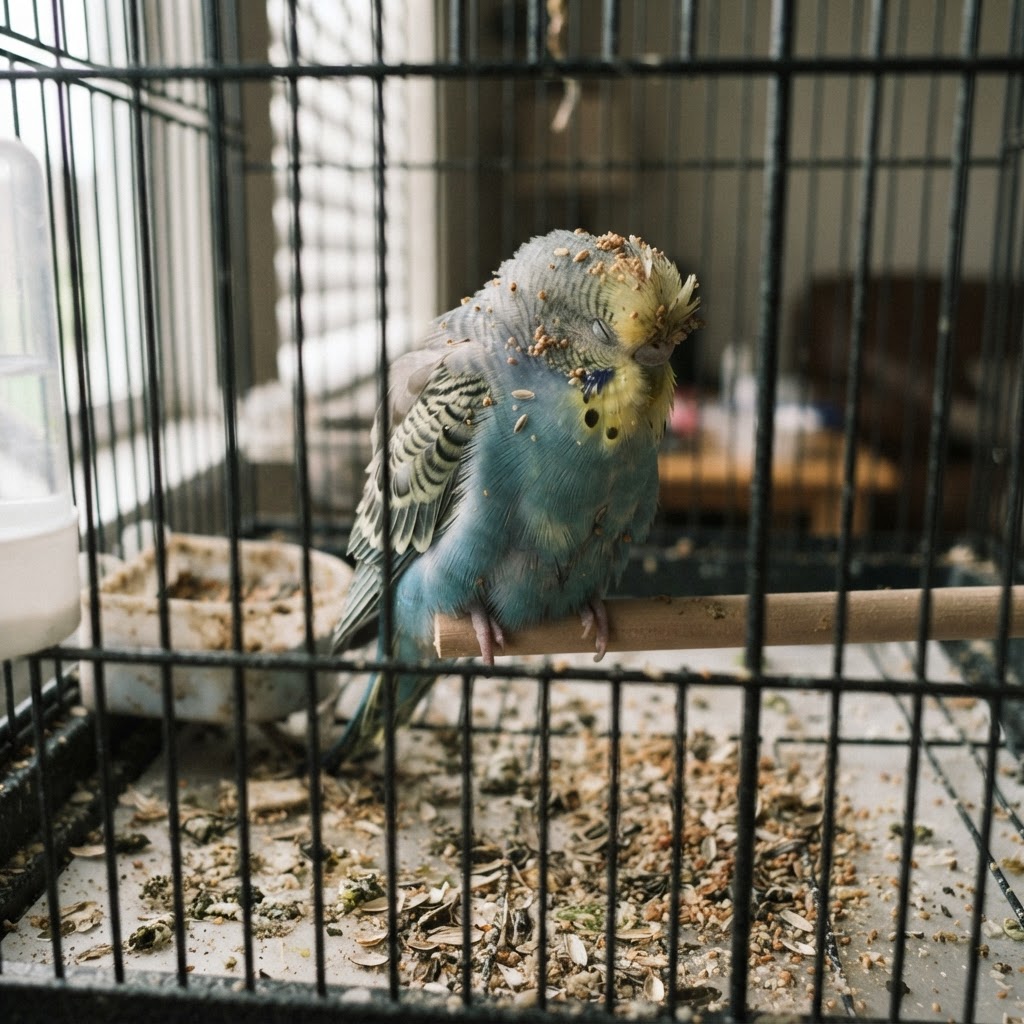
Owners often mix these up, and the difference is important. Regurgitation is a normal, purposeful behaviour: a bird brings up soft food from the crop and offers it to a mate, a favourite toy, a mirror, or even an owner. The bird looks calm, bobs its head, and places the food down. Vomiting is involuntary and forceful, the bird flicks its head, spits seed in all directions, and has food stuck to the beak, face, and cage bars. Vomiting is always abnormal in a bird and usually means crop or gut disease, poisoning, or a serious infection.
What can cause true vomiting
Crop problems, sour crop (a yeast infection), crop impaction, or crop infection, are common causes. Gut infections, heavy metal or plant poisoning, egg binding in females, and organ disease can all cause vomiting. Psittacosis (chlamydia) is a contagious infection that can cause vomiting and is transmissible to people. Stress or a sudden diet change can cause a brief upset, but repeated vomiting is not normal.
When to worry, the red flags
Regurgitation to a mate or toy, with a bright bird, is often normal. See an avian vet for:
- Forceful, flicking vomiting with food stuck to the beak and cage
- Repeated vomiting, or vomiting with not eating
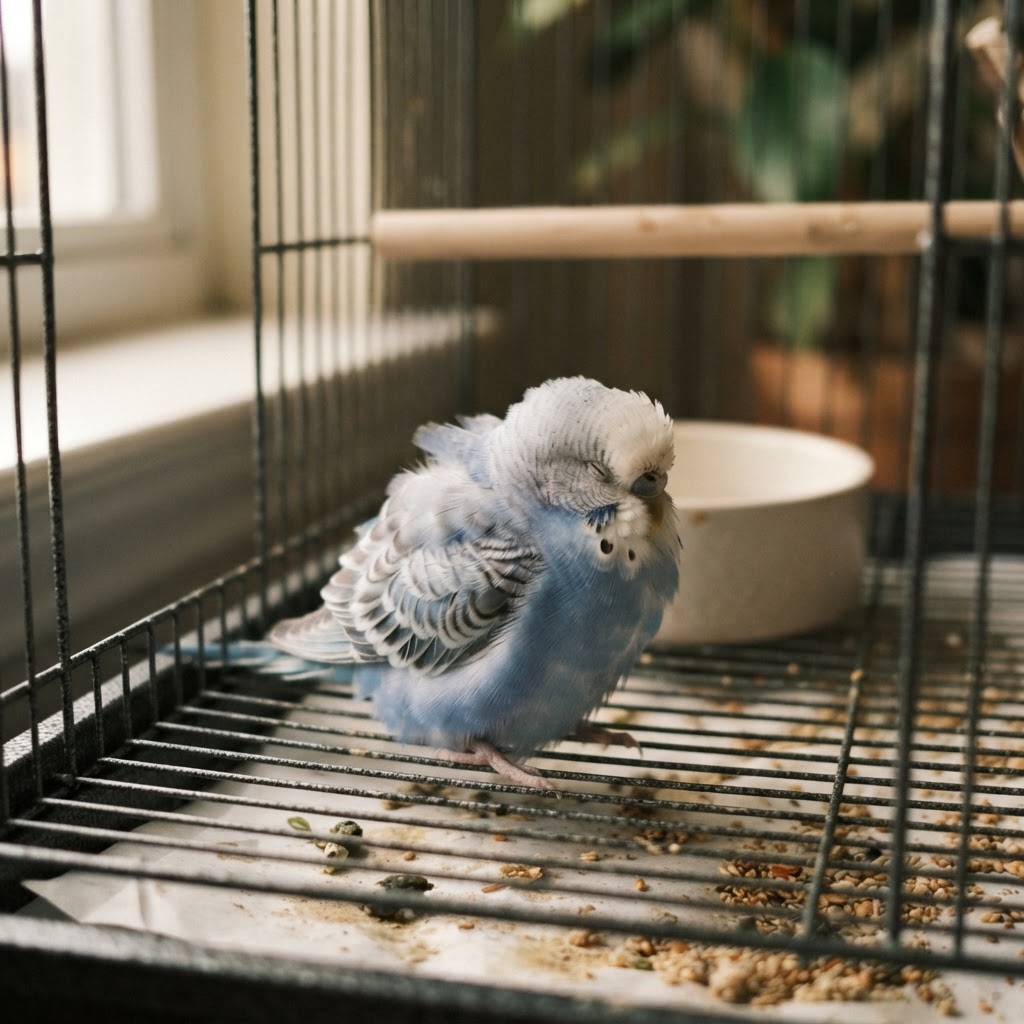
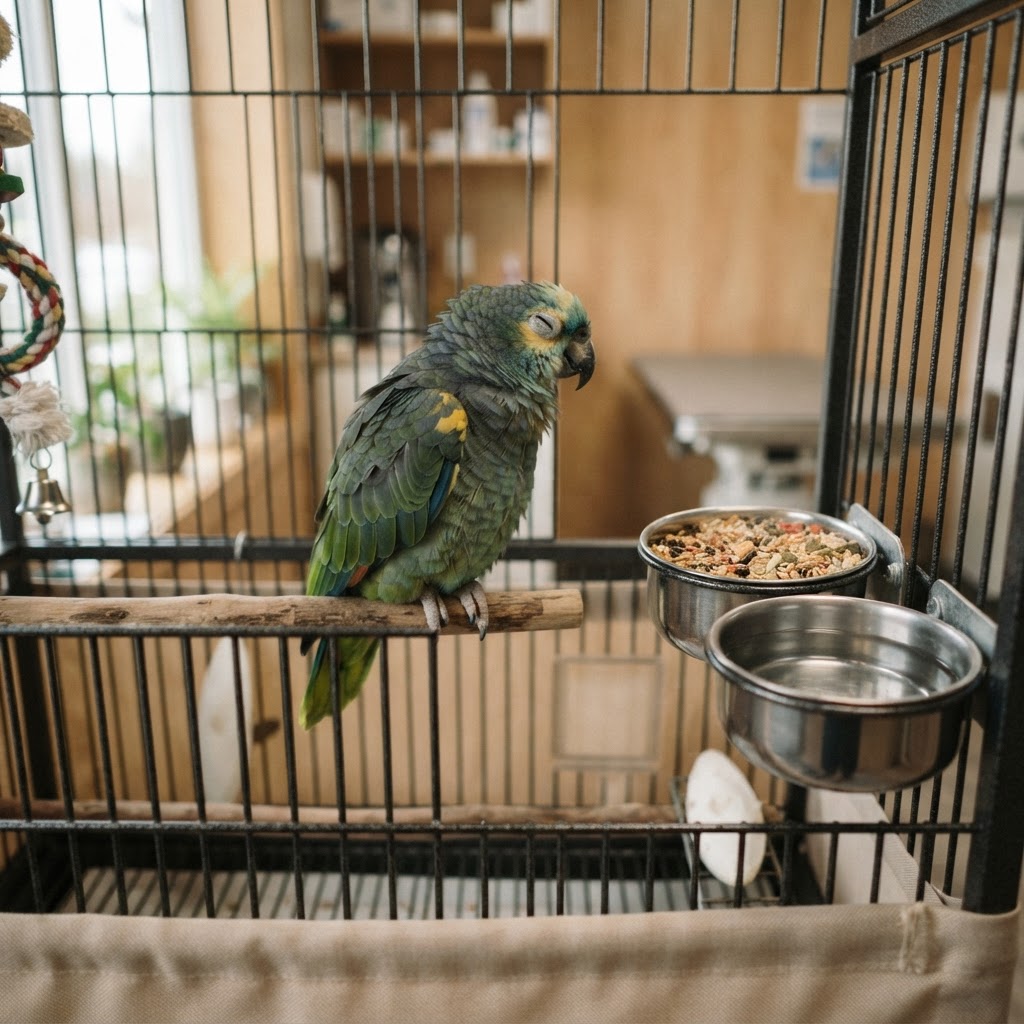
- Fluffed up, quiet, or on the cage floor
- Tail bobbing, open-mouth breathing, or clicking, respiratory distress
- A swollen crop that isn't emptying, or foul-smelling crop contents
- Weight loss, a sharp breastbone
- Abnormal or scant droppings
What to do right now
- Decide: regurgitation (calm, purposeful) or vomiting (forceful, flicking)? Regurgitation in a bright bird can be watched; vomiting needs a vet.
- Keep the bird warm and quiet, and remove food temporarily if vomiting is forceful.
- Offer water; dehydration is a real risk with vomiting.
- Check the crop, a swollen, soft, or foul crop points to crop disease.
- Call an avian vet the same day for vomiting, or immediately with weakness or breathing effort.
What NOT to do
- ❌ Don't dismiss forceful vomiting as "just regurgitation" if food is flicked everywhere, it's not normal.
- ❌ Don't give human anti-sickness medications.
- ❌ Don't force-feed a vomiting bird.
- ❌ Don't wait with vomiting, weakness, or breathing effort, birds decline fast.
How an avian vet diagnoses and treats it
An avian vet will examine the bird and crop, check the droppings, and may run a faecal test, bloodwork, or X-rays. Treatment depends on the cause, antifungals for sour crop, crop flushing, antibiotics, fluids, or supportive care. Because psittacosis is contagious to people, a vet may discuss zoonotic risk if it's suspected.
Preventing vomiting
Feed a fresh, balanced diet (not just seed), keep the cage and food dishes clean, avoid sudden diet changes, keep toxic plants and metals out of reach, and quarantine new birds. Watching your bird daily lets you tell normal regurgitation from worrying vomiting early.
When to wait, and when to act now
Calm regurgitation to a mate or toy in a bright bird is often normal. Forceful, repeated vomiting, or vomiting with fluffing, weakness, or not eating needs an avian vet now, birds go downhill fast.
Run a free AI triage assessment for personalised next steps, or find an avian vet near you.
Frequently Asked Questions
Disclaimer: This article is for educational purposes only and is not a substitute for professional veterinary advice. If you're concerned about your pet's health, use our AI triage assessment or consult a licensed veterinarian.