Bottom line: Hamsters have fast metabolisms and can't go long without food, so a hamster that stops eating, especially with weight loss, drooling, or a quiet, hunched manner, needs a vet within a day. Common causes are overgrown teeth, cheek pouch problems, or illness, and hamsters hide disease until it's advanced.
| Situation | Suggested action |
|---|---|
| Skipping food briefly, bright and active | Offer favourite food, monitor 12–24 hours |
| Not eating for 24 hours, or weight loss | Vet visit within a day |
| Not eating + drooling, or a wet bottom, or lethargy | Same-day / emergency vet |
Why a hamster stops eating
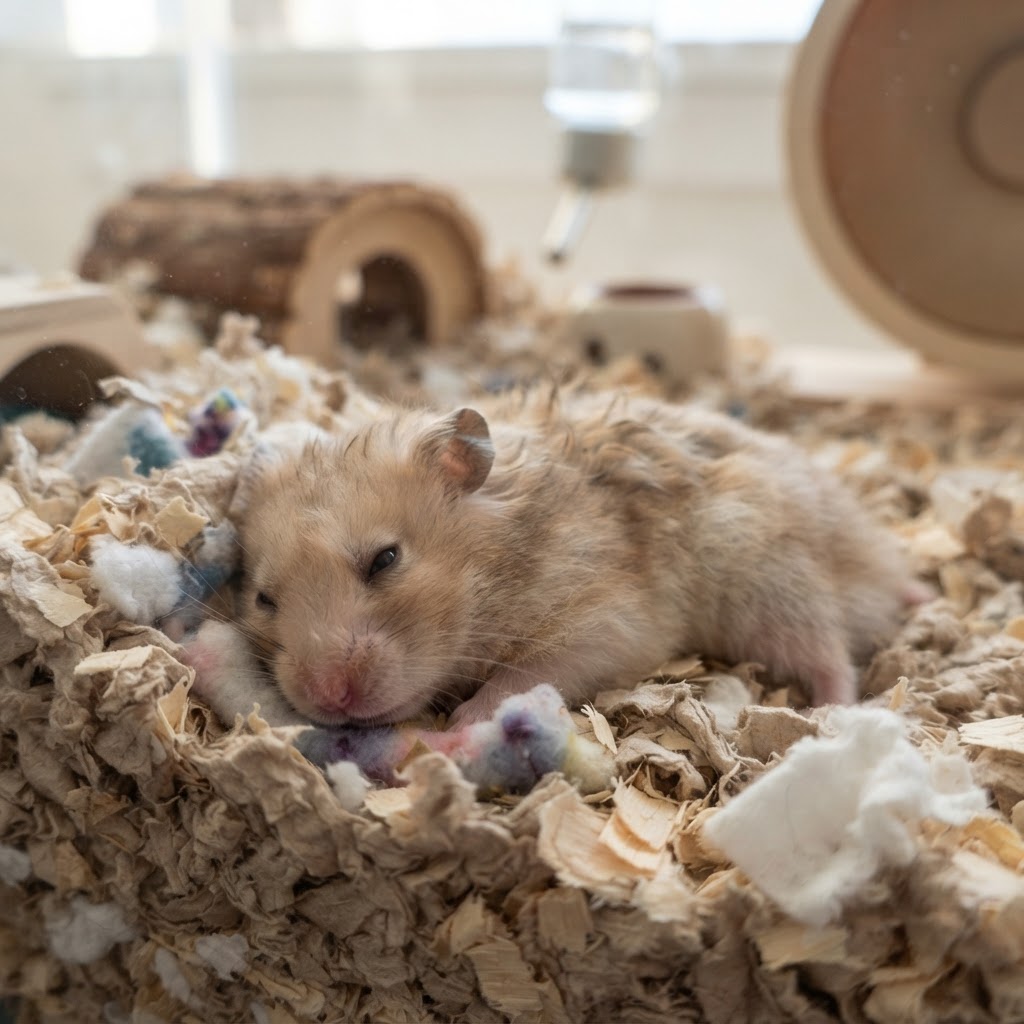
Hamsters are small with high metabolisms, so even a short time off food matters more than in a larger animal. They also hide illness well, and their teeth grow continuously, so dental problems and cheek pouch issues are major reasons a hamster will refuse food. The key is to work out whether the hamster is choosing not to eat (offered something better), can't eat (mouth pain), or won't eat because they feel unwell.
What can cause it
Dental disease is very common: overgrown or misaligned incisors or cheek teeth make eating painful, often with drooling and weight loss. Cheek pouch problems, an impacted or infected pouch, can put a hamster off food and cause a swollen face. Illness of almost any kind, including wet tail, respiratory infection, organ disease, or a uterine problem, reduces appetite.
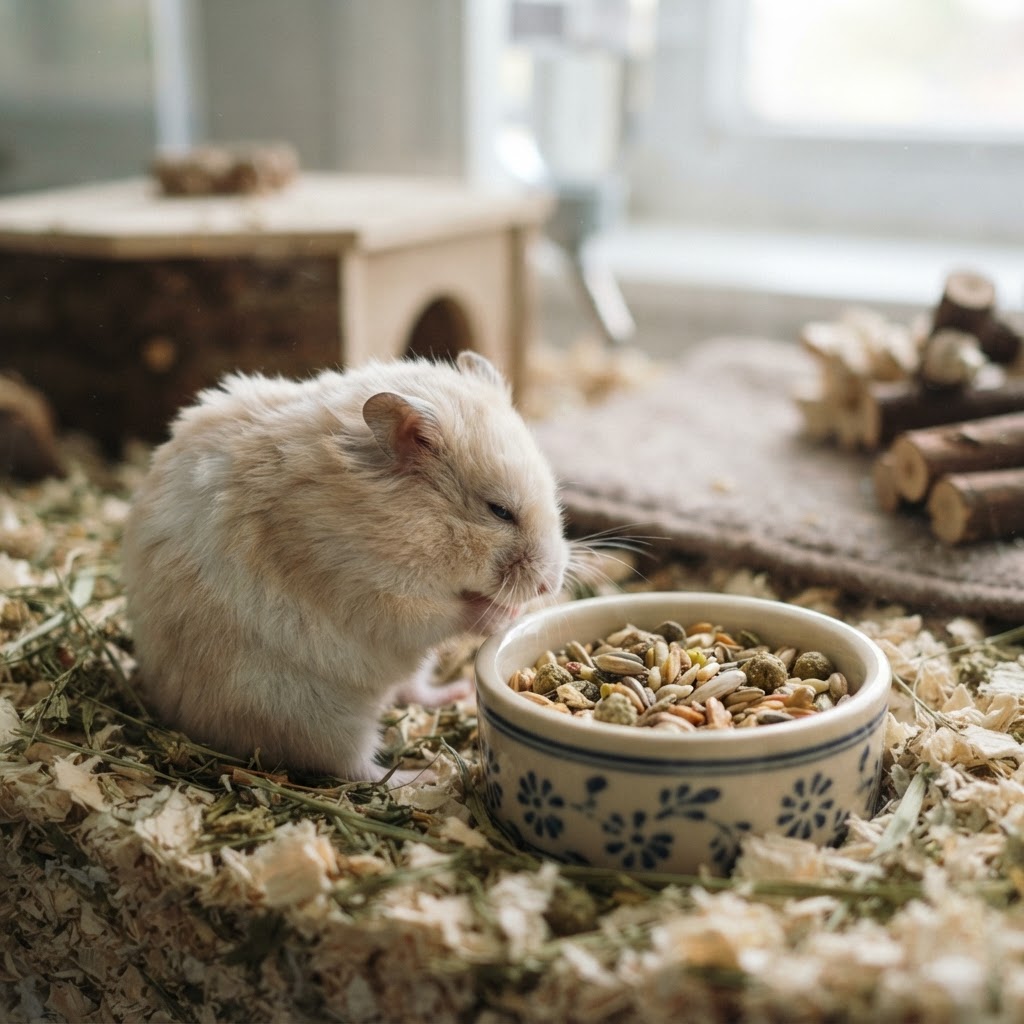
Other causes include stress, a change of food, cold environment (which can also push a hamster toward torpor), and old age. Hamsters will also stash food in their pouches and look like they're "not eating" when they actually are, check the nest, not just the bowl.
When to worry, the red flags
A hamster that's still active and stashing food but eating less can be watched for a day. See a vet for:
- Not eating for more than 24 hours, or visibly thinner
- Drooling, wet chin, or difficulty closing the mouth, overgrown teeth
- A swollen face or lumps near the cheeks, pouch problem
- A wet, soiled bottom or diarrhoea, wet tail is an emergency
- Lethargy, hunched posture, or hiding, the hamster is unwell
- Discharge from eyes or nose, or breathing changes
- Cold to the touch and quiet, warm and seek care
What to do right now
- Check the nest, hamsters hoard food, so the bowl may be empty while the nest is full.
- Offer a favourite, soft food, a little scrambled egg, baby food (onion/garlic-free), or soaked pellet, from a spoon.
- Look at the front teeth if your hamster allows, overlong or crossed incisors need a vet.
- Check for a wet bottom, discharge, or breathing changes.
- Keep the cage warm and quiet, and call an exotic vet if not eating lasts more than a day or any red flag is present.
What NOT to do
- ❌ Don't trim teeth at home, you can split a tooth or cause injury; a vet does this quickly and safely.
- ❌ Don't give human medications or food with onion, garlic, chocolate, or citrus.
- ❌ Don't force-feed a hamster that's drooling or painful without vet advice.
- ❌ Don't wait with a wet bottom, drooling, or a thin, quiet hamster.
How a vet diagnoses and treats it
An exotic vet will examine your hamster, check the teeth and cheek pouches, feel the belly, and listen to the chest. Treatment depends on the cause: trimming overgrown teeth, draining or treating an infected pouch, antibiotics or supportive care for illness, fluids and assisted feeding for a weakened hamster. Most do well once the cause is found.
Preventing appetite problems
Provide hard chew items and a pelleted diet to wear the teeth, keep the cage warm and low-stress, and check your hamster daily, a quick look at the bowl, nest, and bottom catches problems early.
When to wait, and when to act now
A bright hamster stashing food but eating less can be watched for a day. Not eating for more than 24 hours, drooling, a swollen face, or a wet bottom needs a vet, and a thin, cold, or hunched hamster means same-day care.
Run a free AI triage assessment for personalised next steps, or find an exotic vet near you.
Frequently Asked Questions
Disclaimer: This article is for educational purposes only and is not a substitute for professional veterinary advice. If you're concerned about your pet's health, use our AI triage assessment or consult a licensed veterinarian.