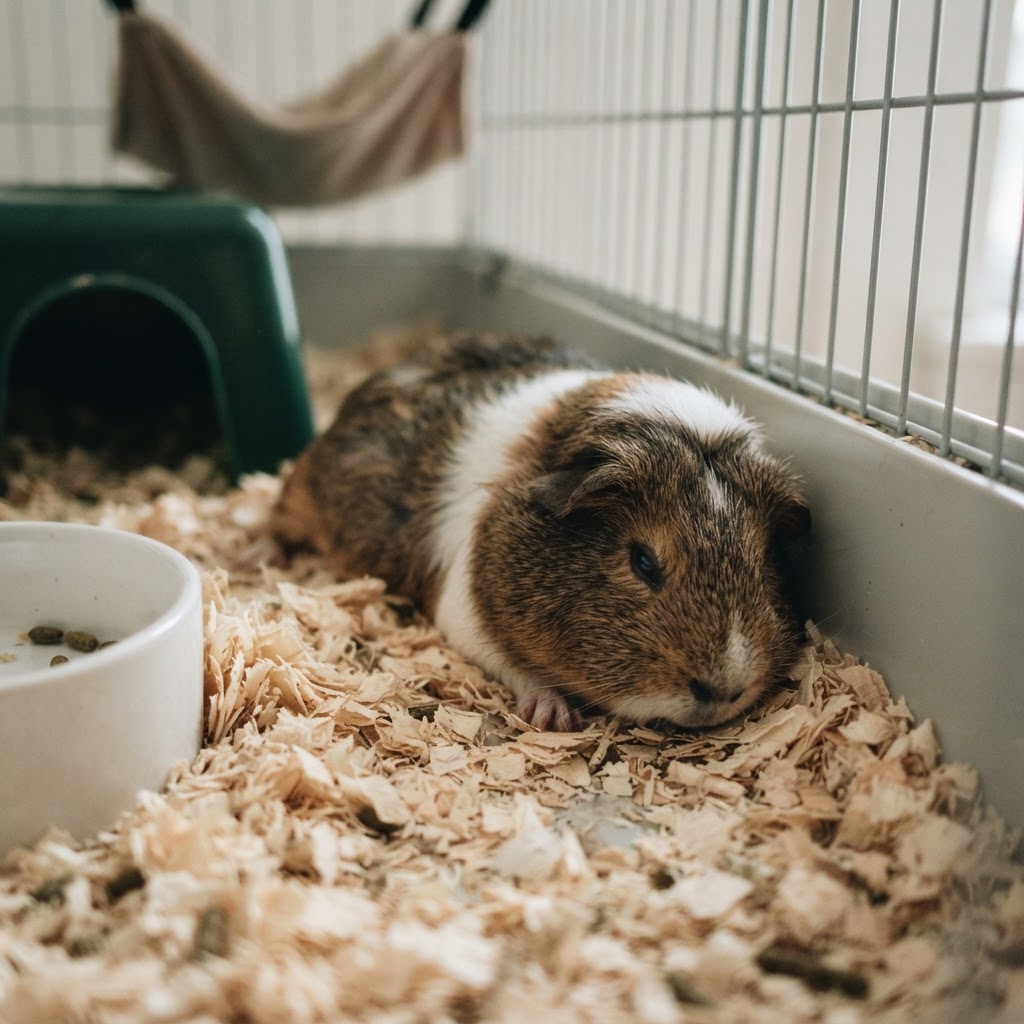
Bottom line: A guinea pig that's lying flat, weak, or not moving is often seriously unwell, guinea pigs hide illness and can decline quickly, and a quiet pig that stops eating is at risk of a gut shutdown that's an emergency. A weak or non-responsive guinea pig needs an exotic vet the same day.
| Situation | Suggested action |
|---|---|
| Quiet for a short while, bright and eating when tempted | Monitor closely |
| Lying flat, weak, or not moving for hours | Same-day exotic vet |
| Not moving + not eating, or fast/laboured breathing | Emergency vet now |
Why a guinea pig goes quiet
Guinea pigs are prey animals and hide signs of illness until they're quite unwell, so a guinea pig that's lying flat and not moving is usually already in trouble. They also can't go long without food: the gut needs constant fibre to keep moving, and a pig that stops eating can develop gastrointestinal stasis, where the gut slows or stops, causing pain, gas, and rapid decline. This is why "quiet and not eating" in a guinea pig is more urgent than in many other pets.
What can cause it
Gut problems are a top cause: gastrointestinal stasis (often from not eating, stress, or a diet too low in hay), bloat, or a blockage. Respiratory infection (pneumonia) is common in guinea pigs and can cause weakness and laboured breathing. Pain from dental disease (their teeth grow continuously), bladder stones, or injury makes a pig lie still. Vitamin C deficiency (scurvy), guinea pigs can't make their own, causes weakness, joint pain, and poor healing.
Serious causes include heatstroke (guinea pigs struggle in heat above ~26–28 °C), poisoning, an ovarian cyst in older females (with hair loss and a swollen belly), and severe infection. A guinea pig that's cold and quiet may also be hypothermic.
When to worry, the red flags
A pig that's resting but bright and eating when offered food can be watched briefly. See a vet, often urgently, for:
- Lying flat, weak, or not moving for more than a short while
- Not eating or not passing droppings, gut stasis risk; an emergency
- Fast, laboured, or open-mouth breathing, pneumonia or distress
- A swollen or painful belly, or hunched, teeth-grinding posture (pain)
- Cold to the touch, or hot and panting (heatstroke)
- Discharge from eyes or nose, or sneezing and coughing
- Weight loss, rough coat, or hair loss (possible cyst or scurvy)
- Difficulty walking or holding the head tilted (possible infection)
What to do right now
- Offer a favourite food, fresh grass, bell pepper, or critical-care mash from a syringe, and note whether they eat and pass droppings.
- Check the cage temperature; move to a warm (not hot), quiet spot.
- Look for discharge, a swollen belly, or fast breathing.
- Offer water from a syringe if they're weak.
- Call an exotic vet the same day if there's any weakness, or immediately if the pig isn't eating, isn't passing droppings, or is breathing hard.
What NOT to do
- ❌ Don't wait if a guinea pig isn't eating or passing droppings, gut stasis can be fatal within a day.
- ❌ Don't give human medications, many are toxic.
- ❌ Don't overheat a cold pig; warm gently.
- ❌ Don't assume "just tired", new lethargy in a guinea pig is a vet visit.
How a vet diagnoses and treats it
An exotic vet will examine your pig, assess hydration and breathing, feel the belly, and check the teeth. Treatment depends on the cause: fluids, pain relief, gut motility medication and assisted feeding for stasis, antibiotics for infection, dental work, or surgery for stones. Guinea pigs often improve well with prompt supportive care, but they have little reserve, early treatment is everything.
Preventing problems
Feed unlimited grass hay (essential for gut and teeth), a vitamin C–rich diet (peppers, or a supplement), keep the cage clean and at a steady 18–24 °C, and weigh your pig weekly, weight loss is the earliest sign of trouble. Annual exotic vet checks catch dental and ovarian issues early.
When to wait, and when to act now
A resting pig that's bright and eating can be watched. Lying flat, weak, or not moving for hours, or not eating and not passing droppings, needs an exotic vet the same day, and laboured breathing, a swollen belly, or a non-responsive pig means an emergency now.
Run a free AI triage assessment for personalised next steps, or find an exotic vet near you.
Frequently Asked Questions
Disclaimer: This article is for educational purposes only and is not a substitute for professional veterinary advice. If you're concerned about your pet's health, use our AI triage assessment or consult a licensed veterinarian.