Bottom line: A black beard in a bearded dragon can be normal (breeding males, morning basking) or a stress or illness sign. The key is what else you see, a black beard plus lethargy, not eating, or stress colour needs investigation.
| Situation | Suggested action |
|---|---|
| Brief black beard during basking or breeding, dragon bright | Monitor |
| Constant black beard + lethargy, not eating, or stress marks | Check husbandry, vet visit |
| Black beard + soft jaw, breathing signs, or a swollen belly | Same-day vet |
What a black beard means
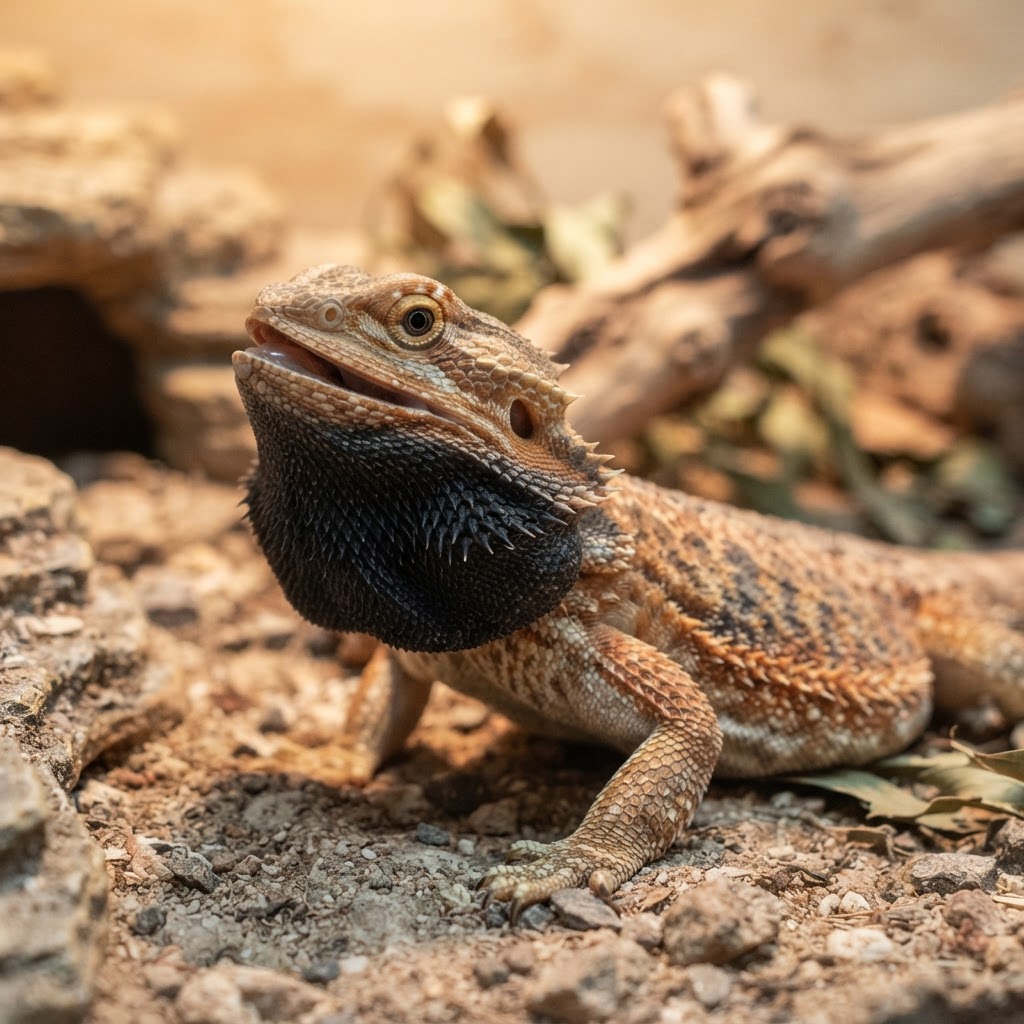
Bearded dragons puff and darken the skin under the chin, the "beard", to communicate. It can be a normal display: a male in breeding mood, a dragon warming up in the morning, or a brief territorial flash. It can also signal stress, fear, pain, or illness. The skill is in the context: a brief, bright, otherwise-normal dragon showing a black beard is usually just being a dragon, while a persistent black beard alongside stress marks, lethargy, or not eating is a red flag worth investigating.
What can cause it
Normal display includes male breeding or territorial behaviour and morning basking. Stress from a cage reflection, a new environment, over-handling, or an aggressive tank-mate is common. Environmental causes include a cold enclosure, a shed cycle, or brumation. Pain or illness, impaction, metabolic bone disease, a respiratory infection, can also bring on a black beard, and in females, egg-related discomfort may do the same.
When to worry, the red flags
A brief black beard during basking or breeding in an otherwise bright, eating dragon is usually fine. Investigate for:
- A black beard with lethargy, not eating, or hiding
- Dark "stress marks" (oval lines) across the belly
- Glass-surfing, pacing, or aggressive behaviour
- A black beard that never goes away
- Combined with a soft jaw, bent legs, or breathing signs (illness)
- A swollen belly or no droppings (impaction)
What to do right now
- Check temperature, UVB, and the enclosure setup.
- Remove stressors: cage reflections, over-handling, or an aggressive tank-mate.
- Check for stuck shed, impaction, or injury.
- If the dragon is eating, active, and basking normally, a black beard may be normal display.
- If it comes with lethargy or other signs, see a reptile vet.
What NOT to do
- ❌ Don't assume a black beard alone means sickness, context matters.
- ❌ Don't reward or provoke aggressive display by teasing.
- ❌ Don't ignore a persistent black beard with other signs.
- ❌ Don't keep an aggressive pair together.
How a reptile vet diagnoses and treats it
If illness is suspected, the vet examines the dragon, checks temperatures and diet, and may run faecal tests or X-rays. Most cases need husbandry correction; illness cases get targeted treatment.
Preventing stress-related black beards
Verify the basking gradient and UVB, reduce reflection stress (background on glass sides), house singly if aggression occurs, avoid over-handling, and keep a routine to reduce stress.
When to wait, and when to act now
A brief black beard during basking or breeding in an otherwise bright, eating dragon is usually fine. A constant black beard with lethargy, stress marks, or not eating needs a reptile vet.
Run a free AI triage assessment for personalised next steps, or find a reptile vet near you.
Frequently Asked Questions
Disclaimer: This article is for educational purposes only and is not a substitute for professional veterinary advice. If you're concerned about your pet's health, use our AI triage assessment or consult a licensed veterinarian.