Bottom line: Hiding is often a cat's primary way of showing pain or feeling unwell. If your cat refuses to come out for food or treats for more than 12-24 hours, they need a medical exam.
| Situation | Suggested action |
|---|---|
| Hiding with labored breathing | Emergency vet visit |
| Hiding and refusing food/water | Same-day vet appointment |
| Hiding due to recent environment change | Provide safe quiet space |
| Occasional hiding but acting well | Monitor behavior |
Why Cats Hide - and When It's Worrisome
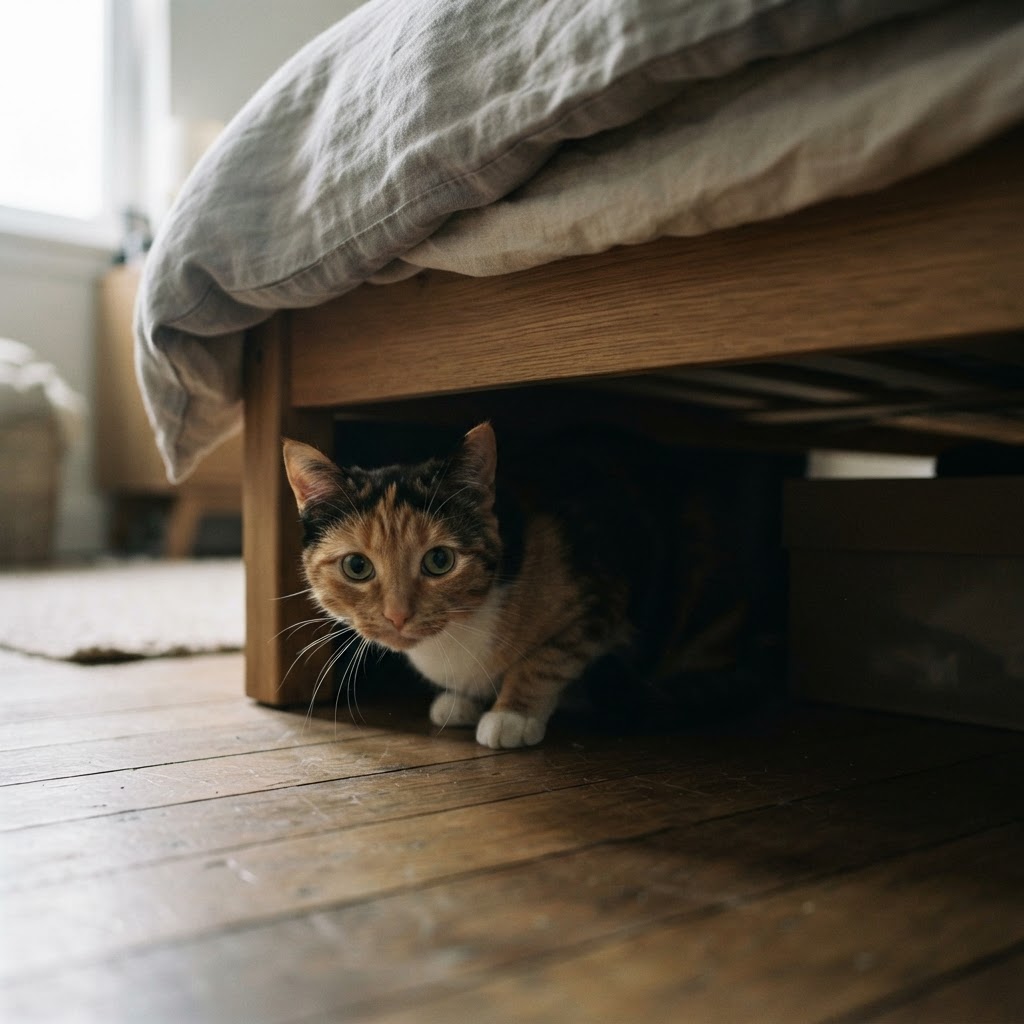
You come home and your cat isn't at the door. You check their usual spots - the sofa, the windowsill, the sunny patch on the rug. Nothing. Then you find them: wedged behind the wardrobe, hunched under the bed, or squeezed into a box in the back of a cupboard.
Your first instinct is probably to drag them out and cuddle them. Don't. Understanding why cats hide - and knowing the difference between normal hiding and a sign of trouble - is one of the most important skills a cat owner can develop.
Hiding Is Normal Cat Behaviour
Cats are both predators and prey in the wild. Their instinct is to seek out small, enclosed, dark spaces - it makes them feel safe. A hiding cat is often simply a cat doing what cats do.
Common, harmless reasons cats hide:
- 🐾 New environment - a cat in a new home will hide for days or even weeks while they adjust
- Visitors or new people - many cats retreat when strangers arrive
- Loud noises - thunderstorms, fireworks, construction, or even a dropped pan
- A new pet - the resident cat may hide while they process the intrusion
- Changes in routine - a new work schedule, a house move, rearranged furniture
- Stress or anxiety - cats are creatures of habit, and disruption unsettles them
- Pregnancy - a pregnant queen may seek out a quiet, dark nesting spot
- Just wanting a nap - sometimes a cat simply wants peace and quiet
In these situations, the cat will usually come out when they're ready - typically at night, when the house is quiet, to eat, drink, and use the litter tray. As long as they're eating, drinking, and toileting, hiding is usually nothing to worry about.
When Hiding Is a Sign of Trouble
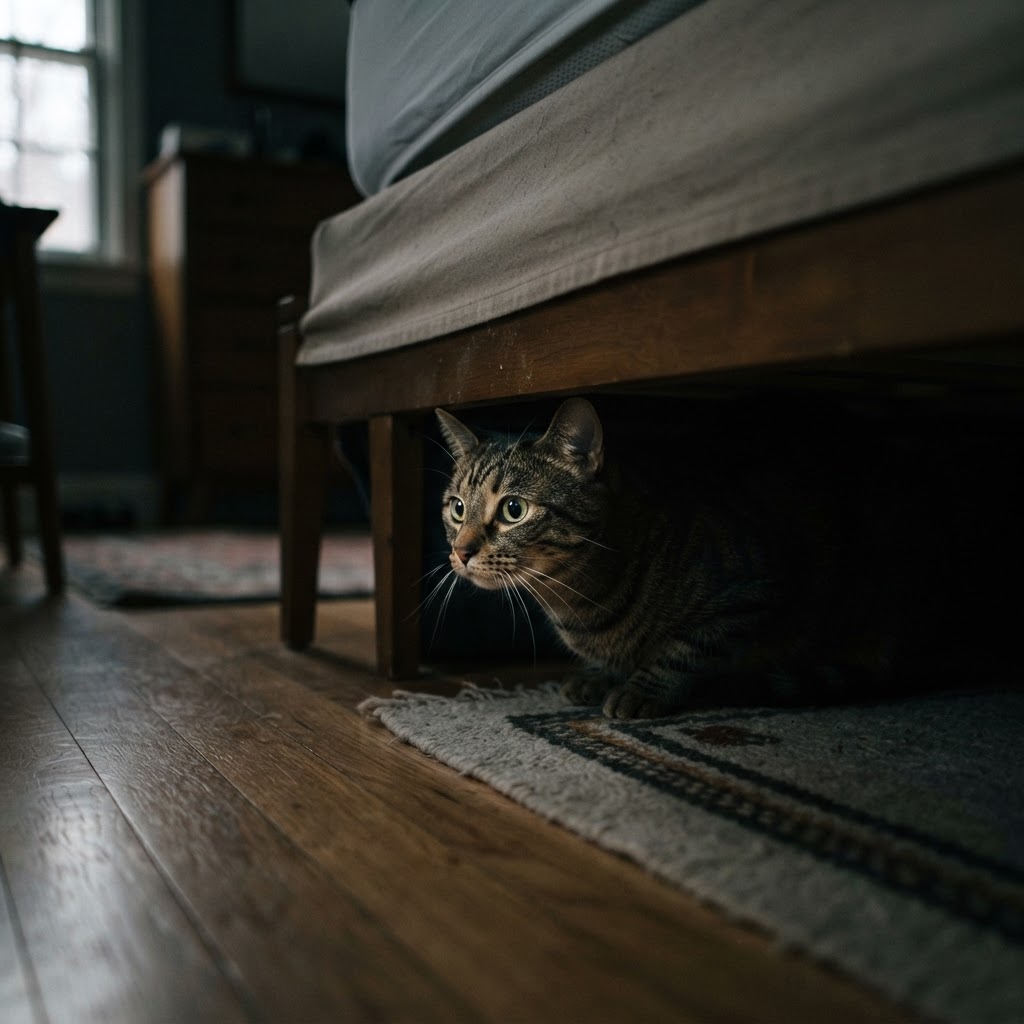
The concern comes when hiding is out of character, prolonged, or accompanied by other changes. Cats hide when they're sick or in pain - it's an instinctive response. A cat who suddenly starts hiding may be telling you something is wrong.
Hiding becomes a concern when:
- It's sudden and unexplained - no new environment, no visitors, no obvious stressor
- Your cat won't come out for food or isn't eating when they do
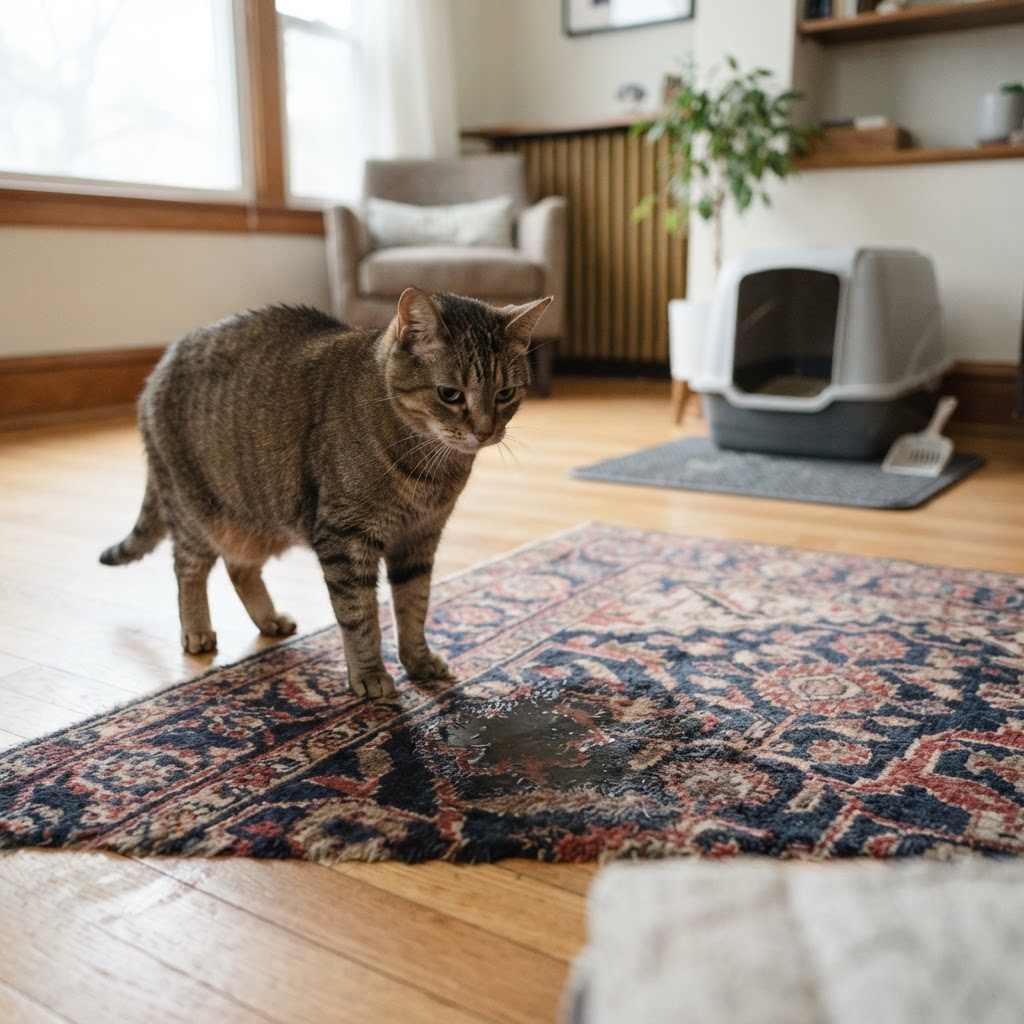
- They're not using the litter tray or the litter tray shows no activity
- They come out but seem hunched, tense, or withdrawn
- They react aggressively when approached or touched
- The hiding is accompanied by other symptoms - vomiting, diarrhoea, lethargy, changes in grooming, vocalisation
In cats, hiding is often one of the very first signs of illness. By the time a cat is visibly sick - not eating, vomiting, or lethargic - the disease may already be advanced. A cat who suddenly starts hiding deserves attention.
What Hiding Can Mean Medically
If your cat's hiding seems unusual, it could indicate:
- Pain - from dental disease, arthritis, a urinary tract infection, or an injury
- Nausea - kidney disease, gastrointestinal issues, or pancreatitis can cause nausea that makes cats retreat
- Fever - an infection will make your cat feel unwell and want to hide
- Urinary issues - a cat with a urinary tract infection or blockage (especially males) will hide and may strain in the litter tray
- Heart disease - cats with heart problems may hide due to breathing difficulty
- Stress-related illness - chronic stress can cause cystitis (bladder inflammation) in cats
How to Respond
If the hiding is due to an obvious stressor (new home, visitors, etc.):
- Leave your cat alone. Don't drag them out - this will increase their stress
- Provide food, water, and a litter tray nearby so they don't have to travel far
- Let them come out on their own terms, usually at night
- Speak softly and sit nearby - your presence can be reassuring without being intrusive
- Consider a Feliway diffuser - a synthetic pheromone that can help calm stressed cats
If the hiding is sudden, unexplained, or accompanied by other symptoms:
- Check the litter tray - is there urine and faeces? Is the urine normal, or is there blood or straining?
- Offer favourite food - if your cat refuses, that's a red flag
- Observe their demeanour - are they hunched, tense, or breathing rapidly?
- Call your vet - describe the change in behaviour and any other signs
When to Seek Immediate Care
Some situations need urgent attention:
- A male cat who is hiding, straining in the litter tray, and producing little or no urine - this could be a urinary blockage, which is fatal within 24–48 hours
- A cat who is hiding and not eating for more than 24 hours - cats can develop a dangerous liver condition called hepatic lipidosis after just 2–3 days without food
- A cat who is hiding and breathing rapidly or with effort - possible heart or lung disease
- A cat who is hiding and vocalising in pain
The Bottom Line
Hiding is part of being a cat - but sudden hiding is often the first whisper of trouble. Know your cat's normal hiding patterns. If they're suddenly spending more time under the bed than usual, and especially if they're not eating or using the litter tray normally, don't dismiss it. Cats are masters at hiding illness, and hiding itself is one of their strategies. Pay attention to the change.
Frequently Asked Questions
Disclaimer: This article is for educational purposes only and is not a substitute for professional veterinary advice. If you're concerned about your pet's health, use our AI triage assessment or consult a licensed veterinarian.