Bottom line: A dry nose is rarely a cause for concern on its own and is often just a result of a nap or lack of airflow. You should only worry if your dog also has nasal discharge, cracked skin, or is acting lethargic.
| Situation | Suggested action |
|---|---|
| Bloody, cracked, or sores on nose | Schedule vet exam |
| Thick or colored nasal discharge | Call your veterinarian |
| Dry nose with lethargy or fever | Monitor for symptoms |
| Dry nose with normal behavior | No action needed |
The Wet Nose Myth
There's a long-standing belief that a wet, cold nose means a healthy dog, and a dry, warm nose means a sick one. It's one of those myths that just won't die - passed from owner to owner, generation to generation, like a veterinary game of Chinese whispers.
Here's the truth: a dog's nose wetness changes constantly throughout the day, and on its own, a dry nose tells you absolutely nothing about your dog's health.
A perfectly healthy dog can have a dry, warm nose. A seriously ill dog can have a wet, cold one. The nose is not a thermometer, and it's certainly not a crystal ball.
Why Dog Noses Go Dry
A dog's nose is normally moist because they secrete a thin layer of mucus that helps trap scent particles - enhancing their already extraordinary sense of smell. They also lick their noses frequently, which keeps them wet. When this moisture evaporates, the nose feels dry.
Common, harmless reasons for a dry nose:
- 🐾 Sleeping - dogs don't lick their noses while asleep, so they often wake up with a dry nose
- Just woke up from a nap
- Spending time near a heater or in direct sunlight
- Dry or windy weather - low humidity speeds up evaporation
- Dehydration after exercise (offer water!)
- Age - older dogs sometimes produce less nasal mucus
In all of these cases, the nose should return to its normal, moist state within an hour or so, once the dog is active, drinking, and licking again.
When a Dry Nose Might Mean Something
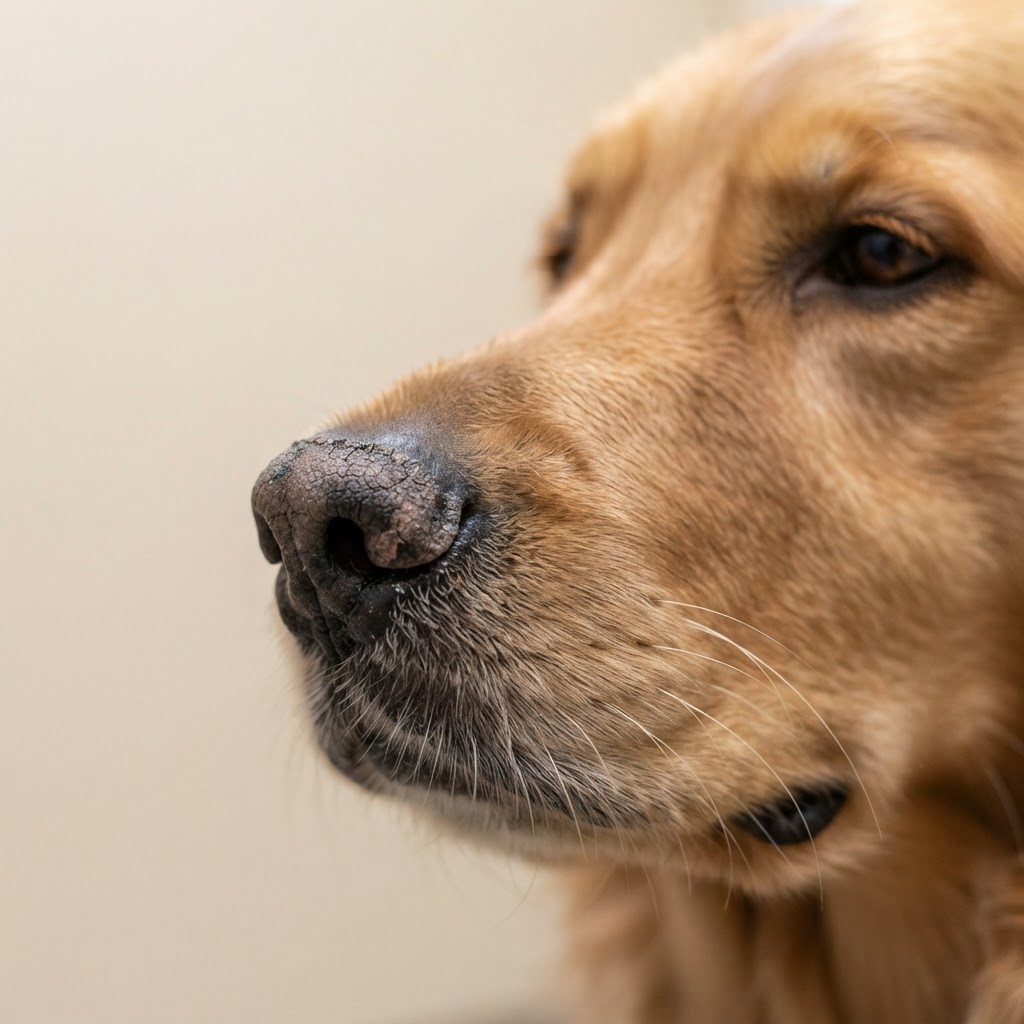
While a dry nose alone is rarely cause for concern, there are times when the appearance of the nose can indicate a problem:
Cracked, bleeding, or scabby nose:
- Can indicate sunburn (yes, dogs get sunburned - especially light-coloured noses)
- May be a sign of autoimmune disease (such as discoid lupus or pemphigus)
- Can result from nasal hyperkeratosis - a condition where the nose skin thickens and cracks, common in older dogs and certain breeds (Bulldogs, Mastiffs)
- Could be a skin infection or allergy
Nasal discharge (especially from one nostril):
- Clear, watery discharge is often normal
- Thick, yellow, or green discharge can indicate infection
- Blood-tinged discharge can indicate a foreign body (like a grass seed), tumour, or dental disease (tooth roots sit right under the nasal passages)
- Discharge from one nostril only is more concerning than from both
Colour changes:
- Loss of pigment (nose turning pink or lighter) can be seasonal ("snow nose") or age-related - usually harmless
- Sores or ulceration on the nose should always be checked by a vet
What Should You Actually Look For?
Instead of obsessing over nose wetness, pay attention to the signs that actually tell you something about your dog's health:
- 🐾 Energy levels - is your dog as active and engaged as usual?
- Appetite - eating normally?
- Thirst - drinking a normal amount?
- Behaviour - any changes in personality or routine?
- Gum colour - pink and moist is good; pale, blue, or dark red is concerning
- Breathing - quiet and regular, or noisy and effortful?
If your dog has a dry nose but is otherwise bright, eating, and acting normally, there is almost certainly nothing to worry about. If your dog has a wet nose but is lethargic, off food, or just "not right," that's when you should call the vet.
When to See the Vet
Contact your vet if your dog's nose:
- Is cracked, bleeding, or ulcerated
- Has thick, coloured, or bloody discharge
- Has a growth or lump on or around it
- Is persistently dry and cracked despite using a dog-safe nose balm
- Is accompanied by other symptoms - lethargy, loss of appetite, vomiting, or fever
The Bottom Line
Stop using your dog's nose as a health barometer. A dry nose is almost always normal - especially first thing in the morning or after a nap in the sun. Instead, look at the whole dog: energy, appetite, behaviour, and demeanour. Those tell you far more about what's going on inside than the moisture level of a nose ever will.
Frequently Asked Questions
Disclaimer: This article is for educational purposes only and is not a substitute for professional veterinary advice. If you're concerned about your pet's health, use our AI triage assessment or consult a licensed veterinarian.