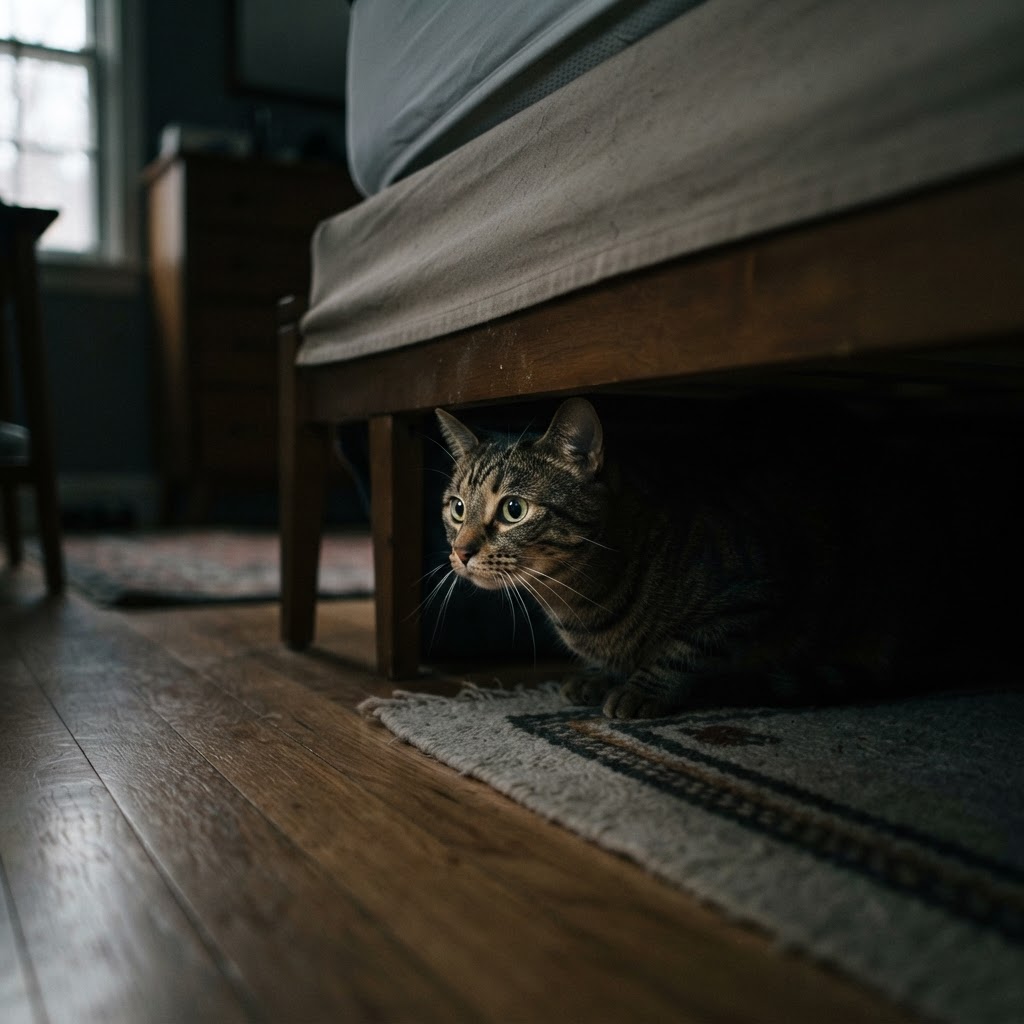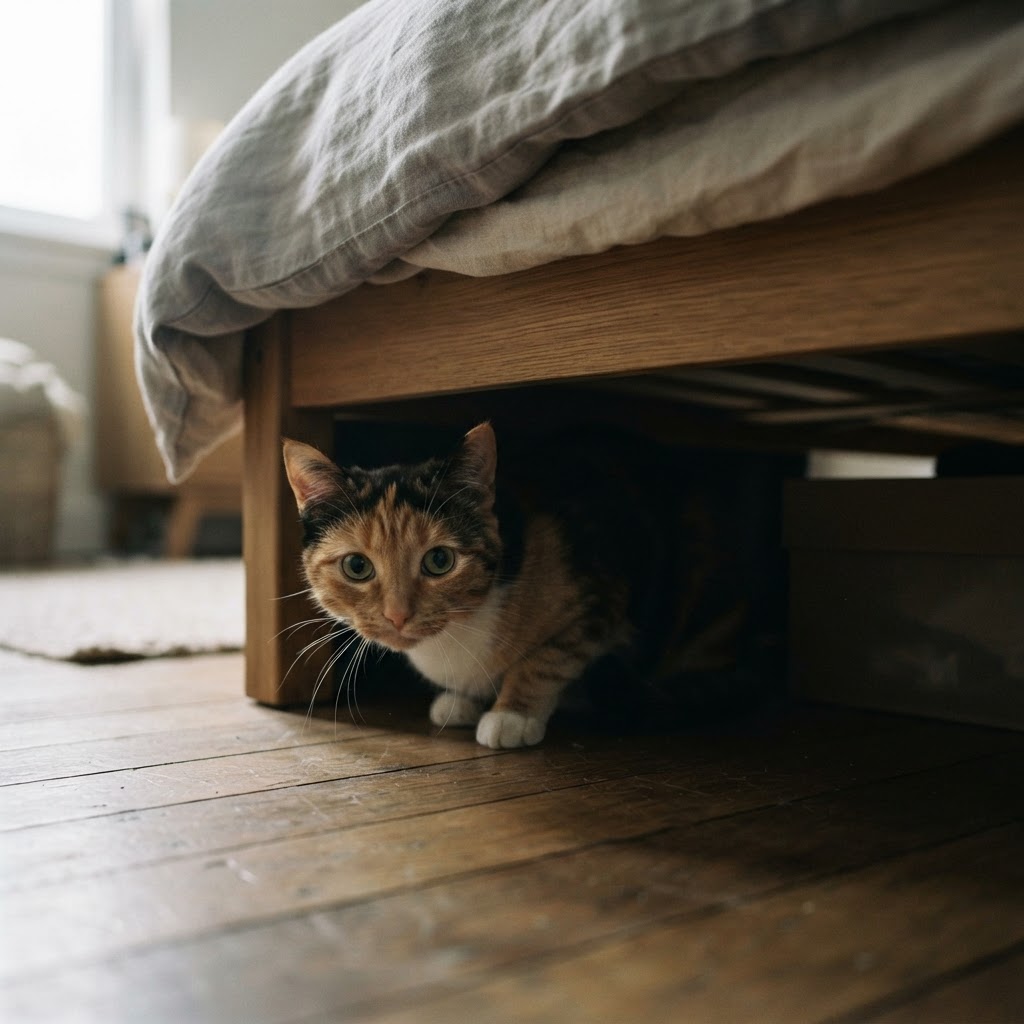
Bottom line: Cats retreat to hide when they feel unwell, scared, or in pain, it's a deeply instinctive behaviour. A cat who's hiding more than usual, or hiding with not eating, lethargy, or a change in the litter tray, often needs a vet, because hiding is one of the earliest signs of illness in cats.
| Situation | Suggested action |
|---|---|
| Hiding briefly after a stressor, otherwise bright | Give space, monitor |
| Hiding for >24 hours, or off food/water | Vet visit within a day |
| Hiding + not eating, vomiting, or straining to urinate | Same-day vet visit |
| Hiding + collapse, pale/yellow gums, or breathing difficulty | Emergency vet now |
Why cats hide
Hiding is normal cat behaviour, a scared or overstimulated cat ducking under the bed for an hour is just being a cat. The concern is when hiding becomes persistent or out of character. In the wild, a sick or injured cat that hides avoids predators; that same instinct is alive and well in a house cat. So when a usually social cat starts vanishing, or a hidden cat won't come out for food, it's often the first, and only, outward sign that something is wrong. This is why vets take "my cat's been hiding" seriously.
What can cause it
Stress and environment, visitors, a new pet, building work, or a move, are common and usually temporary. Pain is a major hidden cause: arthritis in older cats, dental pain, or abdominal pain all drive a cat to hide. Illness of almost any kind, infections, kidney disease, pancreatitis, gut inflammation, or a urinary problem, can present first as withdrawal.
Serious causes include a urinary blockage in male cats (the cat hides, strains in the tray, cries, and stops eating, a true emergency), poisoning (lilies, human medications), anaemia or a ruptured tumour causing collapse, and breathing or heart problems. Cats with hyperthyroidism may become restless rather than hidden, while cats in pain or with organ disease tend to withdraw.
When to worry, the red flags
A cat who hides briefly after a clear stressor, then comes out to eat and use the tray, can be watched. See a vet for:
- Hiding for more than 24 hours, or that's getting worse
- Not eating or drinking, fatty liver risk rises quickly in cats
- Straining in the litter tray with little or no urine, especially a male cat, a blocked bladder is an emergency
- Vomiting, diarrhoea, or not passing stool
- Pale, white, or yellow gums, anaemia, shock, or liver disease
- Breathing difficulty, open-mouth breathing, or collapse
- A change in demeanour, aggression, crying when touched, or no longer greeting you
- Known access to a toxin, especially lilies or human medication
- An older cat who can no longer jump up and now hides, often pain
What to do right now
- Give your cat a quiet, safe space, don't drag them out; let them come to you.
- Offer favourite food and water nearby and note whether they eat, drink, or use the tray.
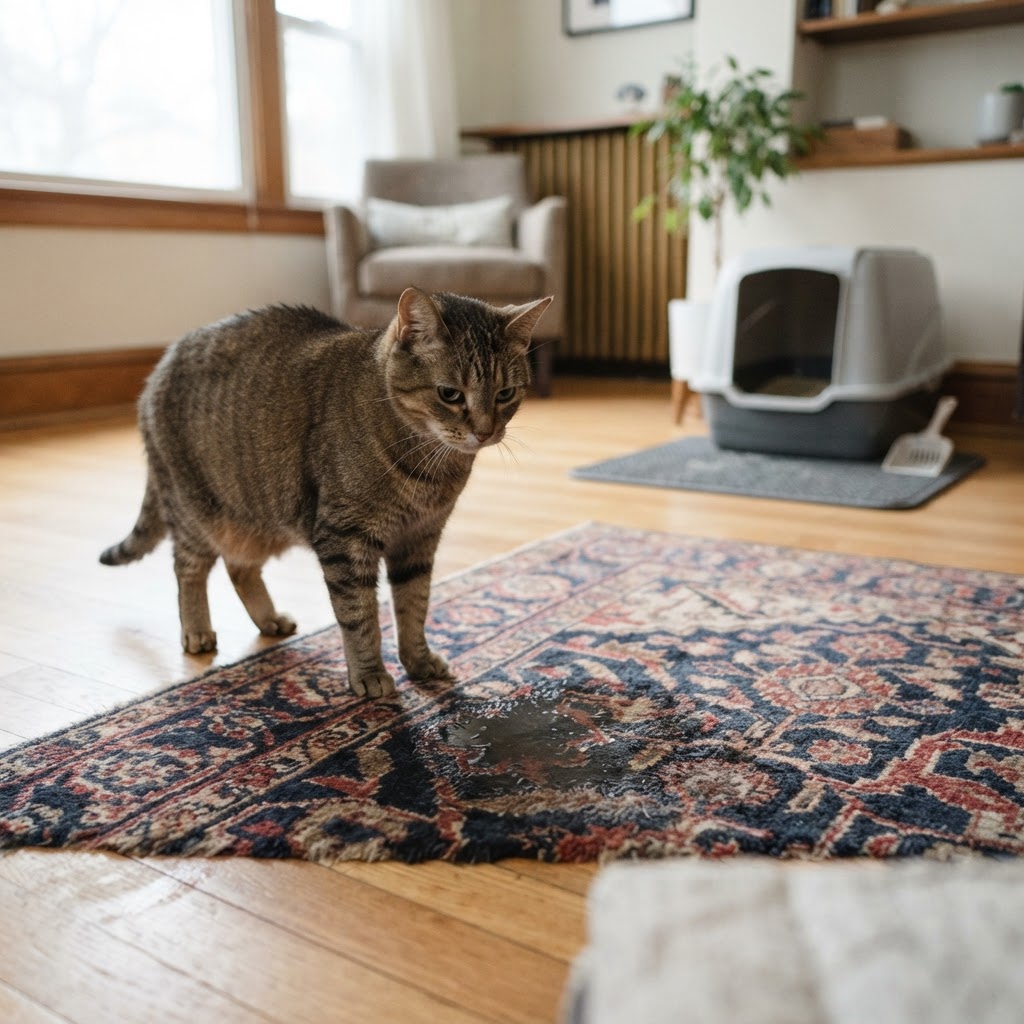
- Check the litter tray, reduced or absent urine, especially in a male cat, is an emergency.
- Check the gums if you can, pink is normal; pale, white, or yellow means a vet today.
- Recall recent changes, new pet, building, visitors, plants, or medications, to tell the vet.
- Call your vet if hiding lasts more than a day or comes with any red flag; go straight to an emergency vet for collapse, pale gums, a male cat straining, or known toxin exposure.
What NOT to do
- ❌ Don't drag a hidden cat out, it adds stress and can lead to bites or injury.
- ❌ Don't give human medications, many are toxic to cats.
- ❌ Don't assume "she's just shy" if hiding is new or persistent.
- ❌ Don't wait with a male cat straining, pale gums, collapse, or known toxin exposure, these are emergencies.
How a vet diagnoses and treats it
Your vet will examine your cat, check the bladder and belly, assess hydration and gum colour, look at the mouth, and may run bloodwork and imaging. Treatment depends on the cause, pain relief for arthritis, dental treatment, fluids, a urinary catheter for a blockage, or specific medication for organ disease. Many cats improve remarkably once pain or the underlying problem is treated, and owners are often surprised how much "old age" was actually treatable pain.
Preventing problems that cause hiding
Provide consistent routine, safe hiding spots, and vertical space; keep lilies and human medications out of reach; maintain a lean weight; and have older cats checked yearly, pain from arthritis and early kidney disease are both very manageable when caught early.
When to wait, and when to act now
Brief hiding after a clear stressor, with normal eating and toileting, can be watched. Hiding for more than a day, not eating, or any red flag needs a vet, and collapse, pale or yellow gums, a male cat straining, or known toxin exposure mean an emergency right now.
Run a free AI triage assessment for personalised next steps, or find an emergency vet near you.
Frequently Asked Questions
Disclaimer: This article is for educational purposes only and is not a substitute for professional veterinary advice. If you're concerned about your pet's health, use our AI triage assessment or consult a licensed veterinarian.