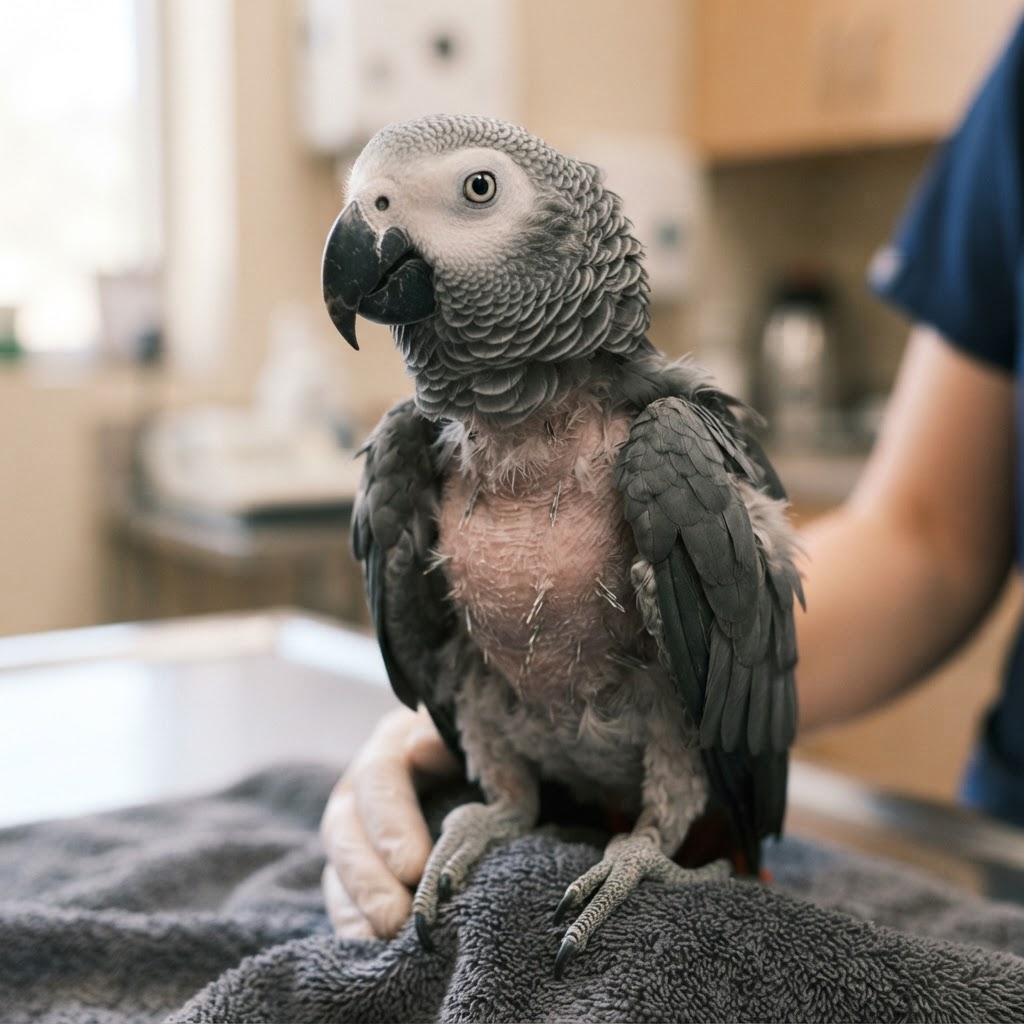
Bottom line: Feather plucking, a bird pulling out or chewing its own feathers, is common and frustrating, and it's usually a sign of physical illness, pain, or stress rather than "just boredom." A new or sudden plucking bird needs an avian vet to rule out medical causes first.
| Situation | Suggested action |
|---|---|
| Occasional preening or a few chewed feathers, bird bright | Improve environment, monitor |
| Sudden plucking, or plucking with skin damage | Avian vet visit |
| Plucking + not eating, weakness, or breathing effort | Emergency vet now |
Why birds pluck
Feather plucking (and the more severe feather destructive behaviour) is one of the most common problems in pet birds, especially parrots. It ranges from gentle over-preening to birds stripping themselves bare and damaging the skin. The causes are split into medical (physical illness, pain, skin disease, parasites) and behavioural (stress, boredom, anxiety, hormones), and in practice most birds have a bit of both. Because birds hide illness, plucking can actually be the first visible sign of an underlying physical problem, which is why ruling out medical causes comes first.
What can cause it
Medical causes include skin infections, parasites (mites), allergies, pain anywhere in the body (a bird will pluck over a painful area), liver disease, nutritional deficiencies, and reproductive hormones in females. Behavioural causes include stress, boredom, lack of foraging, a small or barren cage, poor sleep, a change in the home, or an anxious bond with an owner. Environmental triggers like low humidity, dry skin, or a dusty cage can contribute.
When to worry, the red flags
Some preening and the occasional chewed feather in a bright bird can be improved with enrichment. See an avian vet for:
- Sudden or severe plucking, especially if it's new
- Bare skin showing, or plucking that's spreading
- Skin damage, redness, scabs, bleeding, or self-mutilation
- Plucking with not eating, lethargy, or abnormal droppings, illness
- Plucking over a specific area, may point to pain there
- A bird that's also screaming, fearful, or aggressive, behavioural stress
What to do right now
- Don't punish or spray the bird, it worsens stress.
- Check the environment, cage size, perch variety, toys, foraging, humidity, and sleep (10–12 hours of darkness).
- Remove obvious stressors and add foraging toys and new perches.
- Check for skin damage or bleeding and keep the bird from reaching it.
- Book an avian vet for any new or severe plucking, to rule out medical causes first.
What NOT to do
- ❌ Don't assume it's "just boredom", medical causes are common and need ruling out.
- ❌ Don't punish or spray a plucking bird.
- ❌ Don't ignore self-mutilation with skin damage, it can become an emergency.
- ❌ Don't leave a plucking bird without enrichment while you investigate.
How an avian vet diagnoses and treats it
An avian vet will examine the bird, check the skin and feathers, and may run bloodwork, a faecal test, or skin tests to rule out infection, parasites, and organ disease. Medical causes get treated directly; behavioural cases need an enrichment and behaviour plan, sometimes with hormonal or anxiety support. Early cases have a much better outlook than long-standing habitual plucking.
Preventing feather plucking
Provide a large, enriched cage with foraging toys, natural perches, and a routine; ensure 10–12 hours of quiet, dark sleep; feed a balanced diet; and keep stress low. A stimulated, well-rested bird is far less likely to start plucking.
When to wait, and when to act now
Mild over-preening in a bright bird can be improved with enrichment. Sudden or severe plucking, skin damage, or plucking with illness signs needs an avian vet, and self-mutilation with bleeding needs care now.
Run a free AI triage assessment for personalised next steps, or find an avian vet near you.
Frequently Asked Questions
Disclaimer: This article is for educational purposes only and is not a substitute for professional veterinary advice. If you're concerned about your pet's health, use our AI triage assessment or consult a licensed veterinarian.