Bottom line: Most dogs eat grass out of habit or boredom, and it is generally harmless unless the grass has been treated with pesticides. However, if your dog is eating grass and then vomiting frequently, you should see a vet.
| Situation | Suggested action |
|---|---|
| Eating grass + vomiting/distress | Call your vet |
| Frequent, obsessive eating | Consult vet about diet/boredom |
| Casual nibbling, acting normal | Monitor closely |
| No symptoms observed | No action needed |
Why Do Dogs Eat Grass?
Despite decades of study, there is no single definitive answer to why dogs eat grass. However, several theories explain this behaviour:
1. Natural Behaviour
Dogs are not strict carnivores. In the wild, their ancestors (wolves and wild dogs) consumed entire prey animals, including the plant material in those animals' stomachs. Grass and plant matter has always been a small part of the canine diet. Eating grass may simply be an instinctive, natural behaviour.
2. Digestive Aid
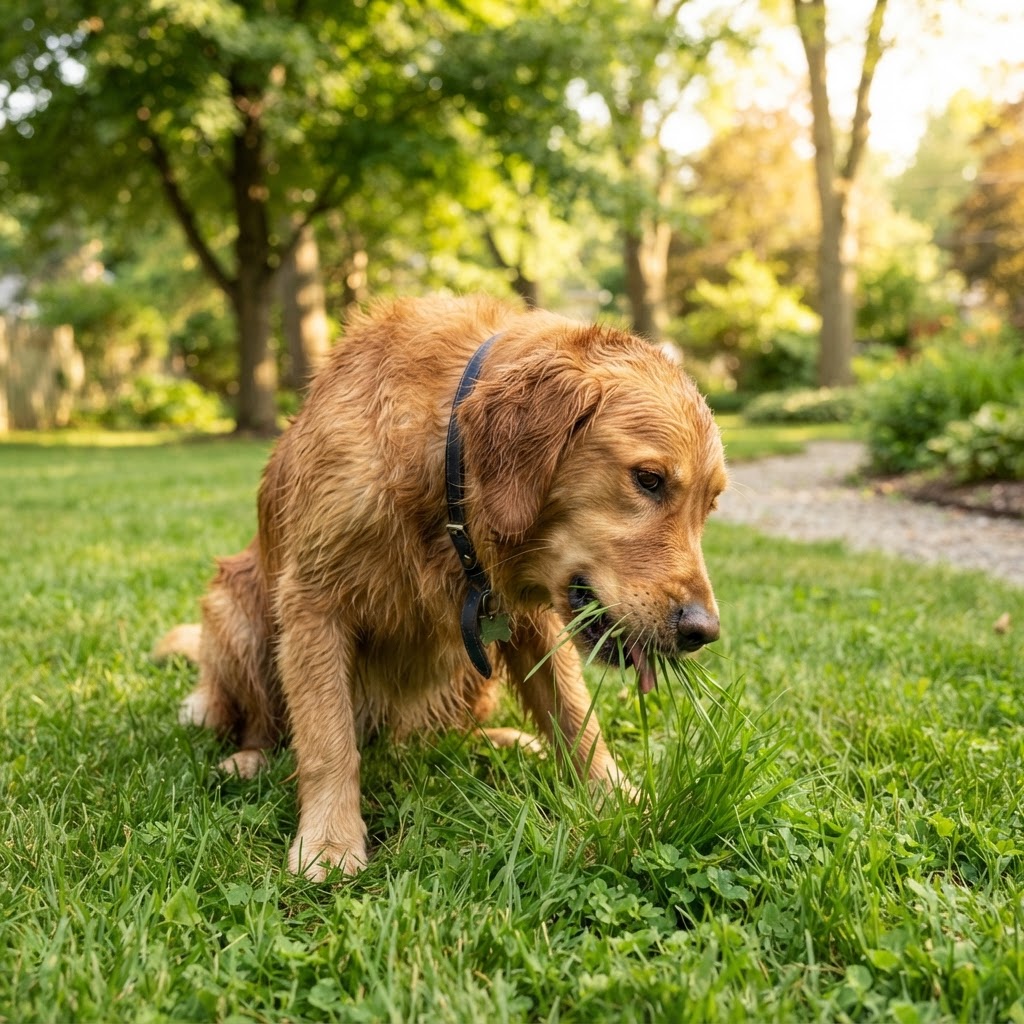
Some researchers believe dogs eat grass to help with digestion. Grass contains fibre, which can help move food through the digestive tract. Some dogs may instinctively seek grass when they feel mild gastrointestinal discomfort.
3. Satisfying a Nutritional Need
It has been suggested that dogs may eat grass to obtain nutrients they are lacking in their diet, such as fibre, vitamins, or minerals. While most commercial dog foods are nutritionally complete, some dogs may still instinctively seek plant matter.
4. Boredom or Anxiety
Dogs who are bored, anxious, or under-stimulated may eat grass simply as something to do. This is particularly common in dogs who spend long periods in the yard without enrichment or interaction.
5. They Simply Enjoy It
Many dogs seem to genuinely enjoy the taste and texture of grass. Some dogs prefer certain types of grass over others, suggesting it is a sensory preference rather than a response to a physical need.
6. Upset Stomach
The most commonly cited reason - that dogs eat grass to make themselves vomit when they feel unwell - is actually less common than people think. Studies have shown that fewer than 25% of dogs vomit after eating grass, and only about 8% show signs of illness before eating grass.
Is Eating Grass Dangerous?
In most cases, no. Grass itself is not toxic to dogs and passes through the digestive system largely undigested. However, there are some risks to be aware of:
Chemical Treatments
The biggest danger is grass that has been treated with pesticides, herbicides, fertilisers, or other chemicals. These substances can be toxic to dogs if ingested.
- Avoid letting your dog eat grass that has been recently treated
- Keep your dog off treated public areas (look for warning signs)
- If you treat your own lawn, keep your dog away until it is safe (follow product instructions)
Parasites
Grass in public areas can harbour parasite eggs from other animals' faeces. Regular worming helps protect your dog.
Toxic Plants
Make sure the grass and surrounding plants your dog has access to are not toxic. Many common garden plants are dangerous to dogs, including lilies, azaleas, daffodils, and foxgloves.
Pesticides on Lawns
If you use lawn treatments, always check the label for pet safety information and keep your dog off treated areas for the recommended period.
When Should You Be Concerned?
While occasional grass-eating is normal, the following situations warrant attention:
Frequent Vomiting After Eating Grass
If your dog regularly eats grass and vomits afterwards, this could indicate an underlying gastrointestinal issue such as inflammatory bowel disease, food intolerance, or chronic pancreatitis.
Sudden Increase in Grass-Eating
If your dog has never been a grass-eater and suddenly starts eating large amounts, this could signal a new health problem. Monitor for other symptoms like vomiting, diarrhoea, or loss of appetite.
Grass-Eating with Other Symptoms
If grass-eating is accompanied by lethargy, weight loss, diarrhoea, changes in appetite, or any other signs of illness, consult your vet.
Eating Grass Excessively
If your dog seems obsessed with eating grass to the exclusion of other activities, or eats grass compulsively, this may be a sign of a behavioural or nutritional issue worth investigating.
How to Manage Grass-Eating
If your dog is a casual grass-eater and is otherwise healthy, there is usually no need to intervene. But if you want to reduce the behaviour:
- Ensure a complete, balanced diet - talk to your vet about whether a dietary change might help
- Provide plenty of exercise and mental stimulation - a tired, engaged dog is less likely to graze out of boredom
- Offer safe alternatives - try carrot sticks, cucumber, or green beans as healthy plant-based treats
- Supervise outdoor time - redirect your dog's attention when they start grazing
- Grow a dedicated patch of untreated grass - if your dog loves grass, provide a safe, chemical-free source
The Bottom Line
Grass-eating is a normal, common behaviour in dogs. In the vast majority of cases, it is harmless and nothing to worry about. The main risk is chemical exposure from treated lawns, so ensure your dog only eats grass you know is untreated.
However, if grass-eating is accompanied by vomiting, changes in appetite, lethargy, or other symptoms, do not dismiss it. These could be signs of an underlying health issue that needs veterinary attention.
If you are concerned about your dog's behaviour or health, our AI triage tool can help assess whether the symptoms warrant a vet visit. You can also find a vet near you if you need to schedule a check-up.
Frequently Asked Questions
Disclaimer: This article is for educational purposes only and is not a substitute for professional veterinary advice. If you're concerned about your pet's health, use our AI triage assessment or consult a licensed veterinarian.