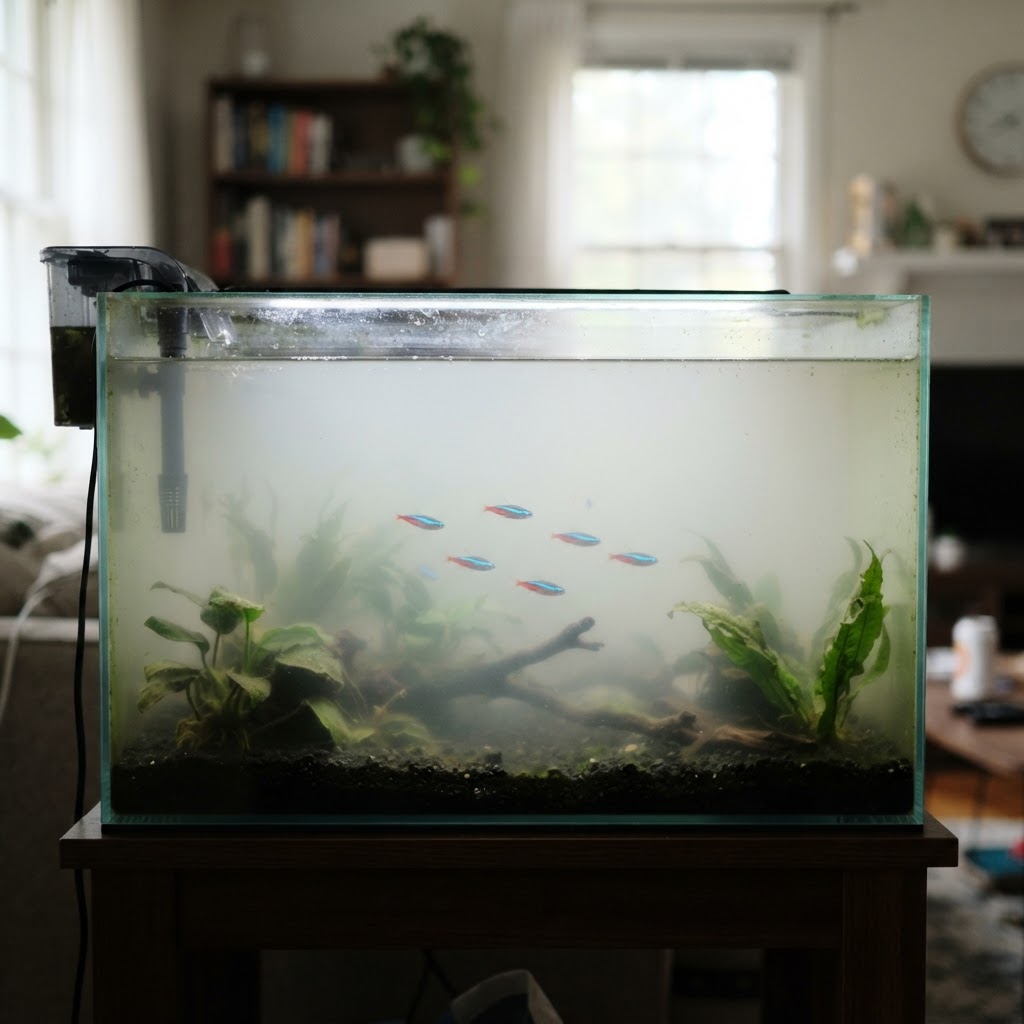
Bottom line: Cloudy water is usually a bacterial bloom, a new-tank cycle issue, or overfeeding, it's not directly harmful, but it signals an imbalance. Test the water, cut feeding, do partial water changes, and be patient; persistent cloud needs a closer look.
| Situation | Suggested action |
|---|---|
| Slightly cloudy in a new tank (first weeks) | Be patient, light feeding, monitor |
| Cloudy with fish acting off, or ammonia/nitrite high | Water change, cut feeding |
| Green cloudy water or persistent cloud | Check light, nutrients, filter |
Why aquarium water goes cloudy
Cloudy water is a symptom, not a disease. The most common cause in a new tank is a bacterial bloom, free-floating bacteria multiplying as the tank cycles and processes fish waste. In an established tank, cloud usually means an imbalance: overfeeding, a filter that's overwhelmed, a dead fish or plant decaying, or a nutrient/light spike causing green water (free-floating algae). The good news is that the cloud itself rarely harms fish; the bad news is it points to a problem that needs fixing, and the fix is almost always about patience, feeding, and water changes rather than chemicals.
What can cause it
New tank syndrome (the tank is still cycling) is the classic cause in the first 4–8 weeks. Overfeeding dumps excess nutrients. An overloaded or dirty filter, a dead fish or plant decaying, overstocking, and washing filter media in tap water (killing the good bacteria) all trigger blooms. Green water comes from excess light plus nutrients. Gravel not rinsed before setup causes a brief mineral cloud.
When to worry, the red flags
Mild cloud in a new, cycling tank can be waited out. Act for:
- Cloud with fish gasping, rapid breathing, or deaths, possible ammonia/nitrite spike
- Ammonia or nitrite reading above zero, toxic; water change now
- A dead fish or plant in the tank, remove and water change
- Green water that won't clear, nutrient/light imbalance
- Cloud that persists for weeks despite water changes, review filter and stocking
What to do right now
- Test the water, ammonia, nitrite, nitrate; if ammonia/nitrite are high, do a partial water change.
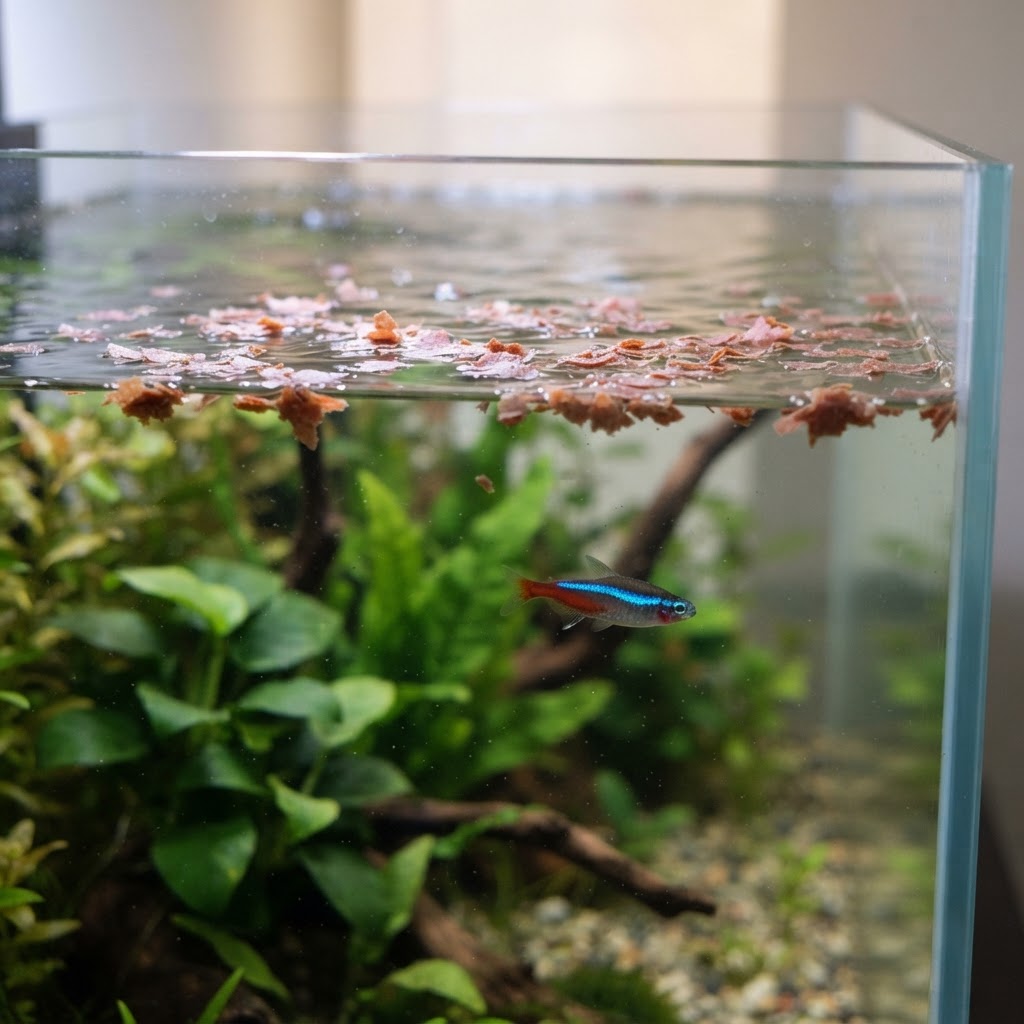
- Cut feeding to a small amount once a day (or skip a day or two).
- Do a partial water change (25%) with dechlorinated, temperature-matched water, don't over-change, which can stall cycling.
- Remove any dead fish or decaying plant and vacuum obvious waste.
- Check the filter is running; clean it gently in tank water, not tap water.
- Reduce light if the water is green.
What NOT to do
- ❌ Don't add "water clarifier" chemicals as a first move, they mask the cause.
- ❌ Don't do huge water changes in a cycling tank; it can stall the cycle.
- ❌ Don't wash filter media in tap water, chlorine kills the good bacteria.
- ❌ Don't overfeed to "help" the fish.
How to clear it
Most bacterial blooms clear on their own as the tank matures and the filter catches up, patience, light feeding, and modest water changes do the work. Green water needs light and nutrient control (shorter photoperiod, fewer nutrients, sometimes a UV steriliser). Persistent cloud in an established tank usually means an overstocked or under-filtered tank, and a review of stocking and maintenance fixes it long-term.
Preventing cloudy water
Cycle a new tank before adding fish (or add very few, lightly), feed sparingly, do weekly partial water changes, keep a filter rated for the tank and clean it in tank water, and avoid overstocking. A stable, mature tank stays clear.
When to wait, and when to act now
Mild cloud in a new cycling tank can be waited out with light feeding and small changes. Cloud with ammonia/nitrite above zero, fish gasping, or deaths means act now, test and water change.
Run a free AI triage assessment for personalised next steps, or find a vet near you.
Frequently Asked Questions
Disclaimer: This article is for educational purposes only and is not a substitute for professional veterinary advice. If you're concerned about your pet's health, use our AI triage assessment or consult a licensed veterinarian.